
金包银手镯

Search documents
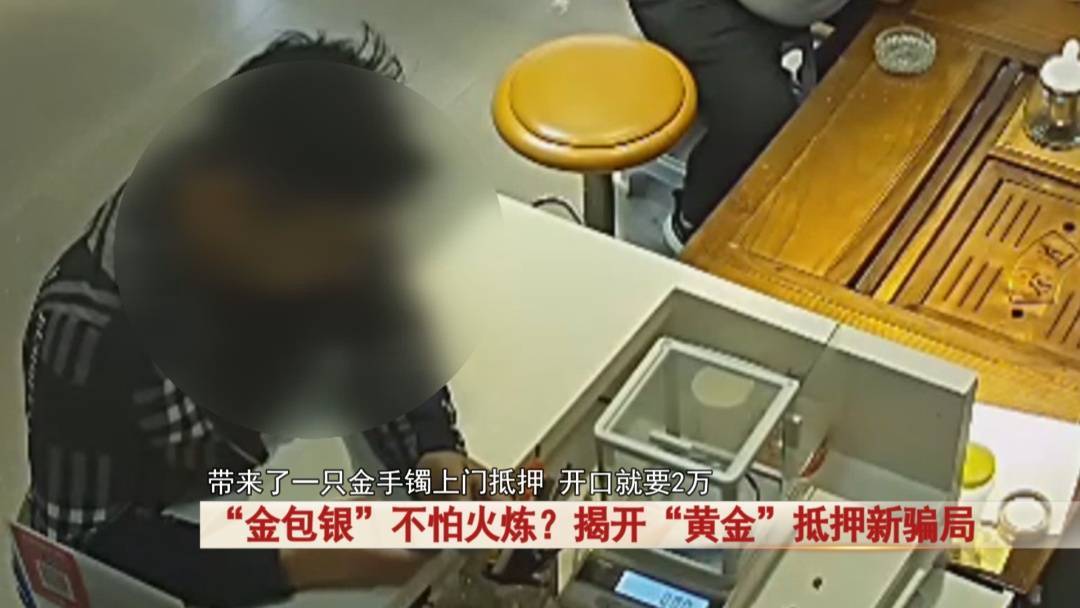
“金包银”不怕火炼?揭开“黄金”抵押新骗局 !
Sou Hu Cai Jing· 2025-05-25 11:23
Core Viewpoint - The rising gold prices have led to an increase in the popularity of "gold-plated silver" jewelry as a cheaper alternative to pure gold, but this has also given rise to new types of mortgage scams targeting pawn shops [1]. Group 1: Scam Details - A pawn shop owner in Wuxi, Jiangsu, encountered a customer who claimed to need money for a wedding and offered a gold bracelet as collateral, requesting 20,000 yuan [3]. - The pawn shop owner conducted standard tests and found no visible changes in the gold bracelet after burning it, leading to a payment of over 21,000 yuan [3]. - Upon attempting to resell the bracelet a month later, the owner discovered it was actually silver, reducing its value to 5,000 yuan [3]. Group 2: Organized Crime - The scam was not a spontaneous act but rather a well-planned operation involving an eight-member fraud gang with specific tools and scripts for their scams [5]. - The gang utilized chat groups to promote their "gold-plated silver" jewelry, claiming it could pass fire and spectral tests, making it difficult for ordinary people to identify the fraud [5]. - They specifically instructed pawn shops not to cut or melt the jewelry, emphasizing that it was "heirloom gold" and would be redeemed in a month, allowing time for the scam to unfold [6]. Group 3: Impact and Legal Consequences - The gang exploited the vulnerabilities in pawn shop testing methods, as "gold-plated silver" could pass fire and spectral tests, with only cutting revealing the truth [7]. - Over a span of three months, the gang executed more than ten scams, accumulating over 200,000 yuan in fraudulent gains [7]. - Prosecutors indicated that the defendants' actions constituted fraud under Article 266 of the Criminal Law of the People's Republic of China, with clear evidence of their criminal activities [9].

调查 | 直播带货竟有“既视感”?主播原来是AI数字人
Sou Hu Cai Jing· 2025-05-23 03:50
Core Viewpoint - The recent consumer tips released by the State Administration for Market Regulation and the China Consumers Association highlight various issues consumers face in live-stream shopping and provide methods to avoid pitfalls, although some methods may not be effective [1] Group 1: Jewelry and Precious Metals - Consumers are advised to request proof of product quality, such as certificates, from live-stream hosts, as many hosts may not provide clear evidence of the product's authenticity [3] - A specific incident showed that a host displayed a certificate that did not match the product's specifications, raising concerns about the reliability of such documents [3] Group 2: Health Products - The consumer tips emphasize the importance of verifying health products by checking for the "blue hat" mark and registration numbers to avoid misleading claims [5] - Instances were reported where products were misrepresented as health foods despite being ordinary foods, indicating a need for better regulatory oversight [7] Group 3: Price Comparison Tools - Third-party price comparison tools were found to be unreliable, often failing to recognize products from live-stream links, which complicates consumers' ability to verify prices [10][13] - The inconsistency in price data from these tools, especially regarding promotional discounts, further complicates the purchasing process for consumers [15] Group 4: Digital Influencers and Marketing Tactics - The use of AI digital influencers in live-streaming raises concerns, as these pre-recorded hosts may mislead consumers without disclosing their artificial nature [16][18] - Marketing tactics employed by these digital influencers often create a false sense of urgency, which can mislead consumers into making hasty purchasing decisions [18]

