金属期权交易

Search documents
人民币被踢出局?英美联手巩固美元霸权,却忘中国才是购买力关键
Sou Hu Cai Jing· 2025-11-26 02:46
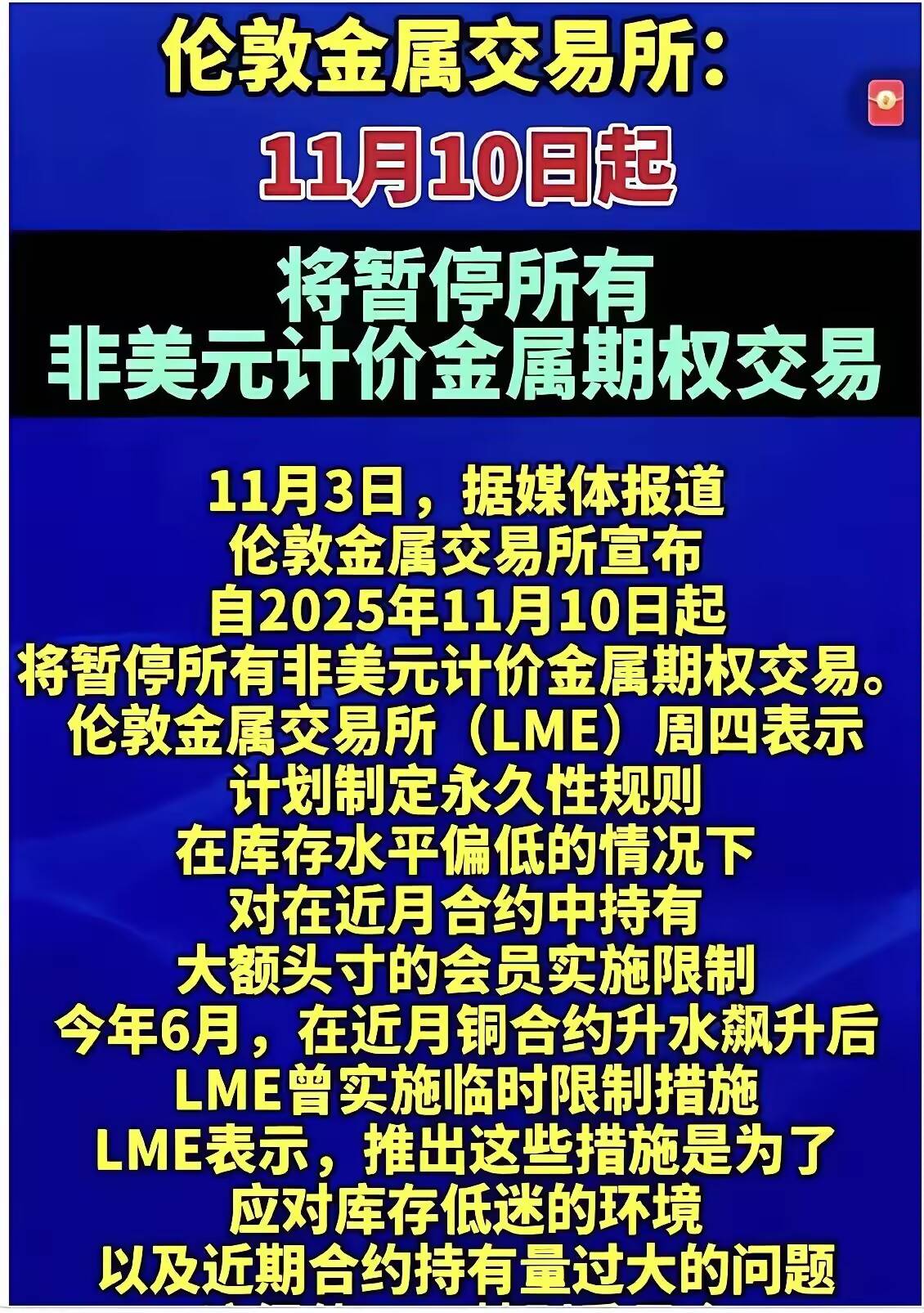
Group 1 - The London Metal Exchange (LME) announced a suspension of all non-USD denominated metal options trading starting November 10, citing "insufficient liquidity and low trading volume," which contradicts the actual trading data showing significant activity in RMB-denominated copper trading [2] - The trading volume for RMB-denominated copper is projected to rise from 357,000 contracts in early 2024 to 482,000 contracts by mid-2025, indicating a robust market contrary to LME's claims [2] - The LME, while appearing to be a UK entity, is effectively controlled by the Hong Kong Stock Exchange, raising questions about the motivations behind the suspension of RMB trading [2] Group 2 - Concurrently, the U.S. is set to initiate a new round of quantitative easing in December, which will increase the supply of USD in the market, potentially impacting global commodity prices [4] - The G7 has formed a "critical minerals alliance" excluding China, indicating a strategic move to undermine China's influence in global metal pricing [4][10] - The U.S. aims to maintain its dollar hegemony by tying key mineral pricing to the USD, similar to its historical approach with oil [10] Group 3 - The G7 alliance's strategy may be flawed as the global market has shifted to a "buyer-dominated" model, where China, as the largest metal importer, holds significant leverage in pricing negotiations [12] - Despite the U.S. efforts to isolate the RMB, the internal divisions within the G7 and the low GDP growth in the U.S. suggest a weakening of traditional dollar dominance [14] - The suspension of RMB trading by LME may inadvertently accelerate the development of a more robust RMB trading system, particularly through the Shanghai Futures Exchange [16][23] Group 4 - The dual trading system is emerging, with the LME and Chicago Mercantile Exchange dominated by USD, while the Shanghai Futures Exchange represents the RMB pricing system [22] - The recent developments are seen as a catalyst for the RMB's rise in global metal pricing, providing an alternative that could lead to a more equitable market structure [25] - The upcoming BRICS meeting presents an opportunity for the RMB to gain support from resource-rich and consumption-heavy nations, further solidifying its position in global trade [20]


伦敦金属交易所突然停交易,美元慌了?人民币悄悄上位!
Sou Hu Cai Jing· 2025-11-09 08:42
Core Viewpoint - The London Metal Exchange (LME) is taking measures to restrict non-USD metal options trading starting November 10, 2025, due to concerns over the increasing influence of other currencies, particularly the Chinese yuan, in global commodity transactions [1][3]. Group 1: Market Stability and Regulatory Actions - The LME's decision to halt non-USD trading is framed as a move to stabilize the market, but it is widely understood to be a reaction to the growing use of the yuan in commodity pricing and settlement [3][4]. - The LME's actions are reminiscent of past market disruptions, such as the nickel market crisis caused by sanctions on Russia, which led to a temporary trading suspension and regulatory penalties [3]. Group 2: Impact of Currency on Commodity Trading - By 2024, 14.2% of global commodity transactions are expected to be settled in yuan, indicating a significant shift away from USD dominance [3]. - The LME's measures are seen as an attempt to maintain the USD's leading position in the face of increasing yuan adoption by global traders and manufacturers [3][4]. Group 3: Comparison with Other Exchanges - Other exchanges, such as the Shanghai Futures Exchange, Singapore SGX, and Dubai DXB, have adopted more flexible approaches, allowing the market to self-regulate rather than imposing strict trading restrictions [4]. - The LME's rigid approach is criticized as being out of touch with market dynamics, contrasting with the more adaptive strategies employed by other exchanges during past market fluctuations [4].