銮铃

Search documents
古代战场上,马尾巴为何都要打结?
Xin Lang Cai Jing· 2026-01-23 16:48
Group 1 - The article discusses the historical significance of horses in human culture, emphasizing their role in transportation, agriculture, and warfare throughout history [2][3][7] - It highlights the importance of horse-drawn chariots in ancient military strategy, where the number of horses represented a nation's military strength [2][3] - The article also mentions archaeological findings, such as the well-preserved chariot and horse burial sites from the Western Zhou period, showcasing the elaborate equipment used for horses [3][4] Group 2 - The text describes the practice of tying horse tails before battle to prevent them from becoming entangled and obstructing visibility, which was crucial for military effectiveness [5][6] - It details the evolution of horse management and breeding policies during the Western Han dynasty, aimed at improving the quality and quantity of military horses [8] - The article outlines the development of horse gear, including saddles and stirrups, which significantly enhanced riding stability and combat effectiveness [9][11] Group 3 - The article notes the cultural significance of horse performances and equestrian skills in ancient China, which evolved into entertainment forms like horse shows and acrobatics [12][13] - It emphasizes the continuation of horse culture and performance traditions from the Tang dynasty to modern times, reflecting the enduring admiration for horses in society [13]

与文物“对话”探究古人征服海洋的智慧 “数字+文博”助推“文博热”持续火爆
Yang Shi Wang· 2025-07-11 06:59
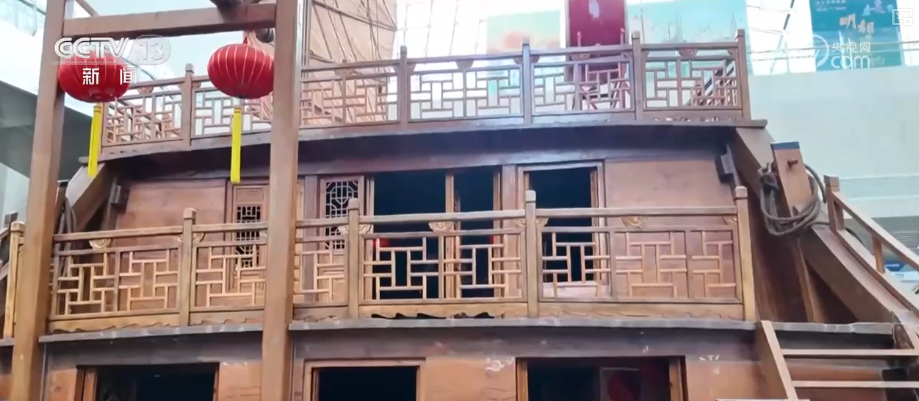
Group 1 - The exhibition "Commemorating the 620th Anniversary of Zheng He's Voyages to the West" opened at the China Maritime Museum, highlighting Zheng He's significant maritime journey that began 620 years ago [1] - A large model of the treasure ship, based on Zheng He's original vessels, is displayed prominently, showcasing its impressive four-story height and intricate internal structure [5][7] - The exhibition features over a hundred precious artifacts from the early Ming Dynasty, including a complete set of jewelry worn by noblewomen, which reflects the trade of valuable gems during Zheng He's voyages [9][10] Group 2 - Zheng He's fleet, which was the largest in the world at the time, made seven voyages between 1405 and 1433, reaching over thirty countries and regions, including East Africa [7] - The exhibition emphasizes the cultural exchange and trade relationships established through Zheng He's voyages, showcasing gifts like Ming Dynasty porcelain given to foreign dignitaries [10] - Interactive experiences allow visitors to engage with the history of Zheng He's voyages, including a digital display of the different routes taken during the expeditions [11][13] Group 3 - The museum also features various experiential spaces, such as a submarine simulation and a sailor's rest area, enhancing visitor engagement with maritime history [16] - The museum director highlights the importance of Zheng He's voyages in demonstrating China's advanced maritime technology and its contributions to global trade and openness today [18]