马政

Search documents
东西问·马年说马丨赵艺博:海昏侯墓中的“马蹄金”缘何而来?
Xin Lang Cai Jing· 2026-02-22 08:41
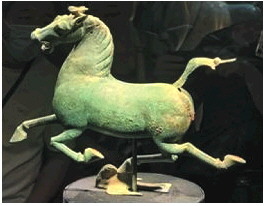
Core Viewpoint - The article discusses the significance of the "Horseshoe Gold" artifacts found in the tomb of Liu He, the grandson of Emperor Wu of Han, highlighting their cultural, historical, and artistic importance in the context of the Western Han Dynasty [3][4]. Group 1: Horseshoe Gold Artifacts - The "Horseshoe Gold" is a colloquial term for "Niao Ti Gold," characterized by its hollow center and concave bottom, resembling the foot of a heavenly horse, with 50 pieces discovered in Liu He's tomb, made of 99% pure gold and featuring intricate designs [4]. - The shape of the Horseshoe Gold is linked to the auspicious beliefs of the Western Han period, where the appearance of heavenly horses was considered a sign of good fortune, and these artifacts were not used as currency but were royal gifts to vassal kings [4]. Group 2: Role of Horses in Han Dynasty - In the Han Dynasty, horses were regarded as the "first among livestock" due to their essential roles in agriculture, transportation, and military, closely tied to the state's strength and expansion [6]. - The military demand for horses was significant, especially during Emperor Wu's reign, where cavalry became the main force in battles against the Xiongnu, leading to a systematic management of horse breeding and training by the state [6][7]. - Horses also played a crucial role in transportation and communication, forming the backbone of the extensive logistics network necessary for the vast Han Empire, including the famous Silk Road [7]. Group 3: Cultural Significance of Horses - Horses in the Han Dynasty transcended their practical uses, becoming symbols of military power, social status, and artistic expression, reflecting the era's martial spirit and reverence for strength [8]. - They were integral to significant rituals and ceremonies, often used in sacrificial offerings, which imbued them with a sacred status, symbolizing a connection between the earthly and the divine [9]. - The quality and quantity of horses were indicators of social status, with noble families using horses and carriages as symbols of wealth and power, while horses also featured prominently in literature and art, representing ideals of loyalty and ambition [9][11]. Group 4: Artifacts and Craftsmanship - The tomb of Liu He yielded over 4,000 pieces of chariot and horse equipment, primarily made of bronze, showcasing advanced craftsmanship techniques such as gilding and gold-silver inlay, reflecting the high artistic standards of the Han Dynasty [11]. - The use of these techniques indicates a sophisticated understanding of materials and aesthetics, merging functionality with visual appeal, and demonstrating the cultural significance of gold as a symbol of auspiciousness [11][13].


寻马记|以“马”为眼,感受汉代文景之治
Xin Lang Cai Jing· 2026-02-19 03:32
Core Insights - The article discusses the significance of the Han Jingdi Yangling Museum, focusing on the cultural and historical importance of horse figurines and their representation of the Han Dynasty's governance philosophy [1][3]. Group 1: Historical Context - The Yangling site reflects the "Wen-Jing governance" period of the Han Dynasty, characterized by stability and agricultural policies that benefited the people [3][4]. - Emperor Jing of Han (Liu Qi) ruled from 188 BC to 141 BC, promoting policies of light taxation and agricultural encouragement, which laid the groundwork for the later expansion under Emperor Wu [3][10]. Group 2: Artifacts and Their Significance - The museum houses hundreds of horse figurines, which are characterized by their modest size and local breed features, symbolizing the agricultural and practical nature of the Han society [4][10]. - The horse figurines are noted for their "Central Plains" characteristics, contrasting sharply with the taller and more spirited horses introduced later during the Han Wudi era [10][21]. Group 3: Horse Management Policies - During the early Han period, horse management was crucial for national defense, especially against threats from the Xiongnu, leading to the establishment of state-run horse breeding farms [10][12]. - The "Horse Recovery Order" incentivized private horse ownership, allowing citizens to avoid military service or taxes in exchange for maintaining horses, significantly boosting horse population [12][21]. Group 4: Artistic Representation - The artistic style of the horse figurines is described as simple and realistic, reflecting the frugality and practicality of the Han Dynasty's burial customs [12][25]. - The wooden horse remains found alongside the figurines indicate a focus on practicality and simplicity in funerary practices, aligning with the era's ethos of avoiding extravagance [17][25]. Group 5: Human Figurines and Cultural Insights - The museum also features human figurines, including riders and female figures, which provide insights into the social dynamics and cultural practices of the Han Dynasty [30][36]. - The figurine known as "Shanshan" exemplifies the elegance and grace of Han women, becoming a symbol of the museum's cultural heritage [36][37].
张传官:马年说马
Xin Lang Cai Jing· 2026-02-16 00:27
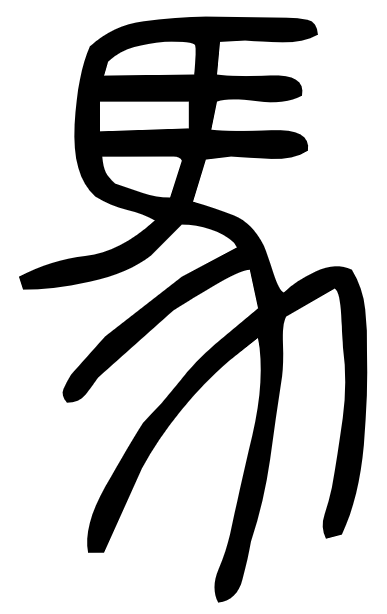
Core Insights - The article discusses the significance of horses in ancient Chinese culture, particularly their representation in the classic text "Shuo Wen Jie Zi" and the development of horse-related terminology and practices over time [1][6][12]. Group 1: Historical Significance of Horses - Horses were crucial in ancient life, serving as essential labor animals for transportation, agriculture, and military purposes, reflecting their status as "the foremost of the six domestic animals" [6][12]. - The character for "horse" in ancient Chinese was an ideogram that depicted the horse's physical features, showcasing the meticulous observation of horses by ancient people [3][5]. Group 2: Horse Terminology and Classification - The "horse" radical in "Shuo Wen Jie Zi" includes over 115 characters related to horses, indicating a comprehensive classification based on age, height, and function [5][6]. - Various terms describe the speed and characteristics of horses, demonstrating the detailed understanding and categorization of horses by ancient scholars [5][6]. Group 3: Horse Evaluation Techniques - The practice of "xiang ma" (horse evaluation) emerged as a specialized skill, focusing on assessing horses' physical traits to determine their quality [7][8]. - Historical figures like Bo Le and Jiu Fang Gao are noted for their expertise in horse evaluation, indicating the cultural importance of this practice in ancient China [8][12]. Group 4: Ancient Texts and Artifacts - Significant texts such as the "Xiang Ma Jing" and "Xu Ma" provide insights into horse evaluation methods and terminology, reflecting the sophistication of ancient equine knowledge [13][15]. - Artifacts like the bronze horse models (ma shi) were created to standardize horse evaluation, highlighting the importance of horses in governance and military strategy [19][22]. Group 5: Veterinary Practices - Ancient texts reveal a strong emphasis on veterinary care for horses, with documented methods for treating various ailments, showcasing the advanced understanding of equine health [63][64]. - The role of monkeys in protecting horses from disease is noted, illustrating cultural beliefs surrounding animal health management [64][65].
青铜文明丨“千年宝马”邀你看展 一起驰骋先秦
Xin Lang Cai Jing· 2026-02-14 08:17
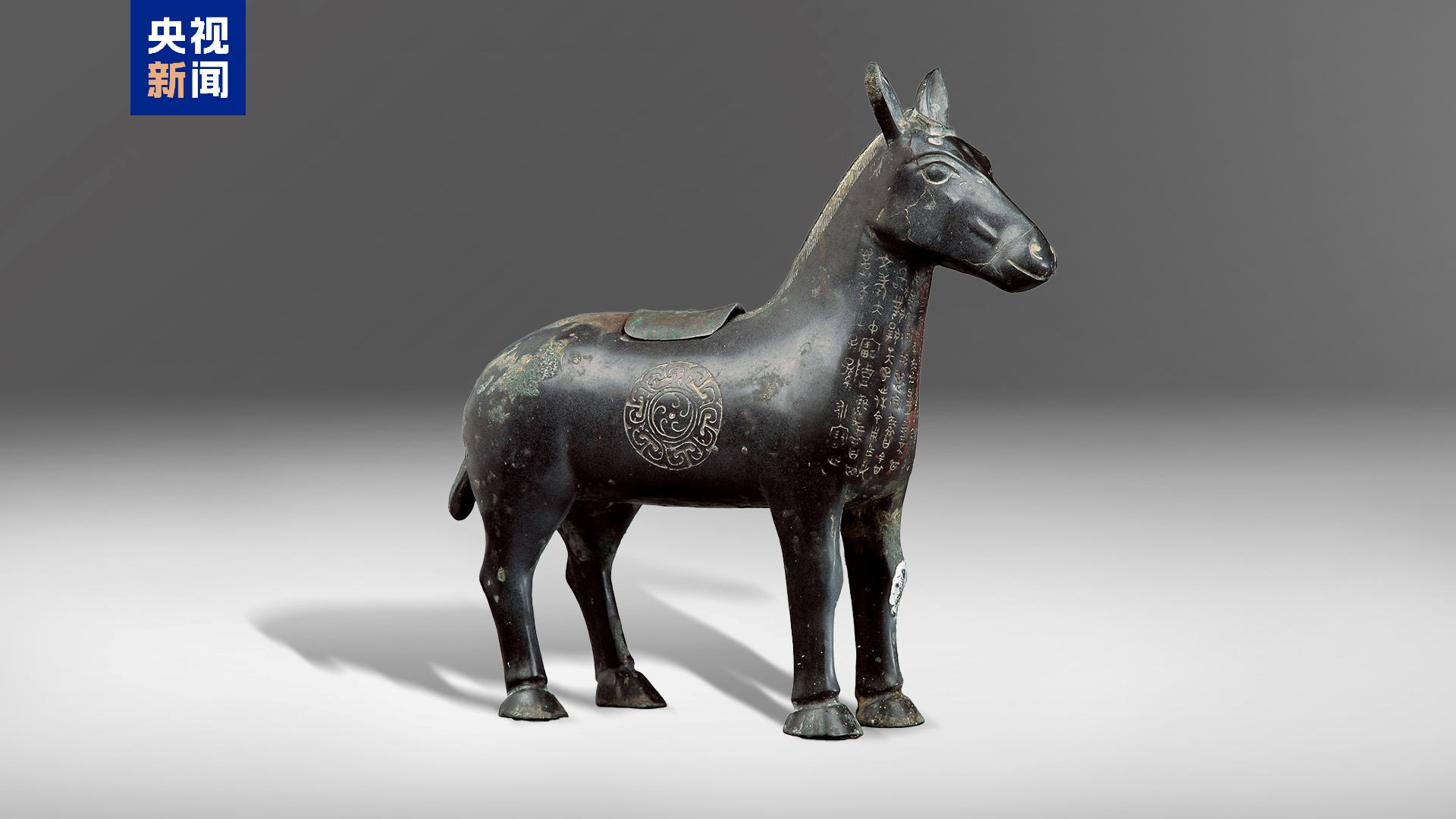
Core Viewpoint - The article highlights the significance of ancient Chinese bronze artifacts, particularly the "盠驹尊" and "秦铜车马," in understanding the historical context of horse culture and craftsmanship in ancient China. Group 1: Bronze Artifacts - The "盠驹尊" is a unique wine vessel from the Western Zhou period, modeled after a horse foal, providing valuable insights into the appearance of horses during the Shang and Zhou dynasties [1] - The vessel features a 94-character inscription detailing a ritual called "执驹," where the Zhou king awarded two foals to nobles, leading to the creation of this commemorative artifact [2][3] - The "秦铜车马" consists of two sets of bronze chariots, accurately replicating real chariots at half scale, showcasing the complexity and craftsmanship of ancient Chinese bronze work [6] Group 2: Artistic Representation of Horses - The "铜奔马," also known as "马踏飞燕," is a pinnacle of Han Dynasty sculpture, depicting a horse in dynamic motion, symbolizing strength and artistic mastery [7] - Unlike earlier representations, Han Dynasty horses are portrayed with a more majestic stature, influenced by the introduction of superior horse breeds from Central Asia after the opening of the Silk Road [7] - The "铜奔马" may have served a dual purpose as both an artistic piece and a model for horse breeding, reflecting the importance of horses in Han society [7]
古代战场上,马尾巴为何都要打结?
Xin Lang Cai Jing· 2026-01-23 16:48
Group 1 - The article discusses the historical significance of horses in human culture, emphasizing their role in transportation, agriculture, and warfare throughout history [2][3][7] - It highlights the importance of horse-drawn chariots in ancient military strategy, where the number of horses represented a nation's military strength [2][3] - The article also mentions archaeological findings, such as the well-preserved chariot and horse burial sites from the Western Zhou period, showcasing the elaborate equipment used for horses [3][4] Group 2 - The text describes the practice of tying horse tails before battle to prevent them from becoming entangled and obstructing visibility, which was crucial for military effectiveness [5][6] - It details the evolution of horse management and breeding policies during the Western Han dynasty, aimed at improving the quality and quantity of military horses [8] - The article outlines the development of horse gear, including saddles and stirrups, which significantly enhanced riding stability and combat effectiveness [9][11] Group 3 - The article notes the cultural significance of horse performances and equestrian skills in ancient China, which evolved into entertainment forms like horse shows and acrobatics [12][13] - It emphasizes the continuation of horse culture and performance traditions from the Tang dynasty to modern times, reflecting the enduring admiration for horses in society [13]