钻地弹

Search documents
算法堡垒与数字骑士:从美以伊冲突看“军事革命”
第一财经· 2026-03-27 09:32
Core Viewpoint - The article discusses the transformation of warfare in the digital age, highlighting the shift from traditional military strategies to a more algorithm-driven, transparent, and less human-centric approach to conflict. This evolution reflects a historical cycle reminiscent of the military revolution described by Geoffrey Parker, where technological advancements reshape state power and military capabilities [3][4][23]. Group 1: Historical Context and Military Evolution - Geoffrey Parker's concept of the military revolution (1500-1800) emphasizes that the rise of Western powers was driven by technological innovations that forced the evolution of state administrative capabilities [4][5]. - The emergence of the "fiscal-military state" was a response to the need for centralized control and efficient tax systems to support expensive military campaigns, marking the birth of modern nation-states [4][5]. - The transition from traditional military structures to disciplined, centralized armies laid the foundation for Western global dominance over the past three centuries [5]. Group 2: Modern Warfare Dynamics - The article notes a significant shift in the balance of power in modern warfare, where defensive strategies, such as Iran's underground networks, challenge the offensive capabilities of technologically advanced nations like the U.S. and Israel [7][8]. - The cost-effectiveness of low-cost drones against expensive military assets represents a structural challenge to the traditional notion of military superiority based on resource allocation [8][9]. - The increasing reliance on algorithms and data-driven decision-making in warfare has transformed the battlefield into a highly transparent environment, where strategic decisions can be made in milliseconds [10][11]. Group 3: Psychological and Societal Implications - The reduction in civilian casualties in modern conflicts, despite the presence of humanitarian crises, indicates a shift in the physical dimensions of war, while the logical dimensions expand significantly [11][12]. - The article suggests that the nature of warfare may evolve towards a "re-ritualization," where conflicts occur in controlled environments, potentially leading to a normalization of warfare as a background noise in society [19][20]. - The future of warfare may redefine power dynamics, where nations with advanced AI and satellite capabilities become the new "lords," while smaller states may find themselves dependent on these larger powers for military capabilities [21][22].


特朗普,最新发声!谈伊朗核设施
证券时报· 2025-07-19 14:55
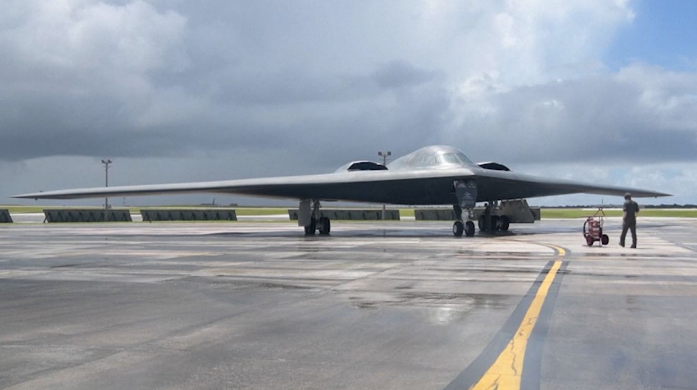
Core Viewpoint - The article discusses President Trump's assertion that Iran's nuclear facilities have been "completely destroyed" and suggests that rebuilding at new locations would be more advantageous for Iran than repairing the damaged sites [1]. Summary by Sections - **Destruction of Nuclear Facilities** - Trump claims that three Iranian nuclear facilities were fully destroyed, requiring years for restoration if Iran chooses to rebuild [1]. - The U.S. military utilized seven B-2 bombers to drop 14 bunker-busting bombs on the Fordow and Natanz facilities, and launched cruise missiles at the Isfahan facility [1]. - **Assessment of Damage** - A report from NBC indicates that only one of the three targeted nuclear facilities was "severely destroyed," while the other two sustained less significant damage, allowing for potential restoration of uranium enrichment within months if Iran decides to proceed [1]. - This assessment is part of ongoing monitoring by the U.S. government regarding Iran's nuclear capabilities and has been communicated to certain members of Congress and defense officials [1].

【环球财经】以伊冲突时间线
Xin Hua She· 2025-06-24 19:06
Core Viewpoint - The article discusses the recent military conflict between Israel and Iran, detailing a series of airstrikes and retaliatory actions, culminating in a ceasefire agreement announced by President Trump. Summary by Sections Timeline of Events - On June 13, Israel launched a large-scale airstrike against multiple Iranian targets, including nuclear facilities, resulting in the deaths of several high-ranking Iranian military officials and scientists [1] - Iran retaliated on the same day with missile strikes targeting Israeli military centers and airbases [1] - On June 14, Israel continued its airstrikes, claiming to have killed over 20 Iranian military commanders and 9 senior nuclear program experts [1] - On June 15, Israel targeted Iran's defense and nuclear project headquarters, while Iran attacked Israeli oil production facilities [2] - On June 16, Israel reported the deaths of additional Iranian intelligence officials and claimed to have destroyed a significant portion of Iran's missile launch capabilities [2] - On June 18, Iran launched long-range ballistic missiles at Israel, while Israel targeted Iranian nuclear and military facilities [3] - On June 22, Trump announced that U.S. forces had successfully struck Iranian nuclear sites, claiming to have "completely eliminated" Iran's nuclear capabilities [4][5] - On June 23, Iran launched a missile attack on a U.S. military base in Qatar, which did not result in casualties [6] - On June 24, a ceasefire agreement was reached, with both sides claiming victory and continuing to issue strong statements [6] Casualties and Damage - The conflict resulted in significant casualties, with Iran reporting 610 deaths and 4,746 injuries due to Israeli attacks since June 13 [6] Ceasefire Agreement - The ceasefire will be implemented in phases, with Iran ceasing hostilities first, followed by Israel [6]
一文速览以伊局势突变!美袭击伊朗三处核设施 伊称受损有限且可修复
Yang Shi Xin Wen Ke Hu Duan· 2025-06-22 04:00
Group 1 - The U.S. conducted airstrikes on three Iranian nuclear facilities: Fordow, Natanz, and Isfahan, using six bunker-buster bombs and 30 Tomahawk missiles, with B-2 bombers involved in the operation [2][6][8] - Iran confirmed the attacks, stating that the Fordow facility suffered partial damage that is repairable, while the Revolutionary Guard vowed to retaliate against U.S. interests in the Middle East [1][8] - Israel heightened its national alert status following the U.S. strikes, having been notified in advance of the military action [10] Group 2 - The United Nations expressed strong concern over the U.S. military actions, warning that the escalation could lead to a broader conflict and urging all parties to exercise restraint [11][12][13] - The UN Secretary-General emphasized the need for diplomatic solutions rather than military ones, highlighting the potential catastrophic consequences for regional stability and global security [12][13]
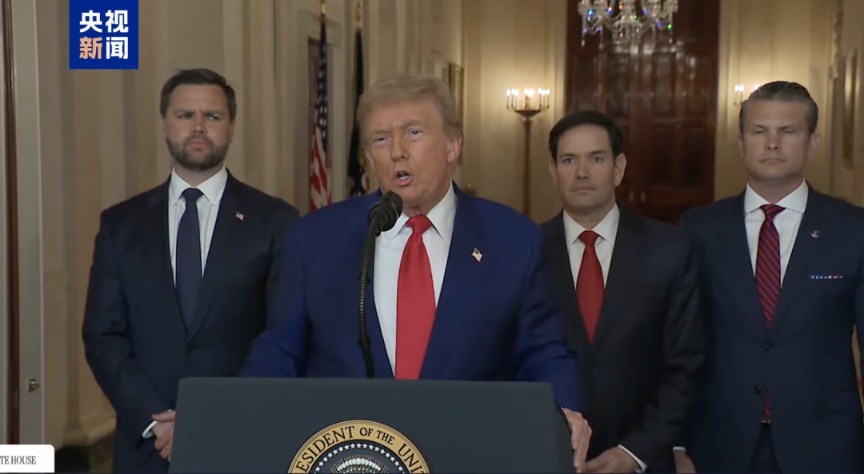
特朗普:彻底摧毁!以色列升级全国戒备状态
Zheng Quan Shi Bao· 2025-06-22 03:32
Group 1 - The core point of the news is that the United States has conducted a large-scale precision strike on three key Iranian nuclear facilities to eliminate Iran's nuclear capabilities and threats [2][7][9] - President Trump announced that the military successfully targeted the Fordow, Natanz, and Isfahan nuclear facilities, claiming that the uranium enrichment facilities have been completely destroyed [2][9] - Trump warned Iran of further attacks if they do not pursue peace, stating that the consequences would be more severe than what has been witnessed in the past eight days [2][9] Group 2 - Following the U.S. strikes, Israeli Prime Minister Netanyahu expressed gratitude towards President Trump for the military action against Iran's nuclear facilities [3][6] - The Israeli Defense Forces announced an upgrade in national alert status, prohibiting educational activities and gatherings due to the current situation [4][5] - An American official indicated that if the U.S. were to join Israel in a war against Iran, Iran is prepared to target U.S. military bases and personnel in the Middle East [7] Group 3 - The U.S. military reportedly dropped six bunker-buster bombs on the Fordow nuclear facility during the strikes [7][9] - Iran has a total of 25 to 30 facilities related to its nuclear program, with six being primary targets, including Natanz and Fordow [11] - The Fordow facility is designed to be deeply buried to withstand potential airstrikes, while the Natanz facility has underground production workshops protected by concrete walls [11]