军事革命

Search documents
算法堡垒与数字骑士:从美以伊冲突看“军事革命”
第一财经· 2026-03-27 09:32
Core Viewpoint - The article discusses the transformation of warfare in the digital age, highlighting the shift from traditional military strategies to a more algorithm-driven, transparent, and less human-centric approach to conflict. This evolution reflects a historical cycle reminiscent of the military revolution described by Geoffrey Parker, where technological advancements reshape state power and military capabilities [3][4][23]. Group 1: Historical Context and Military Evolution - Geoffrey Parker's concept of the military revolution (1500-1800) emphasizes that the rise of Western powers was driven by technological innovations that forced the evolution of state administrative capabilities [4][5]. - The emergence of the "fiscal-military state" was a response to the need for centralized control and efficient tax systems to support expensive military campaigns, marking the birth of modern nation-states [4][5]. - The transition from traditional military structures to disciplined, centralized armies laid the foundation for Western global dominance over the past three centuries [5]. Group 2: Modern Warfare Dynamics - The article notes a significant shift in the balance of power in modern warfare, where defensive strategies, such as Iran's underground networks, challenge the offensive capabilities of technologically advanced nations like the U.S. and Israel [7][8]. - The cost-effectiveness of low-cost drones against expensive military assets represents a structural challenge to the traditional notion of military superiority based on resource allocation [8][9]. - The increasing reliance on algorithms and data-driven decision-making in warfare has transformed the battlefield into a highly transparent environment, where strategic decisions can be made in milliseconds [10][11]. Group 3: Psychological and Societal Implications - The reduction in civilian casualties in modern conflicts, despite the presence of humanitarian crises, indicates a shift in the physical dimensions of war, while the logical dimensions expand significantly [11][12]. - The article suggests that the nature of warfare may evolve towards a "re-ritualization," where conflicts occur in controlled environments, potentially leading to a normalization of warfare as a background noise in society [19][20]. - The future of warfare may redefine power dynamics, where nations with advanced AI and satellite capabilities become the new "lords," while smaller states may find themselves dependent on these larger powers for military capabilities [21][22].


中国反手打出一张王牌,给美国军工命脉,套上出口枷锁
Sou Hu Cai Jing· 2025-05-12 17:06
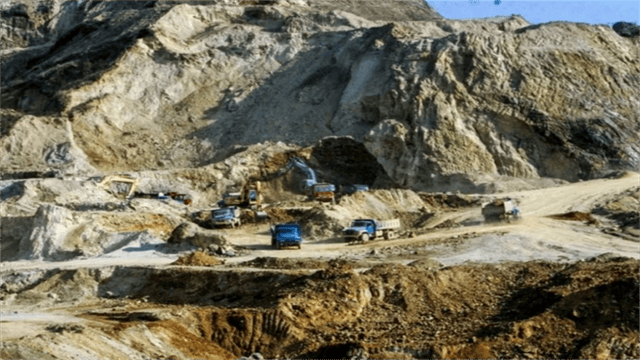
Core Viewpoint - The trade conflict between the U.S. and China has escalated, with China leveraging its dominance in rare earth elements to target critical U.S. military capabilities, revealing a deeper struggle for global technological supremacy [1][3][8] Group 1: Impact on U.S. Military - China's export restrictions on seven key rare earth elements directly threaten U.S. military technology development, particularly affecting the F-47 sixth-generation fighter jet and electronic warfare systems [3][6] - The U.S. currently relies on China for 90% of its rare earth supply, with domestic production only accounting for 15% of global output, highlighting a significant vulnerability in the U.S. defense supply chain [3][6] - The urgency in Washington's response, including invoking the Defense Production Act and seeking resources in Greenland and Ukraine, underscores the strategic shortfalls in U.S. military supply chains [3][6] Group 2: Global Supply Chain Dynamics - China's export controls are not limited to the U.S. but apply globally, complicating the supply chain for all nations and creating a "suspicion chain" regarding rare earth procurement [6][8] - The ambiguity in China's strategy allows it to maintain a moral high ground while inducing anxiety in U.S. supply chains, as defense contractors cannot easily identify military-grade rare earths [6][8] - The global interdependence on rare earths is illustrated by the irony that even if U.S. mines become operational, the processing still relies on Chinese technology, emphasizing the complexity of the global supply chain [8] Group 3: Future Implications - The ongoing rare earth conflict is fundamentally a battle for future industrial dominance, as advancements in military technology increasingly depend on these materials [8] - The competition is shifting from traditional military assets to control over critical materials, with the potential to redefine modern warfare [8] - The U.S. faces a daunting challenge in countering China's three-decade lead in rare earth production and processing, indicating a significant gap in industrial capabilities [8]