
FPV无人机

Search documents
算法堡垒与数字骑士:从美以伊冲突看“军事革命”
第一财经· 2026-03-27 09:32
Core Viewpoint - The article discusses the transformation of warfare in the digital age, highlighting the shift from traditional military strategies to a more algorithm-driven, transparent, and less human-centric approach to conflict. This evolution reflects a historical cycle reminiscent of the military revolution described by Geoffrey Parker, where technological advancements reshape state power and military capabilities [3][4][23]. Group 1: Historical Context and Military Evolution - Geoffrey Parker's concept of the military revolution (1500-1800) emphasizes that the rise of Western powers was driven by technological innovations that forced the evolution of state administrative capabilities [4][5]. - The emergence of the "fiscal-military state" was a response to the need for centralized control and efficient tax systems to support expensive military campaigns, marking the birth of modern nation-states [4][5]. - The transition from traditional military structures to disciplined, centralized armies laid the foundation for Western global dominance over the past three centuries [5]. Group 2: Modern Warfare Dynamics - The article notes a significant shift in the balance of power in modern warfare, where defensive strategies, such as Iran's underground networks, challenge the offensive capabilities of technologically advanced nations like the U.S. and Israel [7][8]. - The cost-effectiveness of low-cost drones against expensive military assets represents a structural challenge to the traditional notion of military superiority based on resource allocation [8][9]. - The increasing reliance on algorithms and data-driven decision-making in warfare has transformed the battlefield into a highly transparent environment, where strategic decisions can be made in milliseconds [10][11]. Group 3: Psychological and Societal Implications - The reduction in civilian casualties in modern conflicts, despite the presence of humanitarian crises, indicates a shift in the physical dimensions of war, while the logical dimensions expand significantly [11][12]. - The article suggests that the nature of warfare may evolve towards a "re-ritualization," where conflicts occur in controlled environments, potentially leading to a normalization of warfare as a background noise in society [19][20]. - The future of warfare may redefine power dynamics, where nations with advanced AI and satellite capabilities become the new "lords," while smaller states may find themselves dependent on these larger powers for military capabilities [21][22].


黑科技重构奥运视野
Xin Lang Cai Jing· 2026-02-21 06:56
Group 1 - The article discusses the innovative broadcasting technologies used in the Milan-Cortina Winter Olympics, highlighting the integration of AI and advanced filming techniques to enhance the viewer experience [3][4][5]. - The use of FPV (First Person View) drones marks a historical first in Olympic broadcasting, with 25 drones deployed, including 15 FPV drones, allowing for close-up and dynamic coverage of athletes [4][5]. - AI-generated real-time data panels provide viewers with detailed statistics on athletes' performance, such as maximum speed and acceleration, enhancing the understanding of the competition [5][6]. Group 2 - The collaboration between OBS and Chinese technology companies has led to the development of a real-time 360° replay system, utilizing multiple AI cameras to capture events from various angles [5][6]. - The broadcasting team aims to capture not only the athletic performances but also the emotional moments of athletes, such as reunions with family, adding a human touch to the Olympic narrative [6]. - The integration of technology and AI in broadcasting is portrayed as a means to translate athletes' experiences into relatable visual language, emphasizing the emotional core of sports [6].

欧洲已经寝食难安——四年的数据显示俄罗斯的战争成本正在降低
Sou Hu Cai Jing· 2026-02-16 07:03
Core Insights - The article highlights a significant transformation in Russia's military strategy over the past four years, shifting from heavy firepower tactics to a reliance on drones and guided munitions, indicating an increasing capability to sustain warfare [1][15]. Group 1: Military Strategy Changes - Russia's military strategy has evolved from traditional heavy firepower to a consumption warfare model supported by drones and guided munitions [1]. - The shift includes a transition from expensive heavy weapons to more cost-effective high-tech solutions, and from soldier-centric operations to a focus on robots and drones [1]. - The nature of attacks has changed from precision strikes to indiscriminate destructive attacks, raising concerns in Europe about Russia's enhanced ability to maintain warfare [1]. Group 2: Casualty Statistics - Despite an overall decrease in casualty rates, the death toll among Russian forces has significantly increased, with projected casualties rising from 106,000 in 2022 to 430,000 in 2024, before declining to 418,000 in 2025 [3]. - The ratio of Russian military casualties has shifted from approximately 1:3 (killed to wounded) in the early stages of the war to 1:1.3 by 2025, largely due to the effectiveness of Ukrainian FPV drones [3]. - Ukrainian forces maintain a casualty ratio of 1:5, with some regions reporting even lower ratios, indicating effective protective measures through advanced technology [3]. Group 3: Equipment Losses - Since 2022, Russian forces have lost 9,655 main battle tanks, nearing the total inventory of NATO member states, with further losses expected in the coming years [5]. - The loss of armored vehicles and artillery is severe, with reports indicating that Russian forces have lost at least 9,200 armored vehicles and 35,600 artillery pieces from 2022 to 2025 [8]. - The operational effectiveness of Russian tanks has diminished due to increased drone strikes, leading to a significant reduction in their presence on the battlefield [5][8]. Group 4: Air and Naval Capabilities - Russian air forces have not established air superiority, suffering losses of 434 aircraft and 347 helicopters, while increasing the use of guided munitions significantly [10]. - The Russian Black Sea fleet has faced substantial losses, with approximately 33% of its operational vessels destroyed, severely impacting its naval capabilities [10]. - The reduction in naval power has led to a 30% drop in Russian oil exports, indicating a broader economic impact from military losses [10]. Group 5: Future Projections and Implications - Despite heavy losses, Russia's drone capabilities are expanding, with projections indicating a fivefold increase in long-range drone launches by 2025, potentially reaching 1.02 million by 2026 [13]. - The ongoing conflict poses a dilemma for Europe, as it must choose between fully supporting Ukraine or maintaining the status quo, which could lead to further escalation of the conflict [15]. - The article suggests that without a strategic shift, Europe may face a passive acceptance of an escalating war situation, highlighting the urgency for a reassessment of support for Ukraine [15].
打造“空地一体”智能警务新体系
Xin Lang Cai Jing· 2026-01-11 19:16
Group 1 - The "Low-altitude Police Practical Combat Center" and "Drone Intelligent Reconstruction R&D Workshop" have been officially launched in Haidong City, focusing on "independent research and development, intelligent adaptation" to create a comprehensive technical system for public safety governance [1] - The Haidong Public Security has established a professional drone team named "Cloud Arrow," which has successfully developed over 60 FPV drones and is in the process of patenting a police-integrated flying shooting device [1] - The newly developed "Haidong Public Security Cloud Arrow Intelligent Patrol and Early Warning System" can intelligently identify and warn about various abnormal behaviors with an accuracy rate exceeding 92% [1] Group 2 - Haidong Public Security has strengthened skills training and actively explored low-altitude policing and intelligent equipment applications, establishing a fixed airport network covering 6 county branches and 27 central police stations [2] - A new police operation mode, "1+3+6 air-ground integration," has been preliminarily formed, allowing for one-click takeoff of all drones within the city [2]
乌克兰军队今年接收300万架FPV无人机
Xin Hua She· 2025-12-24 21:43
Group 1 - The core viewpoint of the article highlights that Ukraine's armed forces are set to receive a total of 3 million first-person view (FPV) drones this year, which is nearly 2.5 times the amount received last year [1] - The Minister of Defense of Ukraine, Shmyhal, emphasized the increasing role of unmanned systems on the battlefield and stated that developing innovative combat tools is a top priority for Ukraine [1] - The majority of the drones currently in service with the Ukrainian military are domestically produced [1] Group 2 - This year, the Ukrainian military has received nearly 15,000 ground robots, which is several times more than last year [1] - The tasks performed by these ground robots include logistics, reconnaissance, mine laying, and mine clearance [1] - Some of the ground robots are equipped with combat modules, enabling them to perform assault and defensive operations [1]
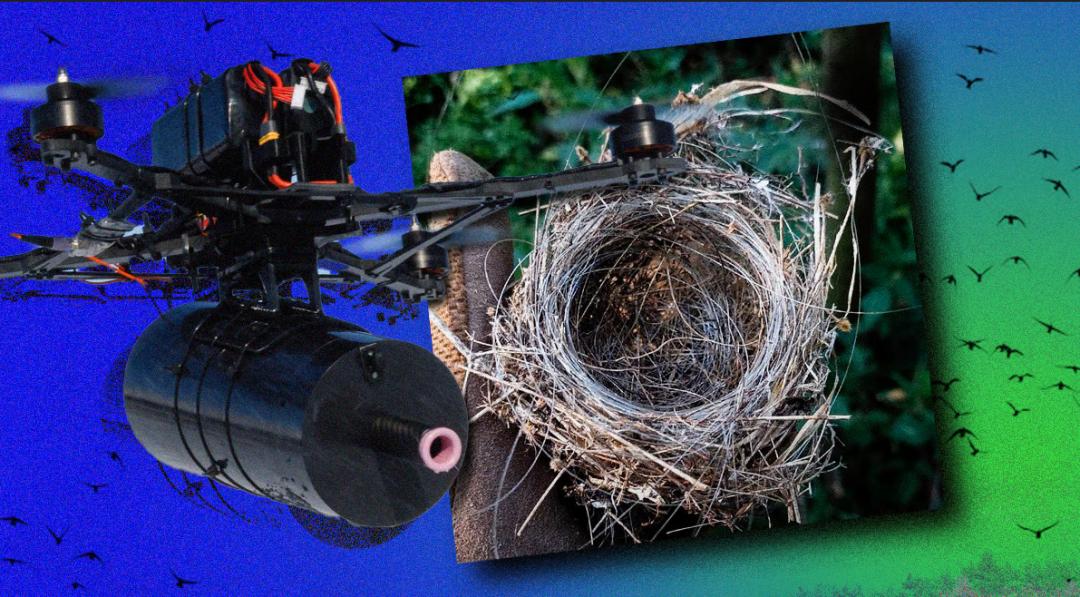
乌克兰的鸟用战场上的光纤筑巢,有的还用防鸟刺造窝,鸟类工业革命来了?
3 6 Ke· 2025-12-04 00:21
Core Viewpoint - Birds have been observed using fiber optic materials to construct nests, marking them as the third known species on Earth to utilize such technology, following humans and chickens [1] Group 1: Fiber Optic Usage by Birds - The Ukrainian National Guard's 12th Special Forces Brigade shared an image of a bird's nest made primarily from FPV drone fiber optics, showcasing a unique and cyberpunk-like scenario [3] - Previous instances of birds, such as magpies and crows, have been documented using anti-bird spikes to create "armored nurseries," indicating a trend of birds incorporating unconventional materials into their nesting practices [5][6] Group 2: Impact of FPV Drones in Warfare - FPV drones, capable of real-time transmission and maneuverability, have been modified in the Ukraine conflict to penetrate armor and attack tanks, with Ukrainian forces reportedly destroying 80%-90% of Russian armored vehicles using these drones [10] - The use of fiber optics in FPV drones has become crucial as it mitigates the vulnerability to electronic interference, allowing for uninterrupted signal transmission even in complex electronic warfare environments [12] Group 3: Environmental Concerns - The discarded fiber optics from FPV drones create extensive artificial "webs" across Ukrainian landscapes, posing risks to agriculture and wildlife, including endangered species [14] - Research indicates that these fiber optics are difficult to biodegrade, potentially remaining in the environment for over 600 years, raising concerns about long-term ecological impacts [17] Group 4: Bird Nesting Behavior - Birds exhibit flexibility in nesting material selection, often opting for readily available, sturdy, and camouflaged materials, which explains their choice of fiber optics for nest construction [20][21] - The use of fiber optics may lead to increased mortality rates among chicks due to the material's potential to entrap or injure them, raising questions about the long-term viability of such nesting practices [24][25] Group 5: Adaptive Behavior of Birds - If the use of artificial materials like fiber optics results in higher chick mortality, birds are likely to abandon such nesting sites in future breeding seasons, demonstrating their ability to learn from experience [27]
“十五五”俄罗斯民用无人机行业市场全景调研与投资前景展望分析(2026)-中金企信发布
Sou Hu Cai Jing· 2025-10-30 02:42
Core Insights - The civil drone industry is rapidly evolving, driven by both consumer and industrial segments, with significant growth potential in various applications [6][9][10]. Government Initiatives - Governments worldwide are actively promoting the drone industry as a strategic emerging sector, focusing on economic upgrades, technological advancements, and national security [7][8]. - Major economies like China, the US, and the EU are implementing policies to foster the development of the civil drone sector, aiming for substantial market growth by 2030 [8]. Market Growth - The global civil drone market is projected to grow from CNY 65.74 billion in 2019 to CNY 193.83 billion by 2024, with a compound annual growth rate (CAGR) of 24.14% [9]. - China is the largest market for civil drones, expected to account for over 57% of the global market share by 2024 [9]. Segment Dynamics - The industrial drone segment is becoming the dominant force in the civil drone market, surpassing the consumer segment since 2021, driven by applications in agriculture, logistics, and emergency services [10][11]. - The consumer drone market is also growing, with a projected increase from CNY 38.14 billion in 2019 to CNY 77.53 billion by 2024, at a CAGR of 15.24% [10]. Competitive Landscape - The industrial drone sector exhibits a competitive landscape characterized by diverse technological needs and localized service demands, leading to a "multi-strong competition" scenario [12]. - Companies like DJI are leading the consumer drone market, while the industrial segment sees various players specializing in specific applications [11][12]. Future Outlook - The civil drone market in China is expected to grow from CNY 43.51 billion in 2019 to CNY 110.85 billion by 2024, with industrial drones driving this growth [11]. - The ongoing technological advancements and policy support are anticipated to further expand the market, with industrial drones poised for explosive growth [12].

反无人机深度:构建无人装备时代钢铁穹顶
Changjiang Securities· 2025-08-14 05:41
Investment Rating - The industry investment rating is "Positive" and maintained [12] Core Insights - The role of drones in modern warfare has rapidly increased, highlighting the urgent need for counter-drone systems to address the challenges posed by low, small, and slow targets [6][24] - Ukraine's use of FPV drones in June 2025 resulted in significant damage to Russian strategic bombers, demonstrating the high cost-effectiveness and flexibility of drones in warfare [3][24] - The counter-drone systems utilize various detection methods such as radar, electro-optical, and radio detection, and employ high-energy lasers and microwave technologies for effective low-cost countermeasures [7][43] Summary by Sections Drone Warfare and Countermeasures - The conflict in Ukraine has shown that small drones can achieve high damage ratios, necessitating the development of counter-drone systems [6][36] - Ukraine's strategic drone strikes in June 2025 targeted multiple Russian bomber bases, destroying over 40 bombers, which is 34% of Russia's strategic bomber fleet [3][24] - The characteristics of small drones make traditional air defense systems ineffective, thus counter-drone systems are becoming essential in modern warfare [43][56] Global Development of Counter-Drone Systems - Various countries are developing counter-drone systems, with the US and Israel leading in technology and system quantity [8][67] - The market for counter-drone systems is expected to grow significantly, with a projected CAGR of 24.7% from 2024 to 2031, reaching a market size of $7.51 billion by 2031 [9][10] Investment Strategy - The rapid expansion of drone applications across various fields is driving the demand for counter-drone equipment [10] - Chinese military enterprises have a comprehensive layout in the counter-drone system sector, with several listed companies involved in various aspects of the industry [10][9] - Recommended companies for investment include those involved in upstream components and complete counter-drone products [10][13]


泽连斯基主持召开反腐败专项会议,披露重大贪腐案件
Xin Jing Bao· 2025-08-03 22:50
Core Points - Ukrainian President Zelensky convened a special anti-corruption meeting on August 2 to hear reports from the heads of the National Anti-Corruption Bureau and the Special Anti-Corruption Prosecutor's Office [1] - A significant corruption case involving the Ukrainian parliament, local governments, and military systems was recently uncovered, involving current lawmakers and officials in procurement fraud related to electronic warfare equipment and FPV drones [1] - This case is the first major announcement from the anti-corruption agencies following the passage of a new law on July 31 that aims to ensure the independent operation of anti-corruption institutions [1] - On July 22, Zelensky approved a law that aimed to undermine the independence of anti-corruption agencies, which led to public protests across Ukraine [1] - In response to public pressure, Zelensky proposed an amendment to safeguard the independence of anti-corruption institutions, which was subsequently passed by the parliament within a week [1]
乌克兰披露重大贪腐案件!涉议会、地方政府、军队系统……
Zheng Quan Shi Bao Wang· 2025-08-03 00:14
Core Points - Ukraine's President Zelensky convened a special anti-corruption meeting on August 2 to discuss a significant corruption case involving parliament, local government, and military systems [1] - The case involves current parliament members, local government heads, and officers from the National Guard of Ukraine, primarily related to procurement fraud in electronic warfare equipment and FPV drones [1] - This is the first major case announced by Ukraine's anti-corruption agencies following the passage of a new law on July 31 aimed at ensuring the independent operation of anti-corruption institutions [1] Legislative Context - On July 22, Zelensky approved a law that aimed to undermine the independence of Ukraine's anti-corruption institutions, leading to widespread protests across the country [1] - The protests marked the first large-scale national demonstrations since the onset of the Russia-Ukraine conflict in 2022 [1] - In response to public pressure, Zelensky submitted a draft law to the Ukrainian parliament on July 24 to restore the procedural powers and independence of the National Anti-Corruption Bureau and the Special Anti-Corruption Prosecutor's Office [1]