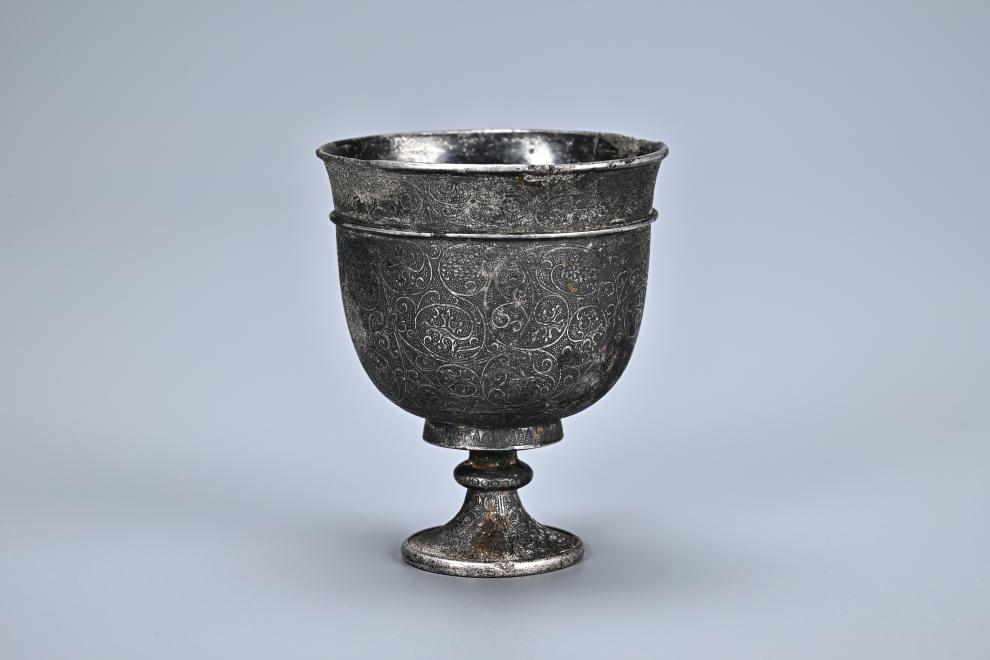
银高足杯

Search documents
陕西考古最新发现
Xin Lang Cai Jing· 2026-01-08 00:26
Core Insights - Archaeologists in Xi'an have discovered a Tang Dynasty tomb containing various artifacts, including ceramics, bronze items, and gold and silver objects with Western characteristics [1][3]. Group 1: Archaeological Findings - The excavation is part of a project in the Jia Li Village renovation, conducted from January 2022 to April 2024, focusing on ancient tombs within the project area [3]. - The tomb, numbered M228, belongs to Ma Sanniang, the wife of Dong Shun, a military official, and dates back to the first year of the Da Zhou Shengli era (698 AD) [3]. - A total of 19 items (sets) were unearthed, including ceramics, bronze, iron, gold, silver, and stone artifacts, with notable pieces being a gold hairpin and silver vessels [3][5]. Group 2: Cultural Significance - The gold and silver items primarily consist of female adornments and storage vessels, featuring Western-style grape and honeysuckle patterns, indicating close interactions between the Central Plains and Western regions during that period [5]. - The discovered silver vessels, including a three-legged pot and a high-footed cup, hold significant research value for studying cultural exchanges and trade during the prosperous Tang Dynasty [5].

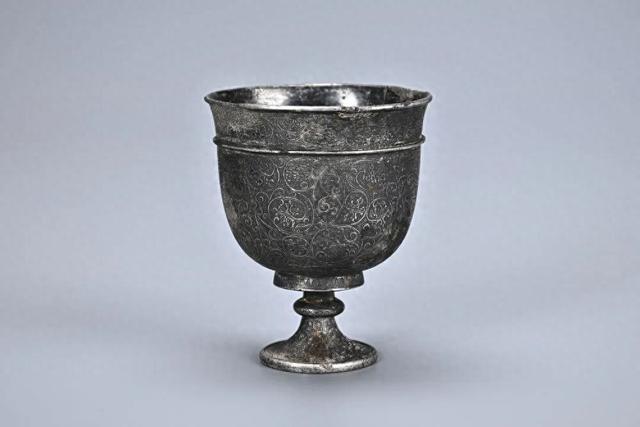
西域特色金银器、波斯萨珊银币……陕西唐代马三娘墓考古出土多件器物
Yang Shi Xin Wen· 2026-01-06 09:43
Core Viewpoint - The excavation results of the Tang Dynasty tomb of Ma Sanniang, the wife of Dong Shunxian, were announced by the Shaanxi Provincial Institute of Archaeology, revealing significant findings that enhance the understanding of early Tang burial practices and cultural exchanges [1][22]. Group 1: Excavation Details - The excavation took place from January 2022 to April 2024, in conjunction with the renovation project in Jiali Village, Chang'an District, Xi'an [1]. - The tomb, designated M228, dates back to the first year of the Da Zhou Shengli era (698 AD) and is well-preserved with a clear chronological record [1]. Group 2: Artifacts Discovered - A total of 19 items (or sets) were unearthed, including ceramics, bronzes, ironware, gold and silver items, and stone tools [1]. - The gold and silver artifacts primarily consist of female adornments and storage vessels, showcasing intricate designs and a predominant grape and honeysuckle pattern, indicating close interactions between the Central Plains and the Western Regions [13]. Group 3: Cultural Significance - The tomb yielded 19 Sasanian silver coins, with two featuring unique symbols, alongside nearly a thousand Kaiyuan Tongbao coins, which exhibit distinct characteristics of the Wude currency [17]. - The variety and distinct characteristics of the burial items reflect strong foreign cultural influences, enriching the early Tang burial data in the Xi'an region and aiding in the completion of the Dong family genealogy [22].
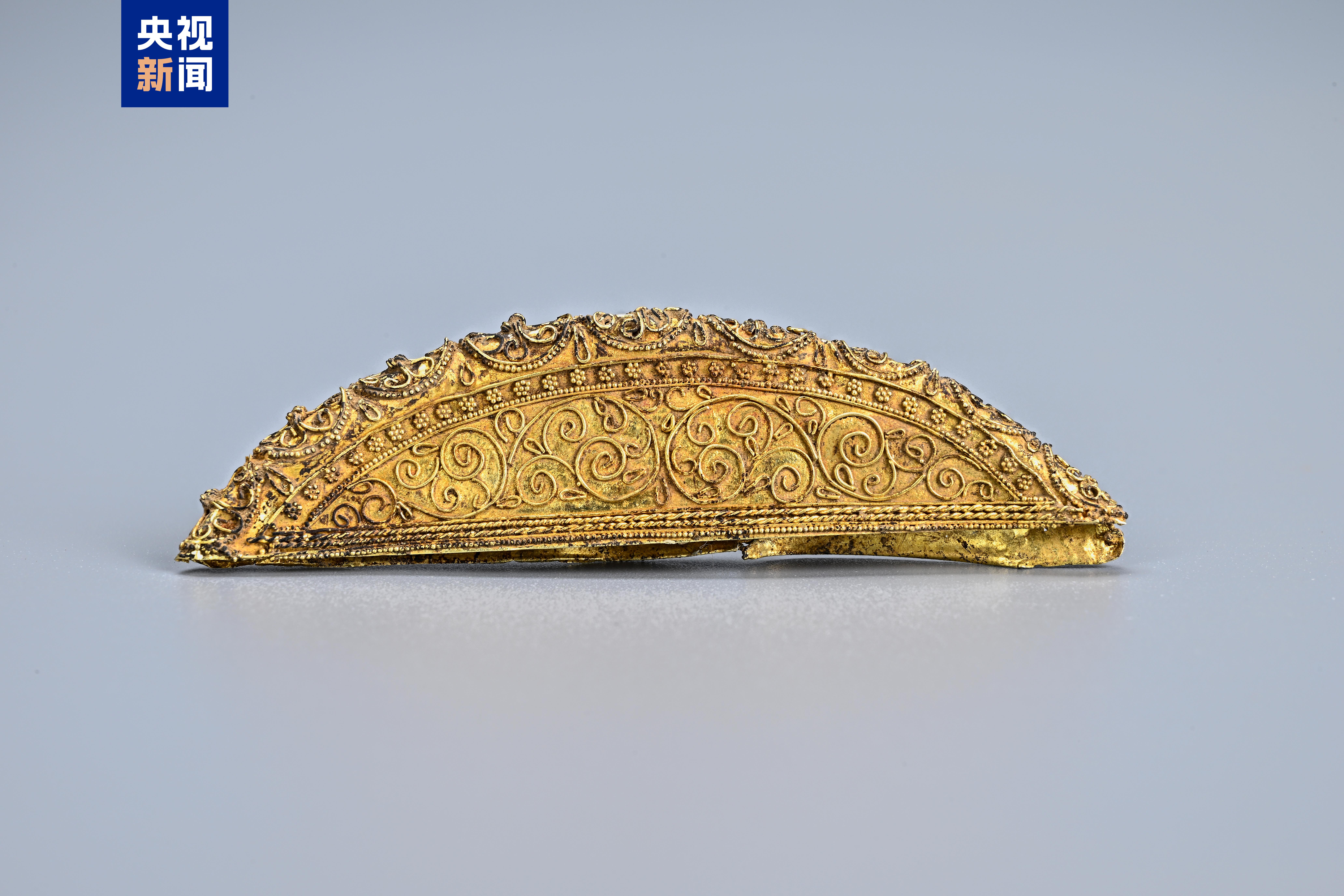
陕西考古新发现:唐代马三娘的墓里,有西域特色金银器等
Xin Hua Wang· 2026-01-06 04:04
Core Viewpoint - Archaeological discoveries in Xi'an reveal a Tang Dynasty tomb containing various artifacts, highlighting the cultural exchanges between the Central Plains and the Western Regions during the Tang Dynasty [1][4]. Group 1: Archaeological Findings - A Tang Dynasty tomb was discovered in Xi'an, yielding ceramics, bronze, and gold-silver artifacts with Western characteristics [1]. - The tomb, identified as M228, belonged to Ma Sanniang, the wife of Dong Shunxian, and dates back to the first year of the Da Zhou Shengli era (698 AD) [2]. - A total of 19 items (sets) were unearthed, including exquisite gold and silver items such as a gold comb back, silver tripod jar, and silver high-footed cup [2][5]. Group 2: Cultural Significance - The gold and silver artifacts primarily consist of female hair accessories and storage vessels, featuring Western-style grape and honeysuckle patterns, indicating close interactions between the Central Plains and Western Regions [4]. - The discovered silver tripod jar and high-footed cup, along with the gold and silver items, hold significant research value for studying cultural exchanges and trade during the prosperous Tang Dynasty [4].