
开元通宝

Search documents
这里“钱”味儿十足
Xin Lang Cai Jing· 2026-01-11 05:54
Core Theme - The article explores the historical significance and evolution of currency in China, highlighting the cultural and economic implications of various forms of money throughout different dynasties [1][2][3][4][5] Group 1: Historical Context - The China Currency Museum, established in 1992, serves as a showcase for the rich history and cultural significance of currency in China, located in a former financial center [1] - The use of shells as a medium of exchange dates back to the Shang and Zhou dynasties, symbolizing wealth and preciousness, leading to the term "宝贝" [1] - The evolution of currency forms, such as the transition from shell money to metal coins, reflects the development of Chinese civilization and economic practices [2][3] Group 2: Currency Forms and Innovations - The "布币" (cloth money) is closely related to agricultural tools, illustrating the connection between currency and the agrarian society of ancient China [2] - The "方孔圆钱" (square hole round coins) was chosen for its aesthetic appeal and practical advantages in manufacturing and usage [3] - The "金错刀" (gold-inlaid knife coin) exemplifies innovative currency design aimed at enhancing value and acceptance [3] Group 3: Economic Implications - The historical context of currency stability is emphasized through the example of the 1948 currency reform in Nanjing, which led to severe inflation and loss of purchasing power [2] - The significance of silver as a currency material during the Ming and Qing dynasties is highlighted, establishing a silver standard that facilitated international trade [4] - The issuance of small denomination currency during the Anti-Japanese War reflects the adaptability of currency systems in response to economic challenges [5] Group 4: Cultural Significance - The political and economic dimensions of currency are intertwined, as seen in historical artworks like "清明上河图" (Along the River During the Qingming Festival), which depict the vibrancy of the economy [4] - The development of the world's earliest paper currency, "交子" (jiaozi), marks a significant leap in currency forms, showcasing China's innovative contributions to global monetary systems [4][5] - The transition to digital currency represents the latest evolution in China's monetary landscape, expanding the reach of the Renminbi globally [5]
西域特色金银器、波斯萨珊银币……陕西唐代马三娘墓考古出土多件器物
Yang Shi Xin Wen· 2026-01-06 09:43
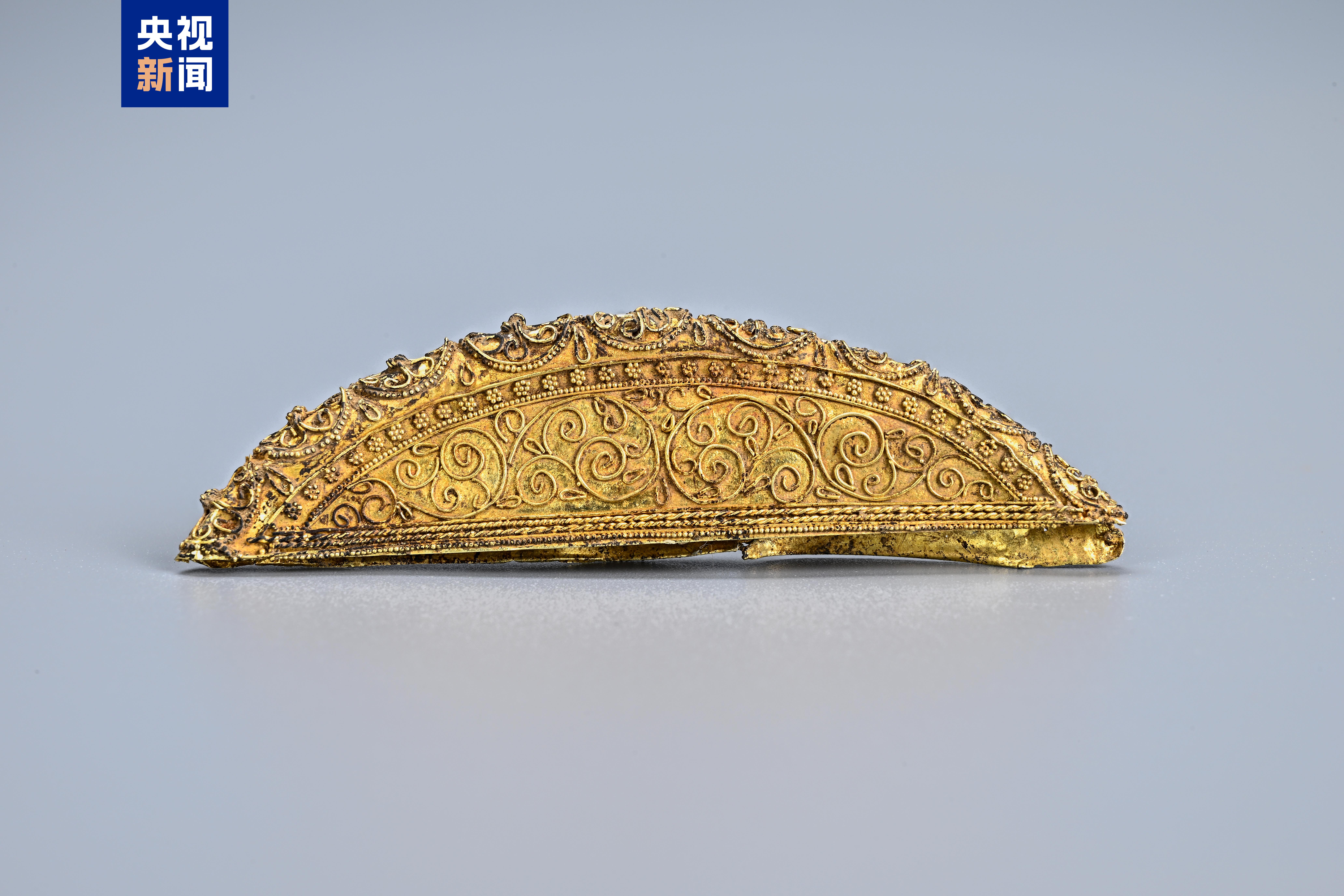
Core Viewpoint - The excavation results of the Tang Dynasty tomb of Ma Sanniang, the wife of Dong Shunxian, were announced by the Shaanxi Provincial Institute of Archaeology, revealing significant findings that enhance the understanding of early Tang burial practices and cultural exchanges [1][22]. Group 1: Excavation Details - The excavation took place from January 2022 to April 2024, in conjunction with the renovation project in Jiali Village, Chang'an District, Xi'an [1]. - The tomb, designated M228, dates back to the first year of the Da Zhou Shengli era (698 AD) and is well-preserved with a clear chronological record [1]. Group 2: Artifacts Discovered - A total of 19 items (or sets) were unearthed, including ceramics, bronzes, ironware, gold and silver items, and stone tools [1]. - The gold and silver artifacts primarily consist of female adornments and storage vessels, showcasing intricate designs and a predominant grape and honeysuckle pattern, indicating close interactions between the Central Plains and the Western Regions [13]. Group 3: Cultural Significance - The tomb yielded 19 Sasanian silver coins, with two featuring unique symbols, alongside nearly a thousand Kaiyuan Tongbao coins, which exhibit distinct characteristics of the Wude currency [17]. - The variety and distinct characteristics of the burial items reflect strong foreign cultural influences, enriching the early Tang burial data in the Xi'an region and aiding in the completion of the Dong family genealogy [22].

陕西西咸新区沣东新城考古发掘25座中小型唐墓
Bei Jing Ri Bao Ke Hu Duan· 2025-12-12 10:09
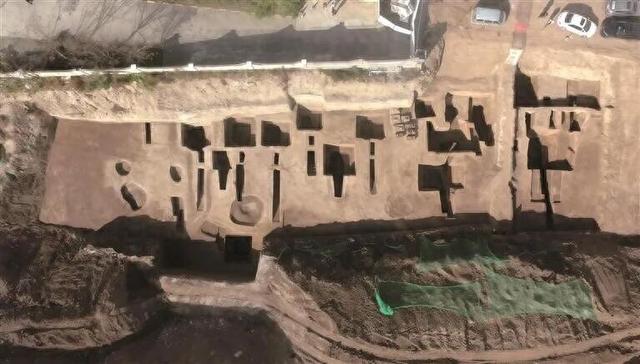
Core Insights - A Tang Dynasty burial site has been discovered in the Fengdong New City of Xixian New Area, consisting of 26 tombs, 5 pits, and 1 well, with most tombs dating back to the Tang Dynasty [1][6]. Group 1: Archaeological Findings - The excavation conducted by the Institute of Archaeology of the Chinese Academy of Social Sciences revealed 25 Tang Dynasty tombs, including 2 brick chamber tombs, 22 earthen cave tombs, and 1 vertical pit tomb [3][6]. - Tomb M5, a single-brick chamber tomb, was severely looted, yielding 19 artifacts, including 1 bronze mirror, 1 Kaiyuan Tongbao coin, and various ceramic figurines [3][6]. - Tomb M6, an earthen cave tomb, contained 21 artifacts, including 15 ceramic figurines and 2 ceramic horse figurines, but was also heavily disturbed [3][6]. Group 2: Significance of the Discovery - The burial site is located approximately 3 kilometers north of the western part of the Tang Chang'an City and is characterized as a medium to small-sized burial site [6]. - The discovery of this Tang Dynasty burial site provides significant data for the study of medium and small-sized tombs in the Sui and Tang Chang'an period, indicating a long duration of use primarily from the early to mid-late Tang Dynasty [6].
西晋壁画墓和敦煌博物馆:藻井上的那朵莲花丨从长安到敦煌(7)
Jing Ji Guan Cha Bao· 2025-07-22 06:00
Group 1 - The article discusses the historical significance and cultural value of the Western Jin mural tombs located in Dunhuang, highlighting their artistic and archaeological importance [1][2][3] - The discovery of the mural tombs in the 1940s and subsequent preservation efforts are emphasized, showcasing the challenges faced during excavation and the importance of safeguarding these artifacts [1][2][4] - The article invites readers to explore the rich history of the Silk Road through the lens of these ancient sites, encouraging a deeper understanding of the cultural exchanges that occurred in this region [1][2][3] Group 2 - The Western Jin mural tombs are recognized as a significant cultural heritage site, with six tombs identified as particularly valuable for their artistic merit and historical context [2][3] - The article describes the architectural features of the tombs, including the intricate designs and symbolic representations found within, such as the lotus motifs that reflect Buddhist influences [19][20] - The narrative connects the tombs to broader themes of life, death, and the afterlife in ancient Chinese culture, illustrating how these sites serve as a window into the beliefs and practices of the time [19][20][21] Group 3 - The Dunhuang Museum is highlighted as a key institution for preserving and showcasing the artifacts from the region, including items from the Han and Tang dynasties that reflect the area's historical significance [20][21][22] - The article notes the diverse range of artifacts found in the museum, from military supplies to everyday items, which collectively illustrate the lifestyle and culture of ancient Dunhuang residents [21][22][23] - The importance of trade and cultural exchange along the Silk Road is underscored, with references to the various influences that shaped the region's development over centuries [28][29][30]