长征十二号甲型火箭

Search documents
会议召开机构干活了!航天卫星不能错过哪些重要节点和细分方向?
Sou Hu Cai Jing· 2025-12-08 11:05
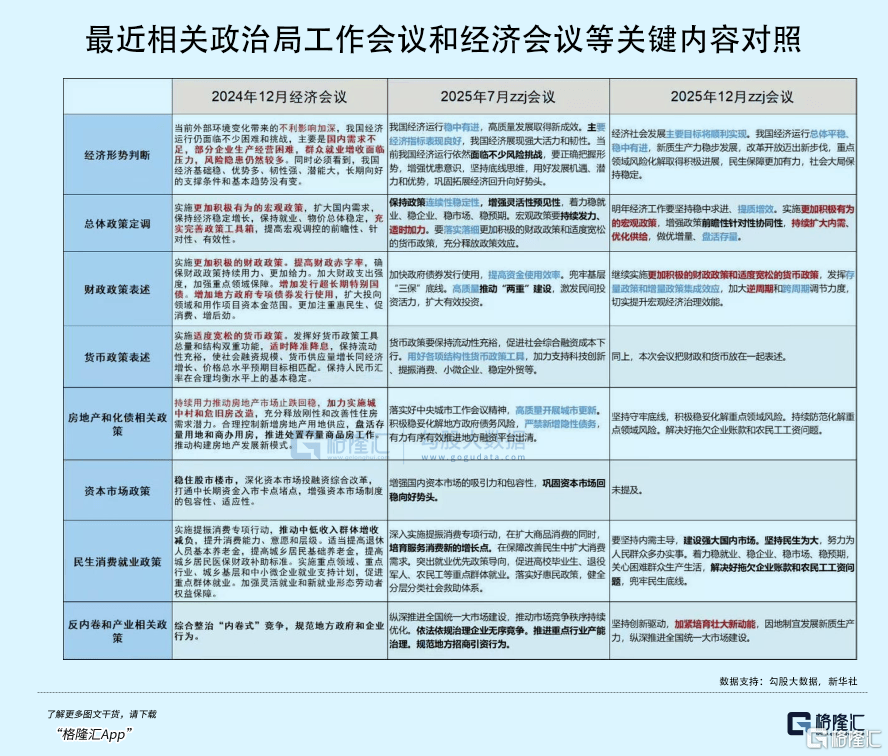
Core Insights - The recent ZZJ work meeting in December has set the tone for the economy in 2024, emphasizing stability and quality improvement, with more proactive fiscal policies and moderately loose monetary policies [1][2] - The meeting highlighted the need for a comprehensive policy toolbox to support macroeconomic stability, combining both existing and new policies [2] Economic Policy Summary - **Economic Outlook**: The economy faces challenges such as insufficient domestic demand and risks, but the foundational conditions remain strong [2] - **Fiscal Policy**: A more proactive fiscal policy is to be implemented, including increasing the fiscal deficit ratio and enhancing fiscal spending efficiency [2] - **Monetary Policy**: The monetary policy will remain moderately loose, with measures such as potential interest rate cuts and maintaining liquidity [2] Market Reaction - Following the announcement of the meeting, there was significant capital inflow into sectors like computing hardware and innovative chips, indicating strong institutional interest [1][3] - The technology sector, particularly AI computing hardware and commercial aerospace, has shown robust performance, with various sub-sectors experiencing substantial gains [1][4] Investment Themes - **Commercial Aerospace**: Identified as a key investment theme due to its strong policy support and technological advancements, with significant upcoming events expected to drive growth [6][9] - **AI Computing**: The AI computing sector is also highlighted as a major area of investment, with strong performance indicators and market interest [4][6] Sector-Specific Opportunities - **Key Sectors**: The commercial aerospace sector is supported by a comprehensive action plan from the National Space Administration, which includes funding and streamlined processes for development [6][9] - **Technological Innovations**: Upcoming launches and technological breakthroughs in the aerospace sector are expected to create new investment opportunities [6][12] Summary of Investment Lines - **Four Main Lines**: The market is currently focused on four main lines: commercial aerospace, cross-strait speculation, AI computing, and financial sector movements [4][6] - **Long-term Focus**: The commercial aerospace sector is particularly noted for its long-term potential due to ongoing policy and technological support [6][9]




会议召开机构干活了!航天卫星不能错过哪些重要节点和细分方向?
格隆汇APP· 2025-12-08 10:47
Core Viewpoint - The article emphasizes the positive signals from the December economic meetings, indicating a focus on stabilizing the economy while promoting quality and efficiency improvements, with more proactive fiscal policies and moderately loose monetary policies expected for 2024 [5][6]. Economic Policy Direction - The economic meetings set a tone for 2024, focusing on stabilizing growth, maintaining employment and price stability, and enhancing the effectiveness of macroeconomic policies [7]. - Fiscal policies will be more aggressive, with an increase in the fiscal deficit ratio and a focus on effective investment in key areas [7]. - Monetary policies will remain moderately loose, with expectations for potential interest rate cuts and maintaining liquidity [7]. Market Trends and Investment Opportunities - There has been significant capital inflow into sectors such as computing hardware and innovative chips, driven by institutional actions following the economic meetings [5][8]. - The technology sector, particularly AI computing and commercial aerospace, is highlighted as having strong profit potential, with various sub-sectors experiencing substantial growth [10][12]. - The article identifies four main investment themes: commercial aerospace, cross-strait speculation, AI computing, and financial sector movements, each with distinct characteristics and investment opportunities [10][12]. Commercial Aerospace Focus - The commercial aerospace sector is identified as a core area of interest, supported by recent policy initiatives and technological advancements [12][27]. - Key developments include the launch of the Long March 12 rocket and the establishment of a national commercial aerospace development fund, which will facilitate industry growth [12][13]. - The sector is characterized by multiple sub-sectors, including rocket manufacturing, satellite operations, and communication payloads, each with specific growth drivers and market dynamics [18][20][22][24]. Sub-sector Analysis - Rocket propulsion systems are crucial for meeting the increasing demand for satellite launches, with a focus on liquid rocket engines and cost-reduction technologies [20][21]. - Satellite chips are essential for operational reliability in space, with a shift towards domestic production to meet growing needs [22]. - Satellite operations are expected to generate revenue post-network completion, with significant growth anticipated in the next 3-5 years [23]. - Communication payloads are evolving to enhance satellite capabilities, with a focus on high-capacity systems [24]. - Solar panels for satellites are critical for energy supply, with ongoing advancements in efficiency and production [25]. Conclusion - The article concludes that the commercial aerospace sector presents robust investment opportunities driven by policy support, technological breakthroughs, and increasing demand, making it a key area for medium to long-term investment strategies [26][28][30].