陶鬲

Search documents
国宝画重点|文物上新!山西辕村遗址的商代文明景象
Xin Hua She· 2025-11-19 10:23
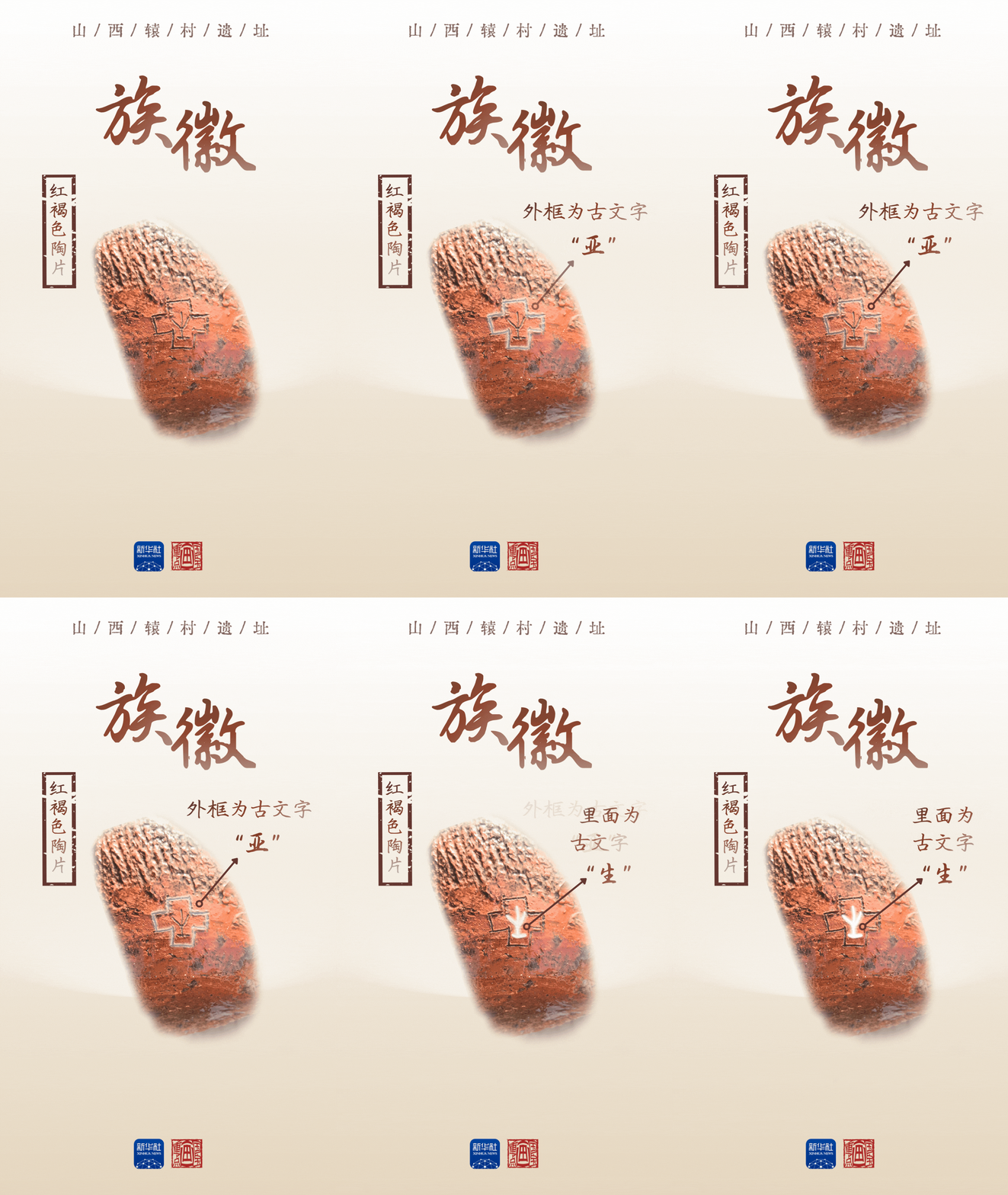
Core Insights - The discovery of the Yancun site in Shanxi Province reveals significant archaeological findings from the Neolithic and Xia-Shang periods, including the first-ever discovery of a clan emblem from the Late Shang period [1][4] - The site provides crucial insights into the culture of the Shang Dynasty in the Jin Nan region, with a rich array of artifacts, particularly pottery, indicating a shift towards more practical uses in daily life [4][19] Archaeological Findings - The Yancun site is located approximately 4 kilometers from the ancient Yuncheng Salt Lake, suggesting it was a settlement for small to medium nobility during the Shang Dynasty, strategically positioned along transportation routes [22] - The excavation revealed a variety of pottery, including ding (tripod cauldrons), gui (basin), and jars, which were the most commonly found artifacts, reflecting the daily life and burial customs of the time [8][15] - The presence of bronze and jade ritual vessels in two tombs indicates the status of the individuals buried there, suggesting they belonged to a small noble class [19] Cultural Significance - The clan emblem discovered, featuring the ancient character "亚" and a motif resembling a sprouting seedling, is believed to represent a family with military authority, marking a significant find in archaeological studies [4] - The artifacts, particularly the pottery, are seen as a reflection of the deceased's life, adhering to the Shang belief of "treating the dead as the living" [5] - The findings provide important clues regarding the ancient salt industry in Yuncheng, highlighting the community's engagement in resource development and management [23]

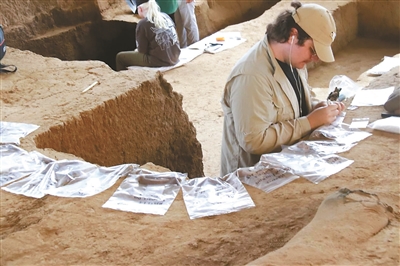
五名洋学生琉璃河遗址学考古
Bei Jing Qing Nian Bao· 2025-07-17 03:51
Core Insights - The article discusses the ongoing excavation activities at the Liulihe site in Beijing, where international students are participating in an archaeological training program under the guidance of Chinese experts [9][10]. Group 1: Program Overview - The 2025 Liulihe International Field Archaeology School is designed to provide international students with immersive archaeological training, combining theoretical knowledge with practical excavation experience [9][10]. - This year marks the second year of the program, which previously included four students from American universities [9]. Group 2: Student Activities and Learning - Students are required to complete various tasks such as excavation, recording, and analyzing findings, with a focus on mastering techniques like "scraping" and "finding edges" [5][6]. - The program includes intensive theoretical courses covering topics such as Chinese settlement archaeology and fieldwork principles before students engage in actual excavation [9][10]. Group 3: Discoveries and Findings - Students have made significant discoveries, including remains of ritual dog burials, which are characteristic of Shang Dynasty burial customs [7][8]. - The findings suggest that the burial site belonged to a male individual of considerable height, indicating a relatively affluent lifestyle based on the number of shells found [8]. Group 4: Cultural Experience - In addition to fieldwork, students participate in various cultural activities, visiting historical sites and museums to deepen their understanding of Chinese civilization [11][12]. - The program fosters camaraderie among students, enhancing their overall experience while learning about archaeology and Chinese culture [11][12].