
非塑料替代品

Search documents
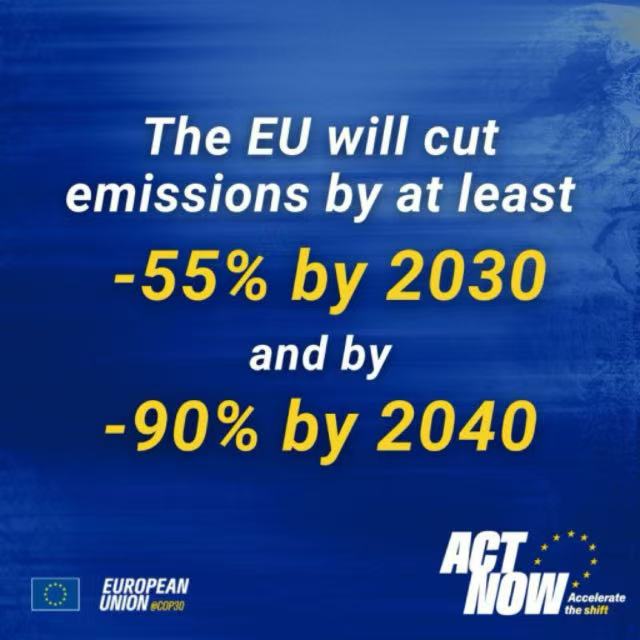
到2040年将温室气体排放量减少90%!COP30前欧盟减排目标出炉
Di Yi Cai Jing· 2025-11-07 08:18
Group 1 - The EU has established a legally binding target to reduce greenhouse gas net emissions by 90% by 2040, including 85% domestic reductions and up to 5% from international carbon credits [1][4] - The new Nationally Determined Contribution (NDC) targets set by the EU aim for a reduction of net emissions by 66.25% to 72.5% from 1990 levels by 2035 [1][4] - The EU's decision comes ahead of the COP30 conference, marking a significant milestone in its climate policy [5] Group 2 - The EU's internal decision-making process has been complex, influenced by geopolitical issues, but there is a strong commitment to environmental concerns [6] - The EU Council has introduced measures allowing member states to purchase international carbon credits to meet up to 5% of their reduction targets starting in 2036 [6] - In 2024, the EU and its member states plan to contribute €31.7 billion towards climate financing for developing countries, alongside an additional €11 billion from private sources [6] Group 3 - The global clean energy sector is experiencing significant cost reductions, with solar project costs dropping by 41% and onshore wind costs being 53% lower than fossil fuel generation from 2010 to 2024 [7] - The sustainable cooling market is valued at $600 billion, with potential earnings of $8 trillion for developing countries by 2050 [7] - However, tariffs and standards remain obstacles, with average tariffs on solar and wind components in developed economies at 1.9% and as high as 7.1% in Africa [7]

2024年全球塑料消费量据估突破5亿吨,其中3.99亿吨沦为废弃物 协力推动全球塑料污染治理(国际视点)
Ren Min Ri Bao· 2025-08-11 21:38
Core Viewpoint - The global plastic consumption is projected to exceed 500 million tons in 2024, with nearly 399 million tons becoming waste, highlighting the urgent need for international agreements to combat plastic pollution [1][2]. Group 1: Plastic Pollution Crisis - Nearly half of the plastic produced annually is single-use, with 18% to 20% of plastic waste entering the oceans [2]. - Without intervention, plastic waste entering the oceans could reach 37 million tons annually by 2040 [2]. - Cumulative economic losses from plastic pollution could amount to $281 trillion from 2016 to 2040, with total plastic entering the environment expected to increase by 50% by 2040 [2][4]. Group 2: Impact on Vulnerable Regions - Coastal areas and small island developing countries are disproportionately affected by plastic waste, despite contributing only 1.3% of global plastic waste [3]. - Research indicates that Easter Island experiences an average of 500 pieces of plastic waste washing ashore every hour [3]. Group 3: Microplastics and Health Concerns - Microplastics pose significant risks, potentially causing agricultural losses of 110 million to 360 million tons annually and seafood losses of 1.05 million to 2.43 million tons [4]. - The economic losses related to health issues from plastic pollution are estimated to exceed $1.5 trillion annually [4]. Group 4: Global Legislative Actions - The European Union has implemented measures to curb plastic pollution, including the ban on single-use plastic items effective from July 2021 [5][6]. - Germany has introduced regulations to increase the use of recycled materials and has implemented a fee system for single-use plastic producers [6]. - Ethiopia has enacted a law banning single-use plastic bags, with penalties for violations [7]. Group 5: China's Initiatives - China has been proactive in addressing plastic pollution, reducing plastic bag usage by over two-thirds since the implementation of the "plastic limit order" in 2008 [8]. Group 6: Circular Economy and Alternatives - Experts emphasize that recycling alone cannot solve the plastic crisis, advocating for a shift towards a circular economy involving innovation and policy coordination [9]. - The global trade in non-plastic alternatives reached $485 billion in 2023, with a growth rate of 5.6% in developing economies [9]. - Companies are exploring biodegradable packaging solutions, with significant reductions in single-use plastic packaging reported [9]. Group 7: Research and Development - Research institutions are classifying over 16,000 chemicals in plastics to inform regulatory policies and promote sustainable design [10]. - Digital tools for tracking plastic products are suggested to enhance lifecycle management and accountability [10].