面花

Search documents
旱碱麦的逆袭
Jing Ji Ri Bao· 2026-01-14 02:16
Core Viewpoint - The development and promotion of drought-resistant and salt-tolerant wheat (drought-saline wheat) is crucial for utilizing saline-alkali land in China, which has significant implications for food security and agricultural sustainability [1][5]. Group 1: Agricultural Significance - China has approximately 1.5 billion acres of saline-alkali land, with about 500 million acres having development potential, making the promotion of drought-saline wheat vital for revitalizing these resources [1]. - The national wheat industry technology system has initiated systematic research since 2022, focusing on improving saline-alkali land and breeding drought-saline wheat, resulting in several high-quality varieties suitable for saline-alkali conditions [1][4]. Group 2: Product Quality and Consumer Acceptance - Drought-saline wheat has unique flavor characteristics, with consumers praising its rich taste and texture, which is attributed to the plant's ability to adapt to saline-alkali stress [2][3]. - The protein content of drought-saline wheat ranges from 13% to 16%, with wet gluten content exceeding 35%, and it is rich in essential trace elements, making it nutritionally superior to regular wheat [3]. Group 3: Market Potential and Industry Growth - The market response to drought-saline wheat products has been positive, with companies reporting annual sales growth of 10% to 20% since entering the market in 2012 [3]. - Companies are expanding their production capacity and product offerings, aiming to meet increasing consumer demand and enhance the value chain through deeper processing and product diversification [4].
他们说,分房是一场战争
Bei Jing Wan Bao· 2025-12-26 07:39
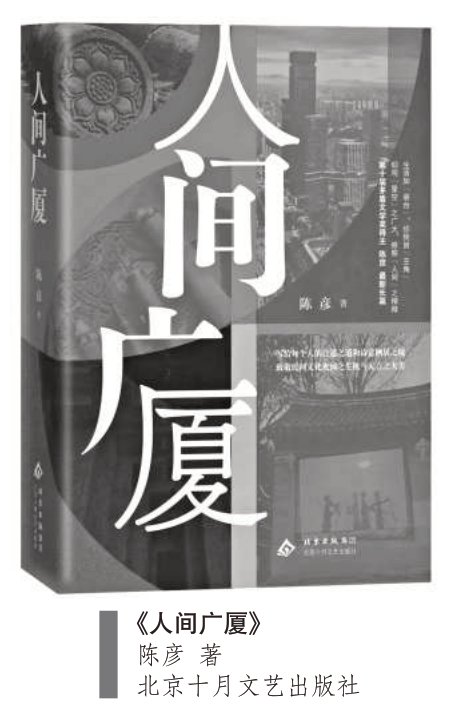
Core Perspective - The novel "Human Mansion" by Chen Yan explores the theme of housing allocation as a metaphor for human desires, integrity, and the deeper meaning of "home" beyond mere physical shelter [2][9] Group 1: Narrative Structure and Style - Chen Yan continues his realist approach seen in previous works while introducing new elements, blending traditional chapter styles with modern narrative techniques [3] - The dual narrative structure contrasts the chaotic housing allocation with the quiet archaeological dig, enriching the thematic depth of the story [3][9] - The use of local dialect and vibrant dialogue adds authenticity to the characters and setting, enhancing the reader's experience [3] Group 2: Character Analysis - The protagonist, Man Tingfang, is portrayed as a reluctant leader caught in the turmoil of housing allocation, representing the struggle between personal integrity and societal pressures [4][9] - Supporting characters like the opportunistic deputy director Ying Tianchang and the dedicated folk artists highlight various human motivations and ethical dilemmas within the context of the housing crisis [7][8] - The character of Xiao Taohong, a once-celebrated performer, illustrates the personal sacrifices made in the pursuit of stability and legacy, revealing the complexities of human relationships [6] Group 3: Themes and Messages - The novel critiques the moral compromises individuals make in the face of competition and scarcity, showcasing a spectrum of human behavior from integrity to opportunism [9] - It emphasizes that true stability and fulfillment come from personal effort and moral integrity rather than material possessions or power [9] - The underlying message suggests that the quest for a spiritual home is a timeless human desire, transcending the physicality of housing [9]