
旱碱麦

Search documents
影像记录|黄骅面花蒸出幸福年味
Xin Lang Cai Jing· 2026-02-23 00:09
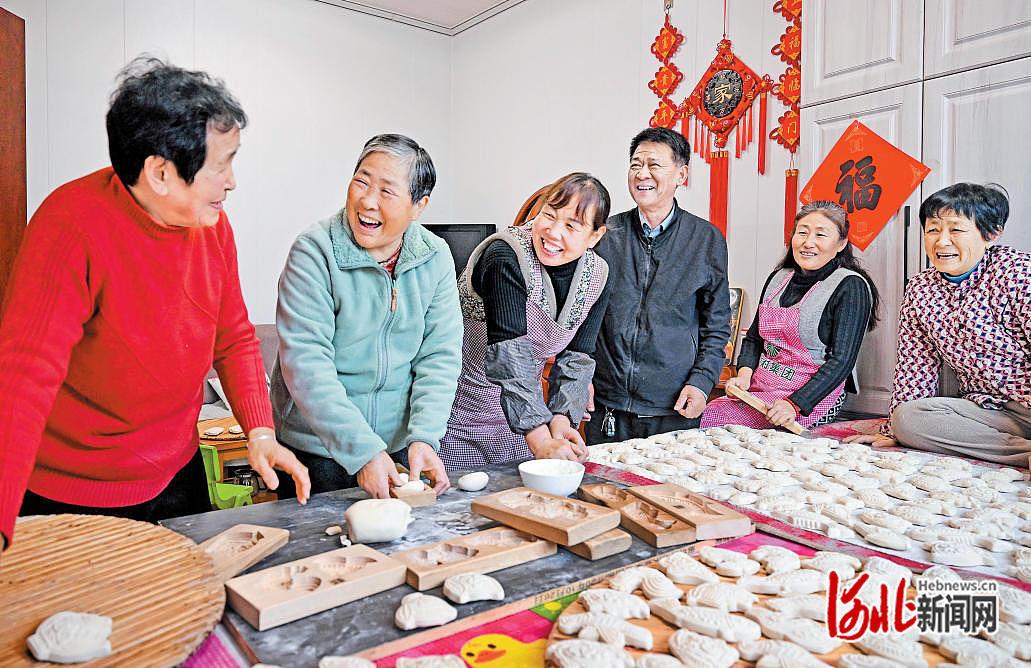
Group 1 - The tradition of making steamed wheat flowers, known as "mianhua," in Huanghua has a history of over 200 years, symbolizing wishes for a bountiful harvest and happiness during the New Year [5] - The local farmers, such as Zhang Ruixia, have experienced significant improvements in wheat yields, with drought-resistant wheat achieving over 700 pounds per acre, contributing to the production of wheat flour for making mianhua [2][7] - The area of saline-alkali land in Hebei province is substantial, with over 5.8 million acres, and the city of Cangzhou, particularly Huanghua, has the highest degree of soil salinization [7] Group 2 - The production of Huanghua mianhua has expanded from local households to a broader market, utilizing modern technology and traditional methods to enhance quality and shelf life [9] - Hebei Dijiang Food Co., Ltd. employs smart equipment and combines 18 traditional processes with modern preservation techniques to produce mianhua, which is now sold through various channels including online platforms and supermarkets [9][12] - The integration of intangible cultural heritage, agriculture, and e-commerce has allowed the Huanghua mianhua industry to flourish, becoming a significant source of income for local farmers [9]

四年攻关培育兼顾产量与口感的良种 旱碱麦的逆袭
Jing Ji Ri Bao· 2026-01-14 06:06
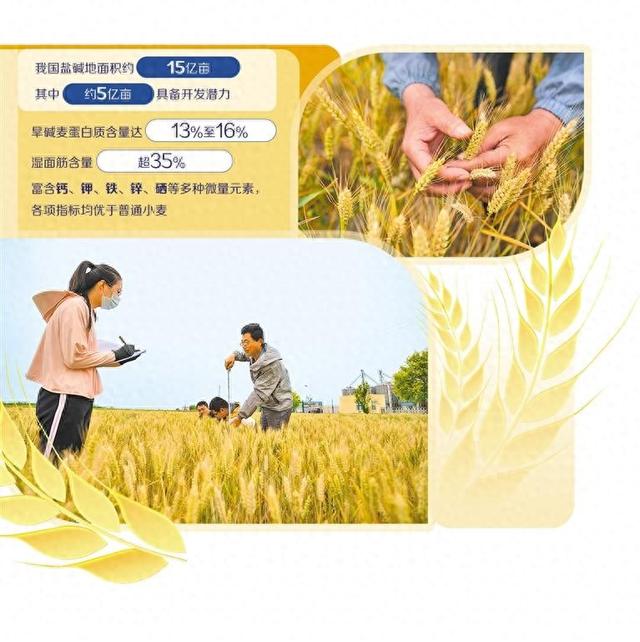
Core Viewpoint - The development and promotion of drought-resistant saline-alkali wheat (drought-alkali wheat) is crucial for utilizing saline-alkali land in China, enhancing food security, and meeting the growing demand for high-quality food products [1][5]. Group 1: Agricultural Significance - Drought-alkali wheat can grow in saline-alkali environments, which cover approximately 1.5 billion acres in China, with about 500 million acres having development potential [1]. - The promotion of drought-alkali wheat is expected to revitalize saline-alkali land resources and expand arable land, playing a strategic role in ensuring national food security [1]. Group 2: Research and Development - Since 2022, scientists from the National Wheat Industry Technology System have been conducting systematic research on saline-alkali land improvement and drought-alkali wheat breeding, successfully developing several high-quality varieties suitable for saline-alkali conditions [1][4]. - Ongoing research aims to analyze the mechanisms behind the aroma compounds in drought-alkali wheat, providing insights for breeding and processing to enhance flavor and quality [4]. Group 3: Market Potential and Consumer Demand - Drought-alkali wheat products have received positive consumer feedback for their unique flavor and nutritional benefits, with protein content ranging from 13% to 16% and wet gluten content exceeding 35% [3]. - The market for drought-alkali wheat products is expanding, with companies reporting annual growth rates of 10% to 20% in product sales since 2012 [3]. - Companies are planning to expand their market reach and increase production capacity to meet rising demand, indicating a supply shortage [4]. Group 4: Future Outlook - The integration of research, education, and industry is expected to lead to breakthroughs in breeding, planting, and processing technologies for drought-alkali wheat, enhancing both yield and quality [5]. - The continued development of high-end and diversified products will cater to consumer preferences for quality food, while also maximizing the potential of saline-alkali land for agricultural production [5].
旱碱麦的逆袭
Jing Ji Ri Bao· 2026-01-14 02:16
Core Viewpoint - The development and promotion of drought-resistant and salt-tolerant wheat (drought-saline wheat) is crucial for utilizing saline-alkali land in China, which has significant implications for food security and agricultural sustainability [1][5]. Group 1: Agricultural Significance - China has approximately 1.5 billion acres of saline-alkali land, with about 500 million acres having development potential, making the promotion of drought-saline wheat vital for revitalizing these resources [1]. - The national wheat industry technology system has initiated systematic research since 2022, focusing on improving saline-alkali land and breeding drought-saline wheat, resulting in several high-quality varieties suitable for saline-alkali conditions [1][4]. Group 2: Product Quality and Consumer Acceptance - Drought-saline wheat has unique flavor characteristics, with consumers praising its rich taste and texture, which is attributed to the plant's ability to adapt to saline-alkali stress [2][3]. - The protein content of drought-saline wheat ranges from 13% to 16%, with wet gluten content exceeding 35%, and it is rich in essential trace elements, making it nutritionally superior to regular wheat [3]. Group 3: Market Potential and Industry Growth - The market response to drought-saline wheat products has been positive, with companies reporting annual sales growth of 10% to 20% since entering the market in 2012 [3]. - Companies are expanding their production capacity and product offerings, aiming to meet increasing consumer demand and enhance the value chain through deeper processing and product diversification [4].
旱碱麦的逆袭——四年攻关培育兼顾产量与口感的良种
Xin Lang Cai Jing· 2026-01-13 23:59
Core Viewpoint - The development and promotion of drought-resistant wheat (旱碱麦) in saline-alkali land is crucial for enhancing food security in China, as it can effectively utilize approximately 500 million acres of potentially cultivable saline-alkali land [3][8]. Group 1: Agricultural Significance - Drought-resistant wheat is a special variety that thrives in saline-alkali conditions, requiring no irrigation and exhibiting low pest incidence, making it a natural green crop [3]. - China has about 1.5 billion acres of saline-alkali land, with 500 million acres having development potential, highlighting the strategic importance of promoting drought-resistant wheat cultivation [3]. - The National Wheat Industry Technology System has been conducting research since 2022 to improve saline-alkali land and develop superior drought-resistant wheat varieties, enhancing yield and flavor [3][8]. Group 2: Market Demand and Consumer Preferences - Drought-resistant wheat products have received positive consumer feedback for their unique flavor and nutritional benefits, aligning with the shift in public dietary preferences towards healthier and higher-quality food [5][6]. - The protein content of drought-resistant wheat ranges from 13% to 16%, with wet gluten content exceeding 35%, making it nutritionally superior to regular wheat [6]. Group 3: Industry Growth and Future Prospects - Companies involved in drought-resistant wheat processing have seen annual sales growth of 10% to 20%, indicating increasing market acceptance and demand [6]. - The ongoing research into the flavor compounds of drought-resistant wheat is expected to enhance product quality and consumer experience, supporting the entire supply chain from cultivation to processing [7]. - Future advancements in breeding, planting, and processing technologies are anticipated to further improve yield and product quality, contributing to food security and sustainable agricultural development [8].
四年攻关培育兼顾产量与口感的良种——旱碱麦的逆袭
Jing Ji Ri Bao· 2026-01-13 22:08
Core Viewpoint - Drought-resistant and saline-alkali wheat (drought-alkali wheat) is a unique wheat variety that thrives in saline-alkali soils, offering significant potential for enhancing food security in China by utilizing approximately 500 million acres of developable saline-alkali land [1][5]. Group 1: Agricultural Significance - The area of saline-alkali land in China is about 1.5 billion acres, with around 500 million acres having development potential, making the promotion of drought-alkali wheat cultivation strategically important for food security [1]. - Continuous research since 2022 by the National Wheat Industry Technology System has led to the successful breeding of multiple high-quality drought-alkali wheat varieties suitable for saline-alkali land, enhancing both yield and flavor [1][4]. Group 2: Consumer Acceptance and Market Growth - Drought-alkali wheat is gaining popularity as consumer dietary preferences shift from merely filling hunger to seeking quality and health, with products made from this wheat receiving positive feedback for their unique flavor [2][3]. - The protein content of drought-alkali wheat ranges from 13% to 16%, with wet gluten content exceeding 35%, and it is rich in essential trace elements, making it a competitive product in the market [3]. Group 3: Research and Development - Ongoing research is focused on understanding the mechanisms behind the accumulation of aromatic compounds in drought-alkali wheat, which will aid in breeding varieties with enhanced flavor profiles [4]. - The integration of research, production, and application is expected to lead to breakthroughs in breeding, cultivation, and processing technologies, enhancing both yield and quality [5]. Group 4: Industry Outlook - Companies are optimistic about the future of drought-alkali wheat, with plans to expand into southern markets and increase production capacity through enhanced cooperation and sourcing of quality raw materials [4]. - The development of high-end and convenient products from drought-alkali wheat is anticipated to enrich the product matrix and improve the overall value of the industry [5].
学习新语|跟着总书记脚步,走过四季庆丰收
Xin Hua She· 2025-09-24 08:28
Group 1 - The article highlights President Xi Jinping's continuous engagement with agricultural production across various regions in China, emphasizing his commitment to improving the agricultural sector and rural livelihoods [3][4][6][20]. - Xi's visits include inspecting rice harvests in Heilongjiang, corn growth in Jilin, grape industries in Xinjiang, and vegetable cultivation in Hubei, showcasing a hands-on approach to understanding local agricultural practices [4][6][20][23]. - The President stresses the importance of integrating poverty alleviation with agricultural development, public services, and ecological protection to enhance overall agricultural productivity and quality [7][17][23]. Group 2 - Xi Jinping's emphasis on modern efficient agriculture as a pathway for farmers to achieve prosperity is evident during his visits to various agricultural sites, where he discusses crop yields and market prices with local farmers [10][12][23]. - The article notes Xi's focus on sustainable agricultural practices, such as promoting green development and the use of new technologies in the tea industry, which is crucial for rural revitalization [30][32]. - The President's remarks on the significance of utilizing saline-alkali land for agricultural expansion highlight the strategic importance of land management in ensuring food security for China's large population [41][42].

荒草滩蝶变米粮川 河北加强盐碱地综合利用监督
Zhong Yang Ji Wei Guo Jia Jian Wei Wang Zhan· 2025-07-04 01:04
Core Viewpoint - The development of saline-alkali land agriculture in Hebei Province is being actively promoted to ensure national food security and increase farmers' income through comprehensive utilization and supervision measures [1][2][3]. Group 1: Agricultural Development and Support - Farmers in Huanghua City have received subsidies for grain planting, which have alleviated their economic burdens and led to increased income through the sale of diverse agricultural products [1]. - The Hebei Provincial Commission for Discipline Inspection and Supervision has established a research group to investigate the development of saline-alkali land agriculture, providing a basis for targeted supervision and effective measures [2][3]. Group 2: Supervision and Responsibility - The Hebei Provincial Commission has outlined six key areas for supervision, including responsibility implementation, breeding, land treatment, comprehensive utilization, specialty agriculture, and resource assurance [2]. - Local governments are being urged to prioritize the comprehensive utilization of saline-alkali land as a major initiative, with specific oversight from the Commission to ensure accountability [2][3]. Group 3: Monitoring and Improvement - The Commission is conducting joint supervision to enhance the effectiveness of agricultural departments in investigating saline-alkali land resources and improving soil quality [3][4]. - Specific issues such as slow project approvals and ineffective actions by personnel are being monitored to ensure timely support for agricultural projects [3][5].
河北加强盐碱地综合利用监督荒草滩蝶变米粮川
Zhong Yang Ji Wei Guo Jia Jian Wei Wang Zhan· 2025-06-22 01:27
Core Viewpoint - The article discusses the efforts of Hebei Province's disciplinary inspection and supervision agencies to promote the comprehensive utilization of saline-alkali land, enhance agricultural productivity, and increase farmers' income through targeted policies and supervision measures [2][3]. Group 1: Agricultural Development and Support - Farmers in Huanghua City have received subsidies for grain planting, which have alleviated their economic burdens and led to increased product variety and sales [2]. - The cooperative has developed 80 products across 11 series, including flour, steamed buns, noodles, and other items, contributing to higher farmer incomes [2]. Group 2: Supervision and Policy Implementation - The Hebei Provincial Discipline Inspection Commission has established a research group to investigate the development of saline-alkali agriculture, providing a basis for targeted supervision [3]. - The commission has outlined six key areas for supervision, including responsibility implementation, breeding, land treatment, comprehensive utilization, specialty agriculture, and resource assurance [3]. Group 3: Local Government Engagement - Local governments are being urged to prioritize the comprehensive utilization of saline-alkali land as a major initiative, with specific oversight from the discipline inspection agencies [3][5]. - The Tangshan Discipline Inspection Commission has issued supervision prompts and established direct reporting points to ensure local governments assess and utilize saline-alkali land resources effectively [3]. Group 4: Challenges and Recommendations - The article highlights challenges such as low yield and pricing issues in saline-alkali crop production, prompting recommendations for the development of salt-tolerant crop varieties and soil improvement techniques [6]. - The Cangzhou Discipline Inspection Commission has issued recommendations to enhance the conversion rate of scientific research achievements into practical applications, aiming to stimulate agricultural innovation [6].