
高温气冷堆核电站

Search documents
焦点访谈丨大国重器再攀高 “硬核”科技新跨越 ——我国第四代核电技术研发和应用达到国际领先水平
国家能源局· 2025-10-30 00:51
Core Viewpoint - The Shidao Bay High-Temperature Gas-Cooled Reactor Demonstration Project represents a significant advancement in China's nuclear power technology, marking the country's transition from following to leading in the global nuclear energy sector [2][7]. Group 1: Project Overview - The Shidao Bay High-Temperature Gas-Cooled Reactor is the world's first commercially operational fourth-generation nuclear power plant, having commenced operations at the end of 2023 and achieving nearly 10,000 hours of safe and stable operation [2]. - The project is characterized by its inherent safety features, which allow the reactor to remain safe without human or mechanical intervention during severe accidents [3][4]. Group 2: Technological Innovations - The reactor utilizes high-temperature spherical fuel elements instead of traditional fuel rods, with each reactor containing 430,000 fuel balls, designed to withstand temperatures exceeding 1,620°C without releasing radioactive materials [4][5]. - The cooling system employs helium gas instead of water, contributing to the reactor's inherent safety and operational efficiency [4][5]. Group 3: Development Process - The project was initiated in 2006 as part of China's major scientific and technological initiatives, with a focus on overcoming unprecedented engineering challenges to establish a commercial-scale high-temperature gas-cooled reactor [5][6]. - A collaborative effort involving Tsinghua University, China Huaneng Group, and China National Nuclear Corporation was essential in the design, development, construction, and commissioning phases of the project [5][6]. Group 4: Industry Impact - The project has led to the development of over 1,500 unique equipment pieces, with a domestic production rate of 93.4%, showcasing China's manufacturing capabilities in the nuclear sector [6][7]. - The successful implementation of the Shidao Bay project is seen as a cornerstone for China's nuclear power industry, enhancing its global standing and innovation capacity [7].

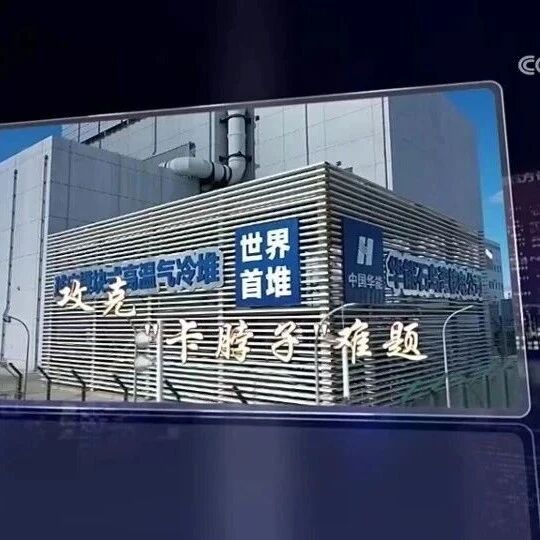
焦点访谈|从跟跑、并跑到领跑世界 我国“硬核”科技新跨越
Yang Shi Wang· 2025-10-29 14:15
Core Viewpoint - The Shidao Bay High-Temperature Gas-Cooled Reactor Demonstration Project represents a significant advancement in China's nuclear power technology, marking the country's transition from following to leading in the global nuclear energy sector [1][19]. Group 1: Project Overview - The Shidao Bay High-Temperature Gas-Cooled Reactor is the world's first commercially operational fourth-generation nuclear power plant, having commenced operations at the end of 2023 and achieving nearly 10,000 hours of safe and stable operation [3][19]. - The project is characterized by its inherent safety features, which allow the reactor to maintain safety without human or mechanical intervention during severe accidents [5][11]. Group 2: Technological Innovations - The reactor utilizes high-temperature spherical fuel elements instead of traditional fuel rods, with each reactor containing 430,000 fuel balls [7][9]. - The fuel balls are designed to withstand temperatures exceeding 1,620°C without releasing significant radioactive materials, ensuring high-temperature operation [9][11]. - The cooling system employs inert helium gas rather than water, contributing to the reactor's inherent safety [11]. Group 3: Development Process - The project began in the 1980s, with significant milestones including the establishment of a 10 MW high-temperature gas-cooled experimental reactor in 2000 and the official start of the demonstration project in December 2012 [13][15]. - A collaborative effort involving multiple universities, state-owned enterprises, and private companies has been crucial in overcoming numerous engineering challenges [19]. Group 4: Industry Impact - The project has led to the development of over 15,000 pieces of equipment, with 2,200 being first-of-their-kind and a 93.4% domestic production rate [19]. - The success of the Shidao Bay project is seen as a reflection of China's advancements in nuclear technology and its ability to innovate independently, positioning the country as a leader in the global nuclear energy landscape [19].

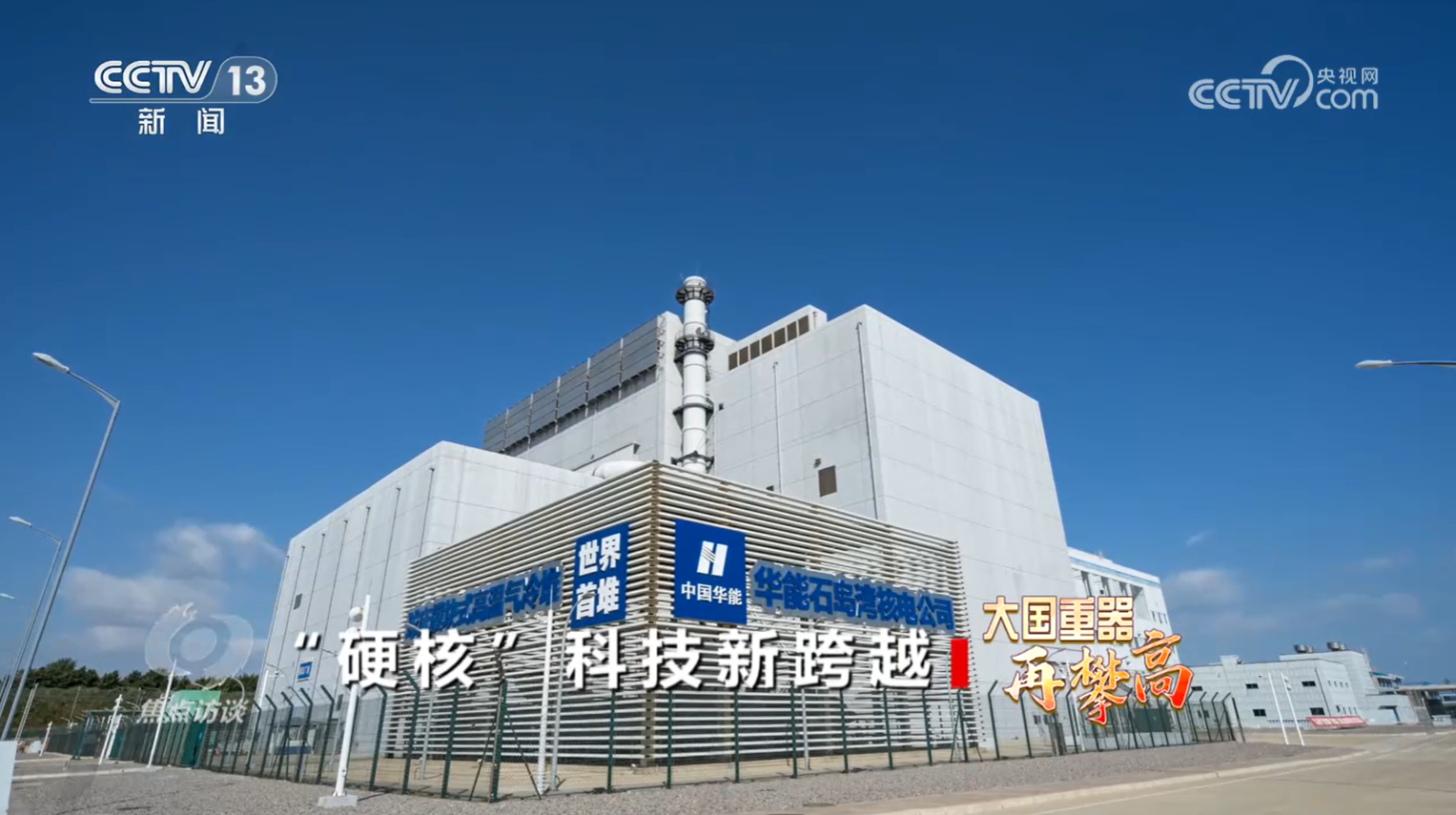
创新体系深化 一组数据看中国清洁能源装备如何“装备世界”
Yang Shi Xin Wen Ke Hu Duan· 2025-09-18 01:28
Core Insights - China's clean energy equipment production has seen rapid growth this year, significantly contributing to the construction of a modern energy system and a new power system [2][6] - The core technology of clean energy equipment has achieved major breakthroughs in self-control, providing a solid foundation for energy security [3][8] Clean Energy Equipment Production Growth - In the first seven months of this year, solar cell production reached 470 million kilowatts, a year-on-year increase of 19.6% [2] - Wind and solar power accounted for 89.9% of newly installed power generation capacity in the first half of the year [2] - China's clean energy equipment has been exported to 108 countries and regions, with steady growth in export value [2] Technological Advancements - Significant advancements in core technologies for clean energy equipment have been made during the 14th Five-Year Plan period [3] - In Deyang, a major production base, 70% of gas turbine units, 60% of nuclear power units, and 40% of hydropower units' key technologies are developed [3] Innovations in Manufacturing - The G50 heavy gas turbine is nearing completion, marking a significant breakthrough in self-developed gas turbines [4] - The world's largest 500-megawatt hydropower unit rotor has been completed using robotic welding, achieving a 99% first-pass yield rate [4] - The first fourth-generation nuclear power plant with complete independent intellectual property rights has been operating stably for nearly two years, with a utilization rate of 75% and a domestic equipment rate of 93.4% [4] Environmental Impact and Efficiency - The two gas turbine units in Zhejiang Anji are expected to achieve an annual power generation of approximately 7 billion kilowatt-hours, reducing carbon dioxide emissions by about 1.86 million tons annually [5] - The efficiency of the gas turbine units is projected to reach 64.15%, significantly improving energy output [5] Transition to Global Market - China's clean energy equipment is transitioning from product exports to industry ecosystem outputs, with projects like the 1000-megawatt pumped storage power station in Cambodia [6] - The successful production of high-end shield pumps for European clients indicates the establishment of a technical and standard system [6] Standardization and International Influence - The rapid development of clean energy equipment in China is significantly influenced by standardization efforts, with 64 new standards established for the wind power industry during the 14th Five-Year Plan [7] - China's participation in international standard-setting has increased its influence, marking a shift from "market for technology" to "technology output standards" [8]