
蒸汽发生器

Search documents
哈尔滨电气:收入利润订单多维全面改善-20260327
HTSC· 2026-03-27 10:45
Investment Rating - The investment rating for Harbin Electric is maintained as "Buy" with a target price of HKD 29.15 [6][9]. Core Views - Harbin Electric reported a comprehensive improvement in revenue, profit, and orders for 2025, achieving a revenue of RMB 46.1 billion, a year-on-year increase of 19%, and a net profit attributable to the parent company of RMB 2.67 billion, up 58% year-on-year [7][9]. - The company is expected to benefit from the growth in domestic electricity demand and the increasing importance of traditional power supply, including coal, gas, water, and nuclear energy [7][9]. - The global shortage of electricity is creating opportunities for the company's gas turbine exports, with a significant increase in global gas turbine orders projected for 2025 [8][9]. Financial Performance - Revenue projections for the upcoming years are as follows: RMB 52.3 billion in 2026, RMB 57.3 billion in 2027, and RMB 59.8 billion in 2028, reflecting growth rates of 13.54%, 9.57%, and 4.39% respectively [5][9]. - The net profit attributable to the parent company is forecasted to reach RMB 3.54 billion in 2026, RMB 4.15 billion in 2027, and RMB 4.36 billion in 2028, with year-on-year growth rates of 32.72%, 17.21%, and 5.08% respectively [5][9]. - The earnings per share (EPS) are projected to be RMB 1.58 in 2026, RMB 1.85 in 2027, and RMB 1.95 in 2028 [5][9]. Order Growth and Market Opportunities - The company secured new orders worth RMB 64.6 billion in 2025, a year-on-year increase of 14%, with significant contributions from coal, hydro, and nuclear power sectors [7][9]. - The company is positioned to capitalize on the increasing electrification rates in regions like North America and the Middle East, which may lead to substantial export opportunities for its small gas turbines [8][9]. - The ongoing investment in energy infrastructure, with an expected increase of 40% in fixed asset investments during the 14th Five-Year Plan, supports the demand for traditional power supply equipment [7][9].
哈尔滨电气(01133):收入利润订单多维全面改善
HTSC· 2026-03-27 06:22
Investment Rating - The investment rating for Harbin Electric is maintained as "Buy" with a target price of HKD 29.15 [6][7]. Core Insights - Harbin Electric reported a comprehensive improvement in revenue, profit, and orders for 2025, achieving a revenue of RMB 46.1 billion, a year-on-year increase of 19%, and a net profit attributable to the parent company of RMB 2.67 billion, up 58% year-on-year [7][9]. - The company is positioned to benefit from the growth in domestic electricity demand and the increasing importance of traditional power supply, including coal, gas, and nuclear energy [7][9]. - The global shortage of electricity is expected to create export opportunities for the company's small gas turbines, with a significant increase in overseas orders anticipated [8][9]. Financial Performance - Revenue projections for the upcoming years are as follows: RMB 52.3 billion in 2026, RMB 57.3 billion in 2027, and RMB 59.8 billion in 2028, reflecting growth rates of 13.54%, 9.57%, and 4.39% respectively [5][9]. - The net profit attributable to the parent company is forecasted to reach RMB 3.54 billion in 2026, RMB 4.15 billion in 2027, and RMB 4.36 billion in 2028, with year-on-year growth rates of 32.72%, 17.21%, and 5.08% respectively [5][9]. - The company’s earnings per share (EPS) are projected to be RMB 1.58 in 2026, RMB 1.85 in 2027, and RMB 1.95 in 2028 [5][9]. Order Growth and Market Position - In 2025, Harbin Electric secured new orders totaling RMB 64.6 billion, a 14% increase year-on-year, with significant contributions from coal, hydro, and nuclear power sectors [7][9]. - The company has optimized its contract signing strategy since 2022, leading to the gradual digestion of low-margin orders and an increase in high-margin orders [11][9]. - The fourth-generation nuclear power layout is expected to open new growth opportunities, with the company actively developing advanced nuclear technologies [11][9].
哈尔滨电气(1133.HK):全年利润大幅超预期
Ge Long Hui· 2026-01-28 01:25
Core Viewpoint - Harbin Electric is expected to achieve a significant increase in net profit for 2025, projecting a net profit of 2.65 billion yuan, a year-on-year increase of 57%, exceeding expectations by 10.5% [1] Group 1: Profit Growth Drivers - The profit growth is primarily driven by the realization of new equipment orders, which contributes to revenue growth, alongside improved internal management efficiency and high-margin orders boosting profitability [1] - The company has seen a substantial increase in new orders, with 2024 and the first half of 2025 expected to reach 56.87 billion yuan and 35.56 billion yuan respectively, representing year-on-year increases of 30.5% and 36.6% [2] - The revenue from coal, hydropower, and nuclear power for the first half of 2025 has already achieved year-on-year growth of 61.9%, 23.6%, and 68.7% respectively [2] Group 2: Industry Outlook - The demand for traditional base-load power sources is expected to drive a new cycle of prosperity in the traditional power equipment sector, with a projected national electricity consumption CAGR of 6% from 2025 to 2030 [1] - The latest "14th Five-Year Plan" anticipates fixed asset investment in the national grid to reach 4 trillion yuan, a 40% increase from the previous plan, emphasizing the need for a multi-energy approach [1] Group 3: Nuclear Power and Export Opportunities - The company's nuclear power products, including steam generators and pressure vessels, are positioned to benefit from the growth potential of fourth-generation nuclear technology [2] - The company has a competitive edge in the nuclear power sector, with a gross profit margin of 30.7% in 2024, surpassing industry averages [2] - The global electricity shortage, particularly in regions with weak grid structures, presents export opportunities for the company's power equipment, especially in Southeast Asia [2] Group 4: Financial Forecast and Valuation - The net profit forecast for 2025-2027 has been revised upwards to 2.65 billion, 3.48 billion, and 4.08 billion yuan, reflecting increases of 57%, 31%, and 17% respectively [3] - The target price for the company has been raised to 27.05 HKD, maintaining a "buy" rating based on the growth potential in the fourth-generation nuclear sector and the impact of significant investment in power equipment [3]
哈尔滨电气:全年利润大幅超预期-20260127
HTSC· 2026-01-27 07:25
Investment Rating - The report maintains a "Buy" rating for Harbin Electric with a target price of HKD 27.05 [6][4]. Core Insights - Harbin Electric is expected to achieve a net profit of RMB 2.65 billion in 2025, representing a year-on-year increase of 57%, exceeding expectations by 10.5% [1][4]. - The profit growth is attributed to the fulfillment of new equipment orders and improved internal management efficiency, alongside the realization of high-margin orders [1][4]. - The company is positioned to benefit from increasing domestic electricity demand and the emphasis on multi-energy supply in the "14th Five-Year Plan" [1][2]. Summary by Sections Financial Performance - The forecast for net profit for 2025-2027 is adjusted to RMB 2.65 billion, RMB 3.48 billion, and RMB 4.08 billion, reflecting increases of 57%, 31%, and 17% respectively [4][10]. - The expected EPS for 2025-2027 is RMB 1.19, RMB 1.55, and RMB 1.82 [4][10]. Market Opportunities - The demand for traditional baseload power sources is driving a significant increase in equipment orders, with new orders expected to contribute to performance growth [11]. - The report highlights opportunities for Harbin Electric in overseas markets due to a global electricity shortage, particularly in regions with weak grid structures [3][11]. Industry Outlook - The report predicts a compound annual growth rate (CAGR) of 6% for national electricity consumption from 2025 to 2030, with a corresponding increase in peak load [2]. - The "14th Five-Year Plan" anticipates a fixed asset investment of RMB 4 trillion in the power grid, a 40% increase from the previous plan, which is expected to drive a new cycle of demand for traditional power equipment [2].
哈尔滨电气(01133):全年利润大幅超预期
HTSC· 2026-01-27 06:07
Investment Rating - The report maintains a "Buy" rating for Harbin Electric with a target price of HKD 27.05 [6][4]. Core Insights - Harbin Electric is expected to achieve a net profit of RMB 2.65 billion in 2025, representing a year-on-year increase of 57%, exceeding expectations by 10.5% [1][4]. - The profit growth is attributed to the fulfillment of new equipment orders and improved internal management efficiency, alongside the realization of high-margin orders [1][4]. - The company is positioned to benefit from increasing domestic electricity demand and the emphasis on multi-energy supply in the "14th Five-Year Plan" [1][2]. Summary by Sections Financial Performance - The forecast for net profit for 2025-2027 is adjusted to RMB 2.65 billion, RMB 3.48 billion, and RMB 4.08 billion, reflecting increases of 57%, 31%, and 17% respectively [4][10]. - The earnings per share (EPS) estimates for 2025, 2026, and 2027 are RMB 1.19, RMB 1.55, and RMB 1.82 [4][10]. Market Opportunities - The demand for traditional baseload power sources is expected to drive a significant increase in equipment orders, with new orders projected at RMB 56.87 billion and RMB 35.56 billion for 2024 and the first half of 2025, respectively [11]. - The company has optimized its contracting strategy since 2022, focusing on high-margin quality orders, which may further enhance profitability [11]. Industry Trends - The report highlights a potential growth opportunity in the overseas market due to a shortage of electricity, particularly in data centers and re-industrialization efforts [3]. - Harbin Electric has developed capabilities in heavy-duty gas turbine systems and is positioned to benefit from global electricity shortages, with its small gas turbines expected to see export demand [3][4]. Valuation - The report employs a segmented valuation approach, assigning a price-to-earnings (PE) ratio of 20.86x for the fourth-generation nuclear power business and 14.17x for the power equipment segment [4][14]. - The target price has been raised to HKD 27.05 from HKD 21, reflecting a positive outlook on the company's growth prospects [4][6].
焦点访谈丨从跟跑、并跑到领跑 我国核电技术再攀高
Yang Shi Xin Wen Ke Hu Duan· 2025-10-30 14:02
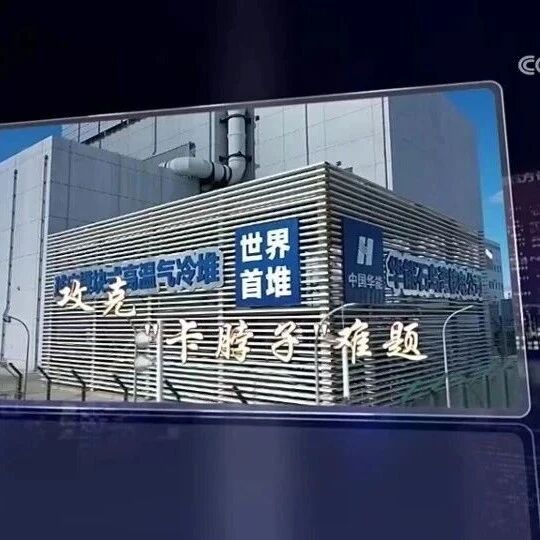
Core Viewpoint - The Shidao Bay High-Temperature Gas-Cooled Reactor Demonstration Project represents a significant advancement in China's nuclear power technology, marking the country's leadership in the development and application of fourth-generation nuclear technology [1][3][20]. Group 1: Project Overview - The Shidao Bay High-Temperature Gas-Cooled Reactor is the world's first commercially operational fourth-generation nuclear power plant, having accumulated nearly 10,000 hours of safe and stable operation since its commercial launch at the end of 2023 [3][20]. - The project is located in Rongcheng, Shandong Province, and is characterized by its innovative safety features, including inherent safety mechanisms that do not rely on human intervention or mechanical systems [5][10]. Group 2: Safety Features - The reactor is designed to allow operators to remain safe for up to seven days in the event of a severe nuclear accident, showcasing its advanced safety protocols [5]. - The use of high-temperature spherical fuel elements, which can withstand temperatures exceeding 1,620°C without significant release of radioactive materials, is a key innovation of this reactor [8][10]. Group 3: Technological Innovations - The reactor employs helium gas as a coolant instead of water, which is a significant departure from previous generations of nuclear reactors, contributing to its inherent safety [10]. - The project has developed unique equipment, such as the steam generator, which is crucial for converting heat into steam for electricity generation, and represents a global first in design and manufacturing [15][16]. Group 4: Collaborative Efforts - The project involved collaboration among various entities, including China Huaneng Group, Tsinghua University, and China National Nuclear Corporation, to overcome numerous technical challenges [14][18]. - Over 500 enterprises and research institutions participated in the project, achieving a domestic equipment localization rate of 93.4%, with over 660 pieces of world-first equipment developed [18][20]. Group 5: Industry Impact - The successful implementation of the Shidao Bay project is seen as a milestone in China's nuclear power development, contributing to the country's goal of becoming a leader in nuclear technology [20]. - The project is part of China's broader strategy to enhance its independent innovation capabilities in the nuclear sector, with plans for further advancements in the upcoming years [20].


焦点访谈丨大国重器再攀高 “硬核”科技新跨越 ——我国第四代核电技术研发和应用达到国际领先水平
国家能源局· 2025-10-30 00:51
Core Viewpoint - The Shidao Bay High-Temperature Gas-Cooled Reactor Demonstration Project represents a significant advancement in China's nuclear power technology, marking the country's transition from following to leading in the global nuclear energy sector [2][7]. Group 1: Project Overview - The Shidao Bay High-Temperature Gas-Cooled Reactor is the world's first commercially operational fourth-generation nuclear power plant, having commenced operations at the end of 2023 and achieving nearly 10,000 hours of safe and stable operation [2]. - The project is characterized by its inherent safety features, which allow the reactor to remain safe without human or mechanical intervention during severe accidents [3][4]. Group 2: Technological Innovations - The reactor utilizes high-temperature spherical fuel elements instead of traditional fuel rods, with each reactor containing 430,000 fuel balls, designed to withstand temperatures exceeding 1,620°C without releasing radioactive materials [4][5]. - The cooling system employs helium gas instead of water, contributing to the reactor's inherent safety and operational efficiency [4][5]. Group 3: Development Process - The project was initiated in 2006 as part of China's major scientific and technological initiatives, with a focus on overcoming unprecedented engineering challenges to establish a commercial-scale high-temperature gas-cooled reactor [5][6]. - A collaborative effort involving Tsinghua University, China Huaneng Group, and China National Nuclear Corporation was essential in the design, development, construction, and commissioning phases of the project [5][6]. Group 4: Industry Impact - The project has led to the development of over 1,500 unique equipment pieces, with a domestic production rate of 93.4%, showcasing China's manufacturing capabilities in the nuclear sector [6][7]. - The successful implementation of the Shidao Bay project is seen as a cornerstone for China's nuclear power industry, enhancing its global standing and innovation capacity [7].
斗山集团凭借"变革DNA"布局未来产业 迎接130周年
Shang Wu Bu Wang Zhan· 2025-10-14 11:36
Core Insights - Doosan Group attributes its longevity to "transformational DNA" and "new generation power discovery" strategies, focusing on enhancing competitiveness in three future industries: energy, industrial machinery, and semiconductors [1] Energy Sector - Doosan Energy has achieved international certification for 8MW and 10MW offshore wind power projects and successfully completed full-load testing of a 380MW gas turbine developed in 2019 [1] - In the nuclear power sector, the company has supplied a total of 34 reactors and 124 steam generators globally [1] Industrial Machinery - Doosan Bobcat has doubled its scale over the past five years, with rapid growth in agricultural and landscaping equipment [1] - The company is leading the electrification transformation in the industry, launching the world's first fully electric compact tracked loader in 2022 [1] - Doosan Robotics has maintained its position as the leader in the collaborative robot market in South Korea since 2018, leveraging exclusive torque sensor technology, and has successfully entered the global top four [1] Semiconductor Sector - In 2022, Doosan Group acquired Tesna, a leading testing company in South Korea, which holds the top market share in the system semiconductor testing field, particularly in wafer testing [1]
中国核电产业链已具备100%整机装备国产化能力
Zhong Guo Jing Ying Bao· 2025-04-28 07:08
Core Insights - The national trade friction response meeting highlighted that China is entering a high-intensity phase of trade friction, emphasizing the need for confidence, strategy, and innovation in the face of challenges [1] - China's nuclear power industry has successfully reduced reliance on foreign technology, achieving over 95% localization in key equipment and demonstrating significant advancements in self-developed technologies [1][2] - The nuclear power sector has matured its supply chain, with major companies like China General Nuclear Power Group (CGN) achieving 100% domestic equipment capability for nuclear power plants [1][2] Industry Developments - Since 2016, particularly after the U.S. placed certain Chinese state-owned enterprises on the entity list in 2019, the nuclear power sector has accelerated its self-sufficiency efforts across various fields, including equipment manufacturing and software design [1] - Domestic manufacturers such as Dongfang Electric and Shanghai Electric have developed the capability to produce core equipment like pressure vessels and steam generators [2] - The nuclear fuel component production has transitioned to domestic technology, with ongoing advancements in fuel component research and development [2] Strategic Responses - The nuclear power industry has adopted a collaborative approach with upstream and downstream partners to identify and address potential vulnerabilities in the supply chain due to trade tensions [2] - The industry has expressed confidence in its ability to compete with global leaders like the U.S. and France, asserting that it can not only match but also surpass their nuclear technology in several areas [2]
