高磷脂虾油

Search documents
南极磷虾:南大洋的“粮仓”
Xin Lang Cai Jing· 2026-02-23 19:42
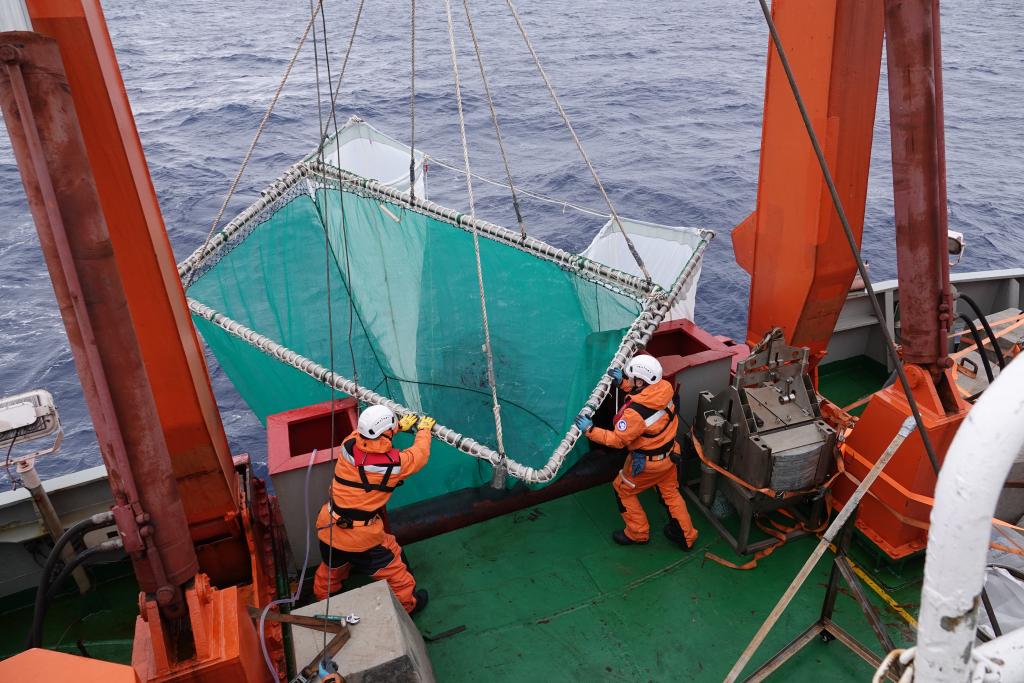
Core Insights - Antarctic krill is one of the largest single-species biological resources on Earth, serving as a crucial food source for various marine animals and supporting the marine ecosystem [1][2] - The nutritional value of krill, rich in protein, unsaturated fatty acids, and astaxanthin, positions it as a potential high-quality protein source for humans [1][2] - China's research and development in krill studies have accelerated, focusing on genetic, distribution, and ecological data collection since 2018 [1] Group 1 - Antarctic krill is compared to the "granary" of the Southern Ocean, with a body length of only 3 to 6 cm, yet it plays a vital role in the marine food web [1] - The Chinese Antarctic expedition has prioritized the Amundsen Sea for comprehensive marine ecological investigations since 2018 [1] - The establishment of platforms like the Chinese Polar Biological Gene Bank and the National Polar Science Data Center has facilitated rapid advancements in krill research [1] Group 2 - A shipboard intelligent guidance system has been developed to monitor the nutritional components of krill powder in real-time using computer vision and AI models [2] - The aquaculture industry is exploring the extraction of bioactive peptides from krill protein to enhance absorption, moving towards advanced processing methods [2] - Krill is sensitive to climate and ecological changes, with factors like reduced sea ice and rising sea temperatures posing threats to its habitat and food sources [2]
南极“粮仓”!我国磷虾研究促进产业升级
Xin Hua Wang· 2026-02-11 20:18
Core Viewpoint - The research on Antarctic krill is driving industry upgrades in China, highlighting its potential as a valuable biological resource and a source of high-quality protein for human consumption [1][3]. Group 1: Importance of Antarctic Krill - Antarctic krill is one of the largest single-species biological resources on Earth, often referred to as the "granary" of the Southern Ocean [1]. - Krill serves as a crucial food source for various marine species, including fish, penguins, seals, whales, and seabirds, supporting a complete marine food web [3]. - The nutritional value of krill, rich in protein, unsaturated fatty acids, and astaxanthin, surpasses that of beef and shrimp, making it a promising source of high-quality protein for humans [3]. Group 2: Research and Development Initiatives - China has rapidly advanced its research on krill by utilizing polar research vessels like "Snow Dragon" and "Snow Dragon 2," establishing a polar biological gene bank and a national polar science data center [3][5]. - Since 2018, the Amundsen Sea has been a focal area for China's Antarctic research, with ongoing comprehensive investigations into the marine ecological environment [3]. - The development of an onboard intelligent guidance system allows for real-time monitoring of krill powder's nutritional components, enhancing research capabilities [5]. Group 3: Industry Upgrades and Sustainable Practices - The krill processing industry in China is evolving from traditional products like dried krill and krill powder to advanced products such as high-phospholipid krill oil and bioactive peptides [5]. - Research is being conducted to analyze krill distribution patterns, feeding habits, and food chain relationships to promote sustainable utilization of marine resources and environmental protection [6]. - As a member of the Convention on the Conservation of Antarctic Marine Living Resources, China is actively contributing research data and scientific solutions to enhance understanding of climate change impacts on polar ecosystems [6].