水产

Search documents
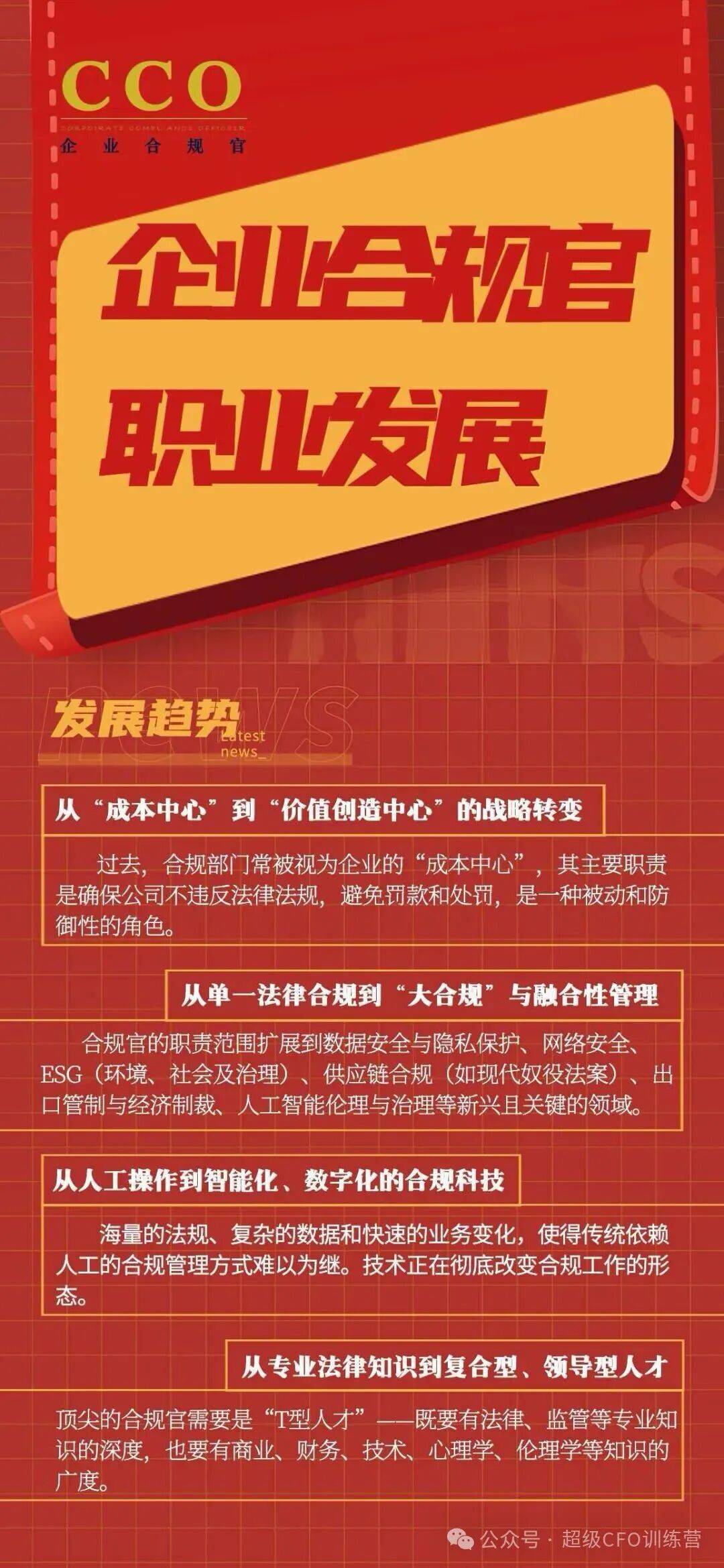
央视曝光:有商贩喂鱼麻醉药
券商中国· 2026-03-23 01:14
Core Viewpoint - The article highlights the illegal use of anesthetics such as eugenol and industrial alcohol in the transportation of live fish across various markets in China, raising serious health concerns for consumers and prompting regulatory actions [1][2]. Group 1: Illegal Practices in Fish Transportation - Multiple fish markets in Chongqing, Shandong, and Anhui are reported to use substances like eugenol and industrial alcohol to induce a "sleeping" state in live fish during transport [1]. - In Chongqing's Lebang Aquatic Market, fish arrive in a dormant state and can be revived with oxygen, while workers add eugenol to the transport containers, which is labeled as a "three-no" product [1]. - In Shandong's Linyi Strong Seafood Wholesale Market, vendors use industrial alcohol and eugenol without regulation, with the dosage being determined by personal judgment [1]. Group 2: Regulatory Response - The National Market Supervision Administration has taken the allegations seriously, initiating a joint investigation with local market supervision authorities in Chongqing and Shandong [2]. - A surprise inspection on March 17 at Chongqing's Lebang Aquatic Market led to the examination of 35 vendors, resulting in the seizure of 14 items containing eugenol and the collection of various samples for testing [2]. - In Linyi, authorities conducted a detailed investigation into suspected industrial alcohol and eugenol, collecting fish and water samples for laboratory analysis [2].

春节淘母积压影响能繁存栏,关注产能调控政策或加码
Guotou Securities· 2026-03-09 10:29
Investment Rating - The industry is rated as "Outperforming the Market" with a target of exceeding the performance of the CSI 300 index by 10% or more over the next six months [3]. Core Insights - The report highlights that the pig farming sector is experiencing a backlog of breeding sows due to the Spring Festival, which is affecting the breeding stock. There is a potential for increased capacity regulation policies [19][20]. - The average price of live pigs this week is 10.56 CNY/kg, reflecting a week-on-week decrease of 3.39% and a two-week decrease of 5.24%. The average price of piglets is 448 CNY/head, down 3.24% week-on-week [19][24]. - The poultry sector is facing a downward trend in white feather broiler prices, with the average price at 7.20 CNY/kg, a decrease of 3.61% week-on-week [24]. - The corn market shows stability with a slight increase in prices, averaging 2405.53 CNY/ton, up 1.09% week-on-week, influenced by geopolitical tensions affecting oil prices and ethanol demand [32]. Summary by Sections 1. Weekly Market Review - The agricultural sector increased by 2.12% this week, outperforming major indices such as the CSI 300, which decreased by 1.07% [11]. - Sub-sectors like planting and breeding have shown positive growth, while agricultural processing, fishery, and animal health sectors experienced slight declines [14]. 2. Industry Data Tracking 2.1 Pig Farming - The average daily slaughter volume of pigs is 152,700 heads, with a week-on-week change of 26.05% [19]. - The breeding sow stock is expected to be adjusted down to 36.5 million heads, a reduction of 3.11 million heads, which will help to eliminate excess capacity in the industry [20]. 2.2 Poultry Farming - The market for white feather broilers is weak, with prices fluctuating and overall market confidence low due to slow sales and high inventory levels [24]. 2.3 Planting Sector - The prices of planting products remain stable, with corn prices showing a slight increase due to supply concerns and rising international oil prices [32]. 2.4 Aquaculture Sector - Prices for various aquatic products remain stable, with specific declines noted in shrimp prices, which decreased by 6.67% [37]. 3. Industry Events - A meeting was held with several pig farming companies to discuss the implementation of production capacity control targets for 2025 [49].
南极磷虾:南大洋的“粮仓”
Xin Lang Cai Jing· 2026-02-23 19:42
Core Insights - Antarctic krill is one of the largest single-species biological resources on Earth, serving as a crucial food source for various marine animals and supporting the marine ecosystem [1][2] - The nutritional value of krill, rich in protein, unsaturated fatty acids, and astaxanthin, positions it as a potential high-quality protein source for humans [1][2] - China's research and development in krill studies have accelerated, focusing on genetic, distribution, and ecological data collection since 2018 [1] Group 1 - Antarctic krill is compared to the "granary" of the Southern Ocean, with a body length of only 3 to 6 cm, yet it plays a vital role in the marine food web [1] - The Chinese Antarctic expedition has prioritized the Amundsen Sea for comprehensive marine ecological investigations since 2018 [1] - The establishment of platforms like the Chinese Polar Biological Gene Bank and the National Polar Science Data Center has facilitated rapid advancements in krill research [1] Group 2 - A shipboard intelligent guidance system has been developed to monitor the nutritional components of krill powder in real-time using computer vision and AI models [2] - The aquaculture industry is exploring the extraction of bioactive peptides from krill protein to enhance absorption, moving towards advanced processing methods [2] - Krill is sensitive to climate and ecological changes, with factors like reduced sea ice and rising sea temperatures posing threats to its habitat and food sources [2]
筑牢食品安全、诚信计量“防护网”
Xin Lang Cai Jing· 2026-02-16 00:28
Core Insights - The article highlights the measures taken by the Guangzhou Huangsha Aquatic Products Center to ensure food safety and quality during the peak seafood trading period around the Spring Festival [1][2]. Group 1: Food Safety Measures - The Huangsha Aquatic Products Center operates a testing laboratory managed by Guangzhou Yuehao Aquatic Products Testing Co., which is responsible for seafood testing and food safety risk monitoring [2]. - The laboratory has obtained CMA certification and can test 44 parameters in food and agricultural products, making it the first intelligent seafood safety center in China [2]. - Daily testing capacity reaches 300 batches, with a focus on high-demand products like shrimp, shellfish, and fish during the Spring Festival [2][3]. Group 2: Digital Management System - A digital testing management system allows staff to upload sample information via a mobile app, generating unique barcodes for tracking throughout the testing process [3]. - The digital system enhances overall business efficiency by over 40%, providing rapid response and reliable service to clients [3]. - In case of non-compliant samples, the laboratory promptly informs market management to take necessary actions such as product removal and destruction [3]. Group 3: Integrity in Measurement - The market has established a professional inspection team to conduct comprehensive checks on electronic scales used by vendors, ensuring they are within valid calibration periods [4]. - The market implements a "five unification" system for measurement tools and a "return one, compensate three" integrity commitment mechanism to ensure fair pricing and trustworthy transactions [4]. - Daily trading volume at the Huangsha Aquatic Products Center exceeds 600 tons during the Spring Festival, with peak periods reaching 1,000 tons [4].
“黄沙水产中心”为市场转型提供精彩“广州范本”
Xin Lang Cai Jing· 2026-02-16 00:27
Core Insights - The successful relocation of the Huangsha Seafood Center reflects a significant transformation in traditional markets, addressing the challenge of urban development while preserving industry [1][2] - The new market's location in Liwan District optimally balances urban management and industry retention, minimizing traffic impact while leveraging the advantages of its waterfront location [1] Group 1: Market Transformation - The Huangsha Seafood Center represents a modernized model for traditional markets, with an investment of nearly 2 billion yuan, challenging outdated perceptions of seafood markets [2] - The introduction of a pioneering "natural seawater—oxygen—refrigerant" integrated supply system allows for 24-hour direct supply of natural seawater, enhancing operational efficiency [2] - The "Digital Huangsha" management system establishes a comprehensive framework for market management, transaction settlement, logistics, and big data, transforming the market into a price-setting and standard-defining entity [2] Group 2: Industry Integration - The upgrade of Huangsha is fostering collaborative development across the entire supply chain, from global procurement networks to high-value processing and enhanced customer relationships in downstream sectors [3] - The market's evolution includes the integration of diverse business models such as fresh processing, e-commerce, and low-altitude logistics, transitioning from a single-function to a multi-functional marketplace [2][3] - The transformation is characterized by innovation that respects traditional practices, reinforcing the market's credibility and trust within the industry [3]
新春消费观察|海味飘香 鲜动津城
Sou Hu Cai Jing· 2026-02-15 16:08
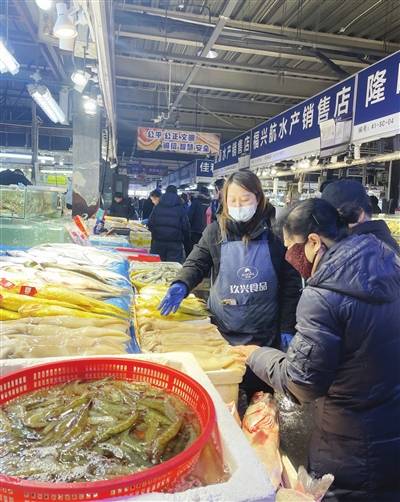
Group 1 - The water product market is experiencing a peak sales season ahead of the Spring Festival, with daily sales volume increasing several times compared to normal days [1][2] - The Wang Ding Di Seafood Wholesale Market reports a daily shipment volume of approximately 200,000 kilograms and daily sales exceeding 10 million yuan [1] - Popular products include sea crabs, grouper, and abalone, with daily sales reaching 16,000 kilograms, 1,500 kilograms, and 1,000 kilograms respectively [1] Group 2 - The demand for various fish species, symbolizing abundance, is high, with one store selling 11,000 kilograms of yellow croaker in a single day [2] - Frozen seafood imports are also increasing, with daily shipments of Ecuadorian white shrimp at 400,000 kilograms and Indian black tiger shrimp at 200,000 kilograms [2] - Cold storage facilities are collaborating with e-commerce platforms, achieving daily order volumes exceeding 30,000, including 5,000 orders for imported white shrimp alone [3]
2025年釜山中小企业对华出口骤增40.7%
Shang Wu Bu Wang Zhan· 2026-02-15 15:45
Core Insights - The export volume of small and medium-sized enterprises (SMEs) in Busan reached a record high of 8.44 billion USD last year, reflecting a year-on-year increase of 7.2% [1] - The number of export-oriented SMEs in Busan grew by 4.0% to 6,336, accounting for 97.3% of the total export companies in the region [1] - Exports to China surged by 40.7%, while exports to the United States increased by 11.4%, indicating strong export momentum to major markets [1] Export Performance - The top ten export items saw growth in nine categories, excluding automotive parts, with significant increases in power equipment (4.53 million USD) and marine products [1] - Power equipment exports were notably driven by the expansion of electrical infrastructure in the United States [1] - Shipbuilding and marine structures, along with seafood exports, experienced year-on-year growth rates of 41.8% and 40.4%, respectively [1] Market Dynamics - The primary export destinations for Busan SMEs included the United States, China, Japan, Vietnam, and Indonesia, with China and the U.S. showing substantial growth [1]
今日涨跌停股分析:46只涨停股、16只跌停股,军工装备板块走强,航发动力、安达维尔等涨停。
Xin Lang Cai Jing· 2026-02-13 07:20
Group 1 - A-shares experienced significant market activity on February 13, with 46 stocks hitting the daily limit up and 16 stocks hitting the limit down [1] - The aquaculture sector showed strong performance, highlighted by Zhongshui Fisheries reaching the limit up [1] - The military equipment sector also strengthened, with companies like Aero Engine Corporation of China and Andavere hitting the limit up [1] Group 2 - ST Zhongdi (rights protection) achieved a remarkable seven consecutive limit ups, while Zhangyue Technology recorded five consecutive limit ups [1] - Other notable stocks included ST Jinhong and *ST Wanfang (rights protection) with four consecutive limit ups, and Fengyuzhu with three limit ups in five days [1] - Conversely, ST Cuihua (rights protection) faced a decline with four consecutive limit downs, alongside *ST Jinglun and *ST Xiongmao (rights protection) with two consecutive limit downs [1]

春节前,兰州海鲜市场人气旺 鲈鱼和虾仍是春节餐桌主角
Xin Lang Cai Jing· 2026-02-11 01:13
Core Viewpoint - The seafood market is experiencing a significant surge in activity as consumers prepare for the Lunar New Year, with bass and shrimp being the main attractions on the festive dining table [1][2]. Group 1: Market Activity - The market is bustling with customers, with long lines of vehicles and shoppers carrying large bags, indicating a high demand for seafood ahead of the holiday [1]. - The first peak of customer flow occurred around 11 AM, with many shoppers specifically looking for frozen shrimp and bass for their New Year's Eve meals [2]. Group 2: Pricing Trends - The price of bass is reported to be lower than last year, while the prices of hairtail fish remain stable, and yellow croaker has seen a slight increase [2]. - Online and offline sales are thriving, with shrimp and hairtail fish prices being approximately 20% lower than last year, making them popular choices among consumers [2]. Group 3: Supply Chain Management - The market has implemented measures to ensure adequate supply for the holiday, with vendors required to increase their stock by three to five times compared to normal levels [3]. - The market features a wide variety of seafood options, catering to different consumer needs, from high-end products to more affordable choices [3].
【国企合规】北京水产集团的合规管理做法
Sou Hu Cai Jing· 2026-02-11 01:12
Core Viewpoint - Beijing Aquatic Group has established a comprehensive compliance management system to enhance risk management and ensure legal compliance across its diverse business operations, serving as a model for similar enterprises [1][12]. Group 1: Compliance Management Structure - The company has developed a top-level design for compliance management, with a clear organizational structure that includes a leadership group, compliance officers, and designated compliance liaisons in each subsidiary [2][3]. - The board of directors acts as the decision-making body for compliance management, while the general manager's office is responsible for risk control and implementation of compliance strategies [2]. Group 2: Compliance Management System - A robust compliance management system has been established, incorporating updated laws, regulations, and industry standards to ensure timely and effective compliance [3]. - The system includes specific compliance guidelines for eight key areas: food safety, corporate governance, trade management, commercial partnerships, environmental safety, labor employment, intellectual property, and financial taxation [3]. Group 3: Operational Mechanisms - The company has implemented eight operational mechanisms to support compliance management, including risk identification, compliance reviews, and training programs [4]. - These mechanisms facilitate dynamic risk management and enhance the company's ability to monitor and respond to various risks effectively [4]. Group 4: Trade Business Compliance - The company has focused on compliance management in trade operations, establishing a structured management framework to address risks related to credit, market, and ownership [5][6]. - A risk management toolkit has been developed, including guidelines and models for assessing credit risk, market risk, and ownership risk, which will support the implementation of an information-based regulatory platform [5][6]. Group 5: Risk Library and Matrix - A comprehensive compliance risk library has been created, covering various business areas and providing specific prevention recommendations for key risks [7]. - A risk matrix has been developed to visualize risks, their causes, consequences, and compliance measures, ensuring accountability and actionable prevention strategies [8][9]. Group 6: Major Decision Compliance Review - The company has enhanced the compliance review process for major decisions by integrating an online approval system and ensuring legal compliance is considered at all stages of project development [10]. - The legal compliance department is involved in all phases of major projects, from initial discussions to post-execution dispute resolution, ensuring adherence to legal standards [10]. Group 7: Contract Compliance Review - The company has refined the contract compliance review process, establishing clear requirements for compliance checks and enhancing oversight of significant contracts [11]. - Regular monitoring of contract performance anomalies is conducted to proactively identify and resolve potential disputes, thereby reducing litigation risks [11]. Group 8: "1+3" Extension Model - The company has initiated a "1+3" model for compliance management, involving collaboration between the headquarters and three representative subsidiaries to develop a comprehensive compliance framework [12]. - This model promotes the sharing of best practices and training, reducing reliance on external consultants and enhancing compliance management efficiency across subsidiaries [12][13].