鲜肉

Search documents
四川海拔最高的县如何解锁春节蔬菜自由?
Xin Lang Cai Jing· 2026-02-13 22:46
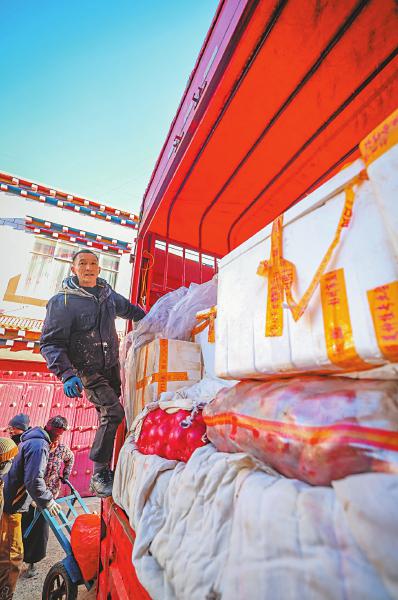
Core Viewpoint - The article highlights the significant improvements in the availability of fresh vegetables in Shiqu County, Sichuan, despite its harsh winter climate, due to enhanced transportation infrastructure and local agricultural initiatives. Group 1: Transportation and Infrastructure - Shiqu County has invested over 10 billion yuan annually for 13 years to improve transportation, facilitating access to fresh produce from Chengdu [5] - The county's road network has been developed to ensure that fresh vegetables can reach local markets within 24 hours from Chengdu [5] Group 2: Local Market Dynamics - The local market in Luoxu Town offers over 50 varieties of fresh vegetables and fruits, comparable to those available in Chengdu [5] - The increase in local restaurants and online cooking tutorials has encouraged residents to explore a wider range of vegetable options, leading to a significant rise in sales [6] Group 3: Agricultural Development - The establishment of the Shiqu Dengma Ecological Agricultural Technology Demonstration Park has allowed for large-scale vegetable cultivation, ending the historical limitation on local vegetable production [8] - The park, created in 2018, spans over 5,300 acres and is expected to supply over 600 tons of vegetables by 2025, contributing to local employment and income [8] Group 4: Community Impact - Local residents, such as Kang Zhu, have benefited from stable employment at the agricultural park, allowing them to afford a better diet [8] - The park has created job opportunities for 125 local employees, with temporary labor reaching up to 600 during peak seasons [8]

广东云牧农业科技有限公司成立,注册资本1000万人民币
Sou Hu Cai Jing· 2026-02-12 08:01
Group 1 - Guangdong Yunmu Agricultural Technology Co., Ltd. has been established with a registered capital of 10 million RMB [1] - The company is wholly owned by Guangdong Shengtong International Trade Co., Ltd. [1] - The legal representative of the company is Zhu Xiaojing [1] Group 2 - The business scope includes technology services, development, consulting, and transfer, as well as livestock acquisition and sales, fresh meat wholesale, and domestic trade agency [1] - The company is classified under the wholesale and retail industry, specifically in the wholesale sector [1] - The registered address is Room 203, No. 14, Ruilong Road, Dongcheng Street, Dongguan City, Guangdong Province [1]
三餐四季,居民吃上“放心肉”
Xin Lang Cai Jing· 2026-02-07 23:55
Core Insights - The article emphasizes the importance of food safety in the meat supply chain, particularly focusing on the role of public interest litigation in enhancing supervision and regulation of the meat industry [2][3]. Group 1: Food Safety Supervision - The local prosecutor's office has developed a "pork slaughter food safety supervision model" to monitor the identification and coding of livestock, revealing issues such as "unknown whereabouts of pig ear tags" and "missing data on diseased meat handling" [2]. - Investigations at slaughterhouses uncovered non-compliance in the storage of inedible meat parts and discrepancies between meat registration information and inspection certificates, indicating significant food safety risks [2]. Group 2: Regulatory Actions - Following the investigation results, the prosecutor's office issued administrative public interest litigation suggestions to the agricultural department to enhance supervision and improve the verification mechanisms for meat factory registrations and inspection certificates [2]. - The agricultural department responded promptly by organizing special rectification efforts to ensure standardized management in the slaughtering process [2]. Group 3: Supply Chain Issues - During investigations, issues such as duplicate numbers and contradictory dates on poultry meat inspection certificates were discovered, leading to the identification of a supply chain involved in the forgery of inspection certificates [3]. - A specific supplier company was found to have violated regulations by subcontracting to lower-tier suppliers who forged documents, resulting in substandard meat entering the supply chain [3]. Group 4: Collaborative Efforts - The prosecutor's office initiated a "public interest litigation + criminal prosecution" mechanism to address issues related to forged animal inspection certificates, transferring criminal leads to law enforcement for further investigation [3]. - The efforts have led to a positive interaction between administrative enforcement and prosecutorial supervision, creating a robust collaborative force for comprehensive food safety protection [3].

新鲜直供 好物聚集
Xin Lang Cai Jing· 2026-02-03 23:53
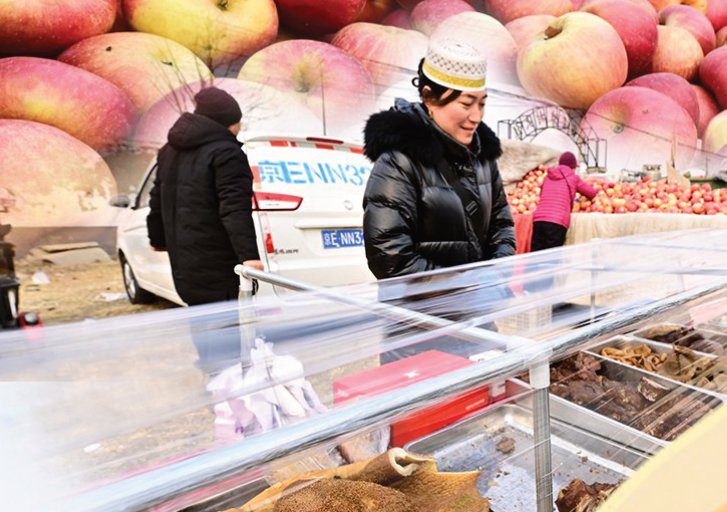
Core Insights - The article highlights the significance of the Yujiawu Market, which has evolved from a small local gathering into a vibrant marketplace over the past 30 years, showcasing local produce and traditional foods [12] Market Overview - Yujiawu Market covers an area of approximately 28 acres with a planned 300 stalls, of which 220 to 260 are actively used during market days, featuring 70 local vendors and a mix of external vendors [5][6] - The market operates on the 5th and 10th of each lunar month, attracting a diverse crowd of residents seeking fresh produce, meats, and local delicacies [13] Vendor Highlights - Local farmers, such as Ding Chaowu, emphasize the importance of quality and organic practices in their produce, with his celery being a market favorite due to its freshness and flavor [8] - Vendors like Yang Yaqi and He Xin focus on traditional meat products, with a strong emphasis on quality and customer satisfaction, leading to a loyal customer base [9][10] Cultural and Festive Activities - The market hosts various cultural events during festive seasons, such as a traditional performance on February 12, which includes a mix of modern and traditional entertainment [6][7] - Special activities for the Lantern Festival on March 3 will include interactive games and traditional displays, enhancing the community experience [7] Community Impact - Yujiawu Market serves as a vital connection between local and external cultures, providing a platform for diverse culinary experiences and fostering community ties [12] - The market's evolution reflects broader trends in rural revitalization, maintaining its traditional charm while improving facilities and services for visitors [12]
民生一件事 | 食品检测、公交专线……各地全力保障市民节日“菜篮子”需求
Yang Shi Wang· 2026-01-28 03:25
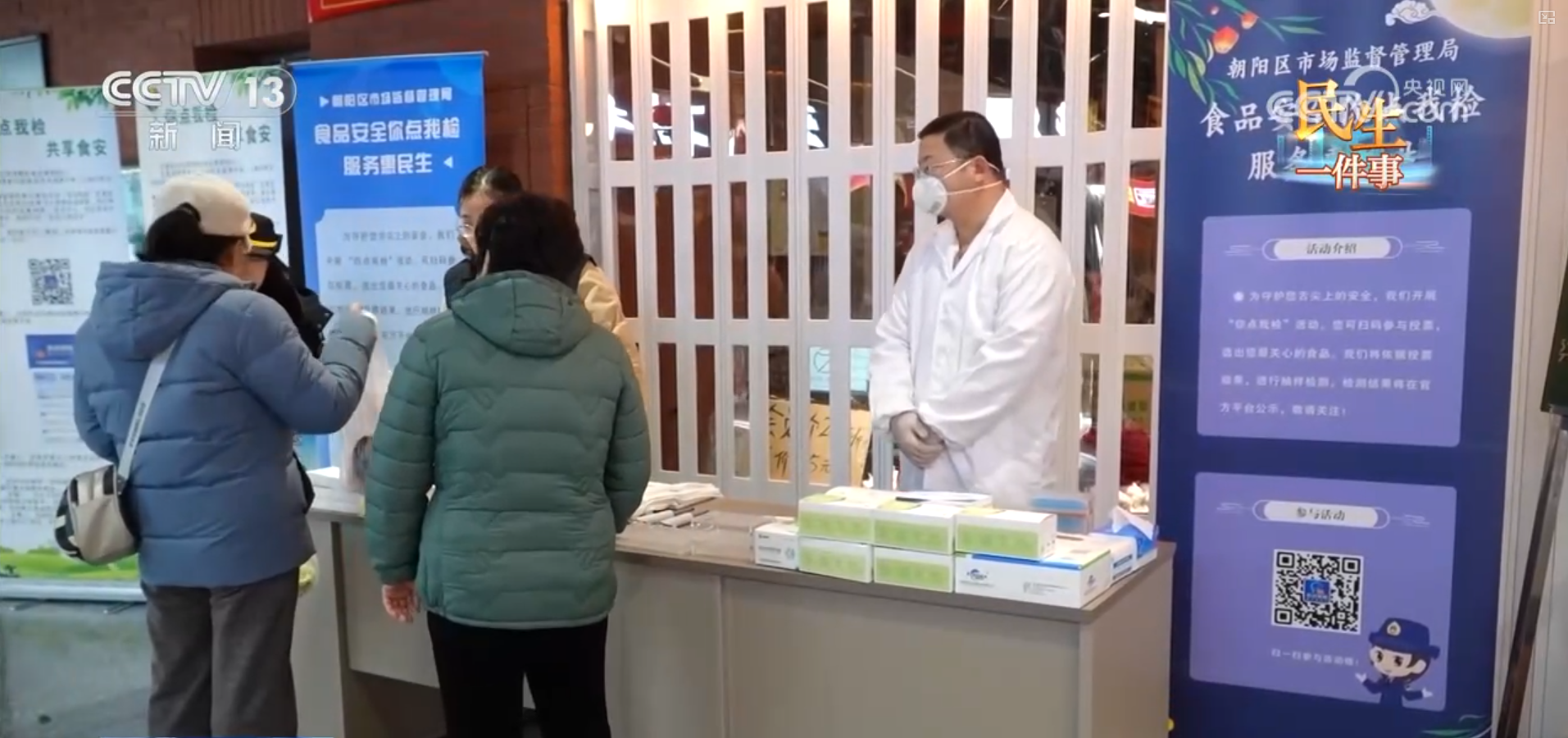
Group 1 - The core message emphasizes the importance of food safety as the Spring Festival approaches, with Beijing's market regulatory authorities conducting on-site food testing services to ensure the safety of food purchased by citizens [1][3] - In Chaoyang District, the "You Point, I Test" food quick inspection service has attracted many citizens, who are queuing to have their recently purchased ingredients tested [3] - The inspections focus on pesticide residues in vegetables, veterinary drug residues and moisture content in fresh meat, and nitrite levels in cooked food, with results available in about half an hour [5] Group 2 - During the Spring Festival, Beijing's market regulatory authorities will conduct special inspections targeting key food items and locations to ensure food safety [7] - In Jinan, Shandong, the government has initiated the release of reserve vegetables to stabilize supply and prices, with approximately 19,000 tons of reserve vegetables to be distributed across 115 outlets over the next month [8][12] - The vegetable release will start on January 24 and continue until March 3, covering the Spring Festival and Lantern Festival, with a focus on commonly consumed vegetables [12] Group 3 - In Nanjing, Jiangsu, a "Vegetable Basket Special Line" has been launched to provide daily vegetable price information, allowing citizens to plan their purchases while commuting [14] - The special bus line covers 18.8 kilometers and connects multiple communities and subway lines, facilitating easy access to various farmers' markets and large vegetable markets [17]
*ST天山可能被终止上市
Bei Jing Shang Bao· 2026-01-26 10:18
Core Viewpoint - *ST Tianshan is facing significant financial challenges, with projected net losses and declining revenues for 2025, alongside risks of delisting due to poor performance [1][2] Financial Projections - The company expects a net profit attributable to shareholders for 2025 to be between -23 million to -16 million yuan [1] - Projected operating revenue for 2025 is estimated to be between 145 million to 185 million yuan [1] - The expected equity attributable to shareholders for 2025 is forecasted to be between 27 million to 35 million yuan [1] Previous Financial Performance - For 2024, the net profit attributable to shareholders was reported at -65.94 million yuan, with operating revenue of 92.28 million yuan [1] - The net asset value attributable to shareholders for 2024 was -3.78 million yuan [1] Stock Status and Risks - The company's stock has been under delisting risk warning since April 30, 2025, due to poor financial performance [1] - If the company meets specific criteria outlined in the Shenzhen Stock Exchange rules, it may face termination of its listing [1] Business Operations - The company’s livestock business continues to incur losses due to a sluggish domestic beef market [2] - Despite the losses, the company has managed to significantly reduce its losses year-on-year through improved procurement management, cost optimization, and enhanced breeding management [2] - The company experienced losses in its slaughtering and fresh meat business in the first half of the year, but operational improvements in the second half have set a foundation for potential future profitability [2] - The overall decline in the beef market has led the company to make impairment provisions for biological assets, inventory, and certain long-term assets, impacting net profit for the reporting period [2]

*ST天山(300313.SZ):预计2025年亏损1600万元–2300万元
Ge Long Hui A P P· 2026-01-26 09:17
Core Viewpoint - *ST Tianshan (300313.SZ) expects a loss of 16 million to 23 million yuan in 2025, compared to a loss of 65.95 million yuan in the same period last year, with operating income projected between 170 million to 220 million yuan [1] Group 1: Revenue Growth - The company experienced significant revenue growth compared to the same period last year, driven by several factors [1] - Livestock business saw growth due to optimized capital allocation, expanded breeding scale, and active sales channel development [1] - Slaughtering and fresh meat business improved with a stable development phase in Guangdong, leading to year-on-year growth [1] - Frozen semen business increased sales scale by consolidating the local market in Xinjiang and expanding into external markets [1] - Land leasing income saw a slight increase due to improved land utilization efficiency and revenue per unit area [1] Group 2: Profit Loss Reasons - The main reason for the net profit loss attributable to shareholders was the overall sluggish domestic beef market, which kept the livestock business in a loss state [2] - The company managed to significantly reduce losses in the livestock business through enhanced procurement control, cost optimization, and improved breeding management [2] - The slaughtering and fresh meat business faced losses in the first half of the year, but the operational model was optimized in the second half, leading to a notable improvement in business development [2] - Impairment provisions for biological assets, inventory, and some long-term assets, in accordance with accounting standards, impacted the net profit during the reporting period [2]
风雪中守护“菜篮子”
Xin Hua Ri Bao· 2026-01-20 22:11
Core Viewpoint - Jiangsu province is facing challenges in supply chain management due to recent rain and snow, prompting local supermarkets and agricultural markets to enhance their supply efforts to ensure food availability for residents [1][2][3] Group 1: Supply Chain Management - Nanjing's agricultural market has increased vegetable supply to 4,343 tons on January 19, a 37.8% rise compared to the previous week's daily average, with 3,000 tons of storable vegetables and 10,000 tons of fresh vegetables secured as backup [1] - Major meat suppliers like Su Food Group have signed agreements with large farming enterprises, resulting in a fresh meat supply of 51 tons and frozen meat of 122.4 tons, which is a 15.8% increase from normal levels [1] Group 2: Supermarket Operations - Supermarkets like Hema have increased their stock of essential goods by 50% and boosted delivery capacity by 20%, while also providing warm meals and heating supplies for delivery personnel [2] - Su Guo Supermarket has implemented direct sourcing to stabilize prices, supplying 86 tons of grains, 150 tons of vegetables, and 350 tons of fruits daily across 60 stores, while also preparing holiday food gift boxes [2] Group 3: Government Response - The Nanjing Municipal Bureau of Commerce has activated an emergency plan, organizing meetings with key enterprises to ensure accountability and monitoring supply data from 22 major companies [2] - Daily monitoring has shown that the retail price of 10 common vegetable types is 7.4 yuan per kilogram, and three types of pork are priced at 30.2 yuan per kilogram, remaining stable compared to the previous week [2] - The government is enhancing inter-departmental collaboration to address logistical challenges and is committed to maintaining a stable supply of essential goods [3]
北京多家商超开启“储备”模式 守护市民“菜篮子”
Xin Lang Cai Jing· 2026-01-18 23:37
Group 1 - Several supermarkets in Beijing activated a "reserve" mode to ensure the supply of essential goods during heavy snowfall on the weekend [1] - The Chaoyang District market saw increased customer activity, with vendors offering a wider variety of fresh produce due to anticipated higher demand [1] - Hema supermarket increased its stock of core livelihood products such as vegetables, meat, eggs, and milk by at least 1.5 times the usual amount, responding to a surge in online orders and optimizing delivery processes [1] Group 2 - Wumart Group utilized an AI smart replenishment system to accurately predict changes in consumer demand, increasing supply by 10% compared to previous periods [2] - Yonghui Supermarket proactively implemented a supply guarantee plan, increasing inventory for essential items like meat, dairy, vegetables, and convenience foods while closely monitoring stock and sales dynamics [2]

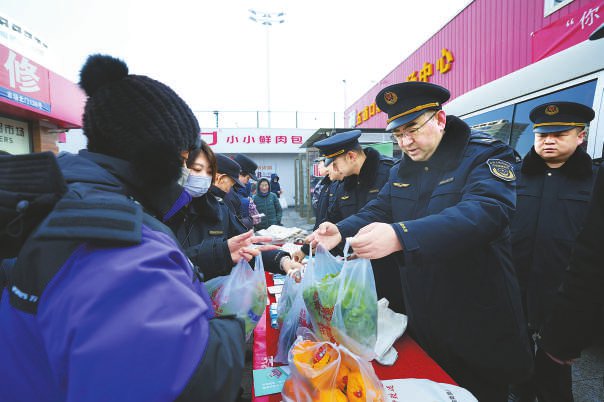
快检车进年货市场 “你点我检”守护安全
Xin Lang Cai Jing· 2026-01-14 21:47
Group 1 - The core initiative of the Beijing market supervision department is the "You Point, I Test" food safety campaign, which aims to enhance consumer confidence in food safety by providing on-site testing services at local markets [2][3] - The mobile testing vehicle acts as a "mobile laboratory," allowing consumers to have their food items tested for safety, including pesticide and veterinary drug residues, with all tested samples reported as compliant [2] - The campaign is designed to address consumer concerns regarding the safety of popular food items such as vegetables, fresh meat, fruits, and seafood, especially during the peak food consumption period leading up to the Spring Festival [3][4] Group 2 - The Beijing market supervision department plans to continue the "You Point, I Test" initiative throughout 2026, utilizing both online and offline channels to gather public input on food types and testing projects [4] - The department emphasizes a comprehensive approach to food safety, implementing full coverage and multi-link inspections in local markets to ensure the safety of essential food items for consumers [3] - The strategy includes empowering technology for mobile testing and encouraging public participation in monitoring food safety, transforming consumers from passive observers to active participants in the safety process [3]