
黎族织锦

Search documents
文旅为桥共叙琼台情 两岸业界共谈合作新机遇
Zhong Guo Xin Wen Wang· 2025-09-23 07:35
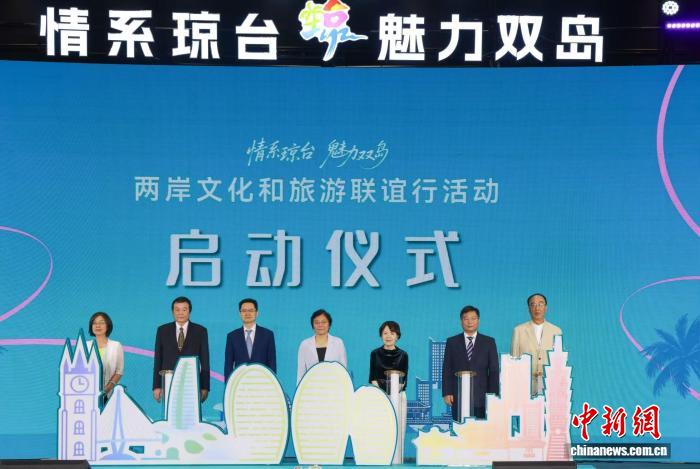
Core Viewpoint - The integration of culture and tourism in Hainan is essential for the sustainable development and transmission of traditional culture, as emphasized by experts in the field [1]. Group 1: Event Overview - The "Cultural and Tourism Exchange between Hainan and Taiwan" event was launched in Haikou, gathering professionals from the cultural, artistic, and tourism sectors from both regions to explore new opportunities for collaboration [3][5]. - Hainan's Vice Governor, Xie Jing, highlighted the upcoming full closure operation of Hainan Free Trade Port on December 18, which will provide broader space for collaboration between the two regions [3]. Group 2: Cultural and Tourism Development - The event showcased Hainan's unique advantages in cultural tourism, particularly its natural resources and a lifestyle that emphasizes slow living and nature [3]. - Taiwanese representatives expressed interest in understanding Hainan's cultural landscape and the development of young tourism professionals to incorporate local elements into future designs [3][5]. Group 3: Interactive Experiences and Innovations - The event featured interactive experiences with non-material cultural heritage, including demonstrations of Li ethnic weaving and other traditional crafts, attracting attention from Taiwanese tourism professionals [5][7]. - There is a focus on utilizing technology, such as artificial intelligence, to promote the digital dissemination and innovative experiences of non-material cultural heritage, aiming to engage more young people in cultural interactions [7].

老手艺的新引擎:借力AI推动海南传统手工艺传承与创新
Hai Nan Ri Bao· 2025-08-28 01:09
Core Viewpoint - Traditional handicrafts in China, particularly in Hainan, are facing severe challenges due to rapid social transformation and changing consumption patterns, leading to the risk of losing valuable skills. The advent of the digital age and artificial intelligence (AI) presents new opportunities for the protection and transmission of these crafts, but there are also challenges in accurately representing cultural elements and meanings [1][6]. Group 1: Metadata Standards - Establishing metadata standards is crucial for organizing the data related to traditional handicrafts. Current inconsistencies in terminology and a lack of systematic records for core techniques hinder effective preservation. A three-tier classification system (object layer, organization layer, and spirit layer) is proposed to create a comprehensive metadata framework [2][3]. - The object layer focuses on external forms such as decorative patterns and cultural symbols, while the organization layer records traditional techniques and processes. The spirit layer captures cultural traditions and historical narratives, effectively creating a "digital household registration" for traditional crafts [2][3]. Group 2: Translating Implicit Knowledge - The essence of traditional handicrafts often resides in unrecorded "implicit knowledge." Digitizing this knowledge involves collecting visual and audio-visual data of the crafts and using advanced technology to achieve semantic alignment. This process aims to make hidden elements of craftsmanship explicit, thus preventing misinterpretations and loss of cultural significance [3][4]. Group 3: Building Associative Networks - AI often misinterprets traditional craft elements due to weak knowledge associations. Constructing a multi-modal knowledge association network using natural language processing can help address this issue by extracting key semantic information from various data forms and creating a unified knowledge framework [4][5]. - This approach allows for a more comprehensive understanding of traditional crafts, enabling users to access not only visual representations but also related narratives and techniques, thereby bridging gaps in knowledge transmission [5]. Group 4: AI-Driven Innovation - The traditional model of knowledge transmission in handicrafts is evolving with AI technology, which enhances understanding and accessibility of craft knowledge. Knowledge graph technology simplifies complex relationships and improves information retrieval efficiency, fostering innovation and cross-disciplinary collaboration [6][7]. - By systematically organizing craft techniques and symbols, AI can inspire creative solutions and provide digital guidance for traditional craftsmanship, ensuring cultural integrity while promoting innovation [6][7]. Conclusion - AI is fundamentally transforming the transmission methods of traditional handicrafts, presenting both opportunities and challenges. It is essential to identify key bottlenecks in leveraging AI for the preservation and innovation of Hainan's traditional crafts, ensuring that ancient wisdom continues to thrive in contemporary contexts [7].