龙鱼

Search documents
赛博鳌鱼出圈背后:小小观赏鱼游出广州百亿产业
Nan Fang Nong Cun Bao· 2025-12-16 10:31
Core Insights - The article highlights the booming ornamental fish industry in Guangzhou, which is projected to exceed a production value of 10 billion yuan by 2025, contributing to a total industry chain value of over 100 billion yuan [38]. Industry Overview - Guangzhou is one of the earliest regions in China to develop the ornamental fish industry, with peak export transactions accounting for over 95% of the national total in the 1990s [19][20]. - The ornamental fish culture in Guangzhou is deeply rooted in local traditions, symbolizing prosperity and good fortune, and has become a significant part of the city's modern fishery industry [25][32]. Cultural Significance - The "Aoy fish" showcased at the National Games opening ceremony represents the rich "water culture" and "fish culture" of Guangzhou, embodying the local people's aspirations for success and abundance [26][28]. - The emotional connection to fish is particularly strong among the people of Guangdong, reflecting a long-standing maritime culture where fish symbolize both livelihood and spiritual well-being [31][32]. Economic Impact - The ornamental fish industry is not only a cultural symbol but also a vital economic sector, with various species like koi, dragon fish, and tropical fish having significant influence both nationally and globally [35][36]. - The industry is integral to rural revitalization efforts in Guangzhou, with initiatives to establish ornamental fish industrial parks and promote quality fish breeding [93][96]. Educational Initiatives - The introduction of ornamental fish in educational settings, such as the "Fish and Me" program in schools, aims to foster a love for life and nature among students while also serving as a therapeutic tool for mental health [86][90]. Historical Context - The history of ornamental fish trade in Guangzhou dates back centuries, with the city being a starting point for many species that have spread globally, including the pearl scale goldfish [44][46]. - The transformation of local markets, such as the famous "Goldfish Street," reflects the evolution of consumer preferences and the growth of the ornamental fish business over the decades [52][71].


全网刷屏!全运会开幕式上的“鳌鱼”究竟是什么鱼?
Nan Fang Nong Cun Bao· 2025-11-13 03:33
Core Viewpoint - The "Aoyu" showcased at the 15th National Games opening ceremony represents a significant cultural symbol from Guangdong, embodying the region's rich maritime culture and heritage [2][58]. Group 1: Cultural Significance - The "Aoyu" is derived from the traditional "Aoyu Dance," a folk art with over 600 years of history from Panyu, Guangzhou, and symbolizes good fortune and success [7][10]. - The Aoyu is linked to the myth of the golden carp that aspires to transform into a dragon, reflecting the Chinese aspiration of "fish turning into a dragon" [9][14]. - The representation of Aoyu at a national event highlights the promotion of Lingnan's intangible cultural heritage on a broader stage [6][58]. Group 2: Economic Impact - The ornamental fish industry in China, particularly in Guangdong, is significant, with an estimated production value exceeding 110 billion yuan by 2024, where koi fish play a crucial role [33][34]. - The popularity of koi fish as symbols of luck has been cultivated through various cultural events and competitions, particularly in Guangdong, which has become a hub for koi exhibitions [30][32]. - The development of the ornamental fish industry is further supported by local research institutions, which have made strides in breeding and technology, reducing reliance on imports [49][50]. Group 3: Regional Identity - The deep-rooted affection for fish among the people of Guangdong is not merely for pet ownership but is intertwined with cultural identity and heritage [16][60]. - The Aoyu serves as a bridge between myth and reality, resonating with the local population's values and aspirations, and is expected to gain recognition beyond regional boundaries [61].
从大熊猫看到的“动物软实力”
日经中文网· 2025-08-29 08:00
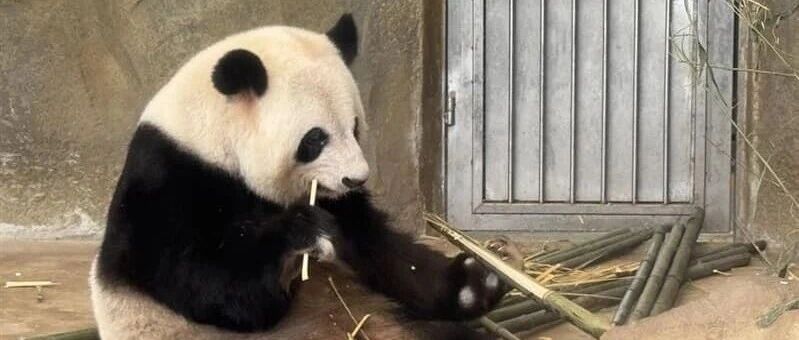
Core Viewpoint - The return of four giant pandas from Japan to China has become a significant topic in Sino-Japanese diplomacy, highlighting the soft power and diplomatic role that giant pandas play between the two nations [7][9][17]. Group 1: Panda Diplomacy - The return of the four pandas is linked to the Convention on International Trade in Endangered Species of Wild Fauna and Flora (CITES), which restricts the international transfer of endangered species [6]. - China has shifted from gifting pandas to a rental system aimed at breeding, with the first instance being the rental to Japan in 1994 [7]. - Currently, only two pandas remain in Japan, set to return in February 2026, raising the possibility of Japan facing a "zero panda" situation [7][17]. Group 2: Historical Context - Giant pandas have played a role in Sino-Japanese relations since the normalization of diplomatic ties in 1972, when China gifted two pandas to Japan [9]. - The use of pandas in diplomacy dates back to 1941, when two pandas were gifted to the United States by Soong Mei-ling to garner support during the Second Sino-Japanese War [9]. Group 3: Public Diplomacy - As of May 2025, China has rented 45 pandas to 15 countries, including the United States, emphasizing the importance of public diplomacy in international relations [10]. - The cute image of giant pandas helps mitigate China's "wolf warrior" diplomacy image, contributing positively to international public opinion [10][17]. Group 4: Economic and Cultural Impact - The presence of giant pandas in foreign zoos not only fosters diplomatic relations but also generates economic benefits through tourism [15][19]. - The emotional connection and care for pandas in foreign countries enhance their role in fostering goodwill and dialogue between nations [19].