21.6英寸4K医疗显示屏

Search documents
我省第10个万亿级产业集群、全国首个该领域万亿级产业集群诞生
Nan Fang Ri Bao Wang Luo Ban· 2026-02-12 07:57
Core Insights - The Guangdong ultra-high-definition (UHD) industry cluster is projected to exceed 1 trillion yuan in revenue by 2025, becoming the province's 10th trillion-level industry cluster and the first in this field nationwide [1] - The persistence and breakthroughs of engineers, entrepreneurs, and technicians in Guangdong have led to significant advancements in UHD technology, including the development of printed OLED and 8K cameras [1][3] Group 1: Printed OLED Technology - TCL Huaxing has developed printed OLED technology, which utilizes high-precision printing to deposit OLED materials, achieving over 90% material utilization and reducing costs by more than 15% when scaled [3][4] - The first mass-produced printed OLED product, a 21.6-inch 4K medical display, is set to be delivered in 2024, with the yield rate of the 5.5-generation printed OLED line increasing from single digits to 70% in just one year [3][4] Group 2: 8K Camera Development - The domestic 8K camera market, previously dominated by international brands, has seen the emergence of companies like Boguan Optoelectronics, which launched its first 8K camera in 2021 and achieved a 95% localization rate in its components [8] - Boguan Optoelectronics successfully showcased its 8K camera at the Beijing Winter Olympics, marking a significant milestone in China's 8K ultra-high-definition technology [8] Group 3: Market Expansion and International Presence - Companies like Zhouming Technology have successfully penetrated the Middle Eastern market, showcasing their LED solutions at major events, which reflects the growing recognition of Chinese brands' technological capabilities [5][6][7] - Zhouming Technology's revenue from LED displays has reached the top globally in 2023, highlighting the effectiveness of its overseas expansion strategy [7] Group 4: Innovation and Future Prospects - The integration of AI technology into UHD applications is being pursued by companies like 4K Garden, which has developed an AI super-resolution system to enhance content quality significantly [10][11] - The Guangdong province aims to leverage its strengths in 5G communication, UHD technology, AI, and manufacturing to create competitive products that can challenge international giants [11]
全球首条印刷OLED8.6代线开工!TCL华星295亿元押注,中尺寸“耐力赛”开启
Hua Xia Shi Bao· 2025-10-22 09:18
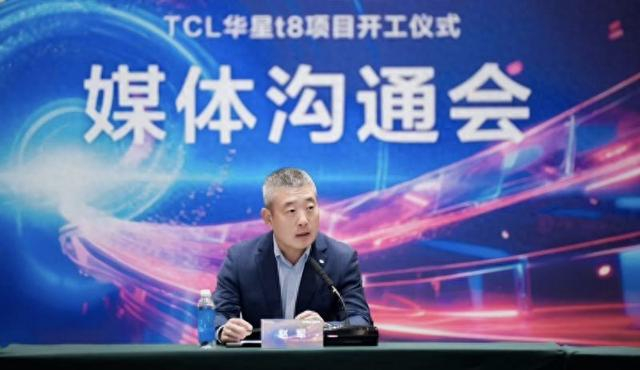
Core Viewpoint - TCL Huaxing has officially commenced construction of its OLED 8.6 generation line, becoming the fourth global player in this segment, with a total investment of approximately 29.5 billion yuan, expected to achieve mass production by 2027 [2][3]. Investment and Production - The T8 project is a joint investment between TCL Huaxing, the Guangzhou Municipal Government, and the Guangzhou Economic and Technological Development Zone Management Committee [2]. - The total investment of 29.5 billion yuan for the T8 project is significantly lower than that of competitors, such as BOE's 63 billion yuan and Visionox's 55 billion yuan for their respective OLED 8.6 generation lines [3][4]. Technology and Production Capacity - TCL Huaxing's T8 project is the world's first printed OLED 8.6 generation line, differing from competitors who use evaporation technology [3]. - The initial design capacity of the T8 project is 22,500 panels per month, which is lower than the 32,000 panels per month capacity of other OLED 8.6 generation lines [4]. - The company aims to achieve a 50% localization rate for equipment in the first phase of the T8 project, with expectations for further increases in subsequent phases [3]. Market Dynamics and Competition - The competition for mid-size displays is intensifying, with TCL Huaxing planning to expand its OLED market presence from niche professional fields to broader consumer electronics [5][6]. - The demand for AMOLED panels is projected to grow significantly, with an expected shipment of 1.01 billion panels in 2024, increasing to over 1.33 billion by 2030 [6]. - The entry of TCL Huaxing into the OLED market is seen as a challenge to South Korean companies, marking a shift in competitive dynamics within the industry [7]. Future Outlook - TCL Huaxing's first consumer OLED product is expected to enter mass production in the first half of next year, focusing on mid-size applications such as monitors, laptops, tablets, and automotive displays [5][6]. - The company anticipates that the growth of mid-size OLED demand will accelerate significantly starting in 2026, leading to increased competition and potential market consolidation [7].