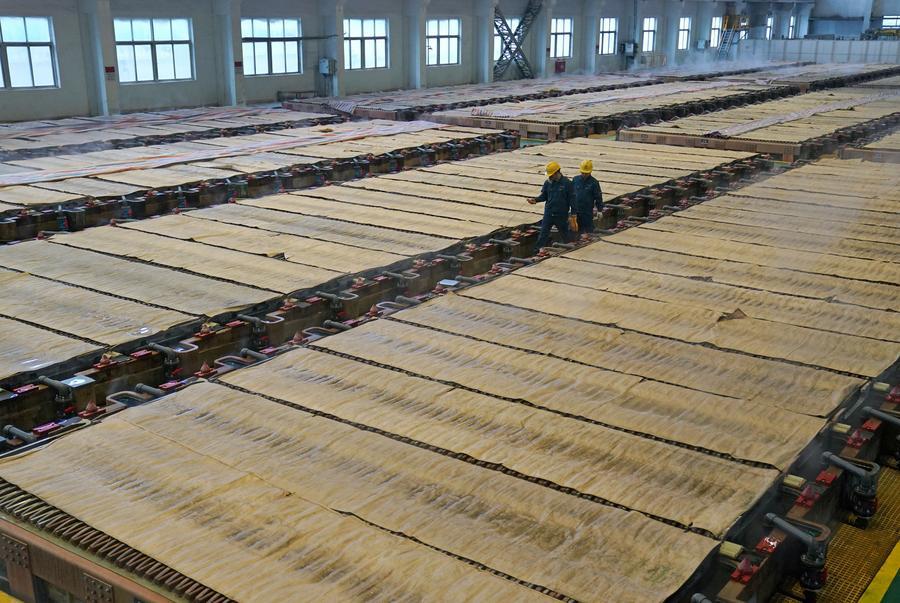
3微米极薄锂电铜箔

Search documents
“以铝节铜”应用提速
Xin Lang Cai Jing· 2026-02-06 12:41
Group 1 - The core viewpoint of the article highlights the significant rise in domestic copper prices in early 2026, following a historical high in 2025, driven by supply disruptions, increased demand, and favorable policy expectations [1][2]. - The global copper ore grade has decreased from 1.3% in 2005 to 0.65% in 2025, with mining costs rising over 40% compared to 2015, indicating long-term supply constraints [2]. - Demand for copper is being significantly boosted by the growth of "green energy" and "artificial intelligence," with electric vehicles using 3 to 5 times more copper than traditional vehicles, leading to substantial demand increases [2]. Group 2 - The rise in copper prices is exerting cost pressure on downstream enterprises, affecting various sectors including electrical production and home appliances [3]. - Companies are focusing on technological upgrades and innovations to mitigate cost pressures, such as optimizing structural designs and employing AI for energy savings [4]. - The exploration of "using aluminum to save copper" is becoming a key strategy in various industries, with applications in power, home appliances, and automotive sectors [5]. Group 3 - The application of copper-aluminum composite materials is gaining traction, with significant reductions in copper usage in air conditioning units and electric vehicles, indicating a shift towards resource-saving technologies [6]. - The use of high-quality copper-aluminum composite materials not only reduces costs but also enhances green value, as aluminum recycling consumes significantly less energy than copper recovery [6]. - The adoption of these materials is expected to alter the trend of dependence on imported copper, particularly copper concentrate, thereby enhancing industrial safety and international competitiveness [6].
财经聚焦|铜价高位震荡 “以铝节铜”应用提速
Xin Hua Wang· 2026-02-06 09:13
Group 1 - The core viewpoint of the article highlights the significant rise in domestic copper prices in early 2026, following a historical high in 2025, driven by supply disruptions, increased demand, and favorable policy expectations [1][2] - The supply side faces long-term constraints due to declining resource quality, rising extraction costs, and increased supply vulnerability, with global copper ore grades dropping from 1.3% in 2005 to 0.65% in 2025, and extraction costs rising over 40% from 2015 to 2025 [2] - Demand for copper is being significantly boosted by the growth of "green energy" and "artificial intelligence," with electric vehicles using 3 to 5 times more copper than traditional vehicles, and AI data centers requiring higher copper density than traditional ones [2] Group 2 - The rise in copper prices is exerting cost pressure on downstream enterprises, leading to price adjustments in various sectors, including electrical appliances and air conditioning [3][4] - Companies are focusing on technological upgrades and innovations to mitigate cost pressures, such as optimizing structural designs and employing AI for dynamic energy savings, which enhance performance without increasing material usage [5] - The strategy of "using aluminum to save copper" is emerging as a significant approach in various industries, allowing for the development of aluminum alloy cables and copper-aluminum composite materials to reduce copper usage while maintaining performance [7][9] Group 3 - The application of copper-aluminum composite materials is expected to reduce copper usage significantly in power distribution equipment, with predictions indicating a 65% average reduction in copper usage per unit over the next three years [8] - The value of copper-aluminum composite materials extends beyond cost reduction, offering green benefits due to lower energy consumption in aluminum recycling compared to copper recovery, and enhancing industrial safety and international competitiveness [9]