精密铜缆

Search documents
“以铝节铜”应用提速
Xin Lang Cai Jing· 2026-02-06 12:41
Group 1 - The core viewpoint of the article highlights the significant rise in domestic copper prices in early 2026, following a historical high in 2025, driven by supply disruptions, increased demand, and favorable policy expectations [1][2]. - The global copper ore grade has decreased from 1.3% in 2005 to 0.65% in 2025, with mining costs rising over 40% compared to 2015, indicating long-term supply constraints [2]. - Demand for copper is being significantly boosted by the growth of "green energy" and "artificial intelligence," with electric vehicles using 3 to 5 times more copper than traditional vehicles, leading to substantial demand increases [2]. Group 2 - The rise in copper prices is exerting cost pressure on downstream enterprises, affecting various sectors including electrical production and home appliances [3]. - Companies are focusing on technological upgrades and innovations to mitigate cost pressures, such as optimizing structural designs and employing AI for energy savings [4]. - The exploration of "using aluminum to save copper" is becoming a key strategy in various industries, with applications in power, home appliances, and automotive sectors [5]. Group 3 - The application of copper-aluminum composite materials is gaining traction, with significant reductions in copper usage in air conditioning units and electric vehicles, indicating a shift towards resource-saving technologies [6]. - The use of high-quality copper-aluminum composite materials not only reduces costs but also enhances green value, as aluminum recycling consumes significantly less energy than copper recovery [6]. - The adoption of these materials is expected to alter the trend of dependence on imported copper, particularly copper concentrate, thereby enhancing industrial safety and international competitiveness [6].
铜价高位震荡 “以铝节铜”应用提速
Xin Hua She· 2026-02-05 13:00
Group 1 - In January 2026, domestic copper prices surged significantly compared to both year-on-year and month-on-month figures, following a historical high in 2025, with high volatility observed in early February [1] - The recent increase in copper prices is attributed to a combination of supply disruptions, rising demand, and favorable policy expectations [1] - Global copper mines are facing long-term constraints due to declining resource quality, rising extraction costs, and increased supply vulnerabilities, with copper grades dropping from 1.3% in 2005 to 0.65% in 2025, and extraction costs rising over 40% since 2015 [1] Group 2 - The demand for copper is significantly driven by "green energy" and "artificial intelligence," with electric vehicles using 3 to 5 times more copper than traditional fuel vehicles, leading to a demand increase of hundreds of thousands of tons [1] - AI data centers have a higher copper density compared to traditional data centers, with the explosion of computing power and the construction of supporting power systems driving demand for high-purity copper foil and precision copper cables [1] - The global liquidity and geopolitical environment have also created favorable conditions for rising copper prices, with abundant liquidity and a strong equity market since the beginning of 2026 [1] Group 3 - The rise in copper prices has resulted in increased cost pressures for downstream companies, affecting various sectors from household items to industrial applications [4] - Companies like Anhui Meibo Intelligent Electric Group and Jiangjun Air Conditioning have issued price adjustment notices, citing rising copper prices as a significant reason [4] Group 4 - Some companies are focusing on technological upgrades to mitigate cost pressures, employing advanced technologies such as AI dynamic energy-saving techniques to enhance efficiency without increasing raw material usage [5] - Industry players are accelerating innovation, with companies like Nord Technology producing ultra-thin lithium battery copper foil and Jintian Copper upgrading recycling processes to achieve 99.99% purity for high-tech applications [5] - Long-term strategies include intelligent mining, low-grade utilization, and high-end material research to address cost pressures and achieve excess profits through technological innovation [5] Group 5 - The strategy of "using aluminum to save copper" is emerging as a significant exploration path, involving the development of aluminum alloy cables and copper-aluminum composite materials to conserve copper resources while ensuring performance [6] - The Ministry of Industry and Information Technology has identified key areas for aluminum development, including aluminum conductors for photovoltaic and wind power stations [6] - The application of copper-aluminum composite materials has shown promising results, with copper usage in air conditioning units decreasing from 12 kg per unit in 2000 to 4 kg currently, and in electric vehicles from 80 kg to 60 kg [6] Group 6 - The value of high-quality copper-aluminum composite materials extends beyond cost savings, offering green value with aluminum recycling energy consumption being only 5% of that for primary aluminum, which is lower than copper recycling energy consumption [8] - The adoption of "using aluminum to save copper" technologies enhances resource conservation and may reduce dependence on imported copper materials, particularly copper concentrates [8]

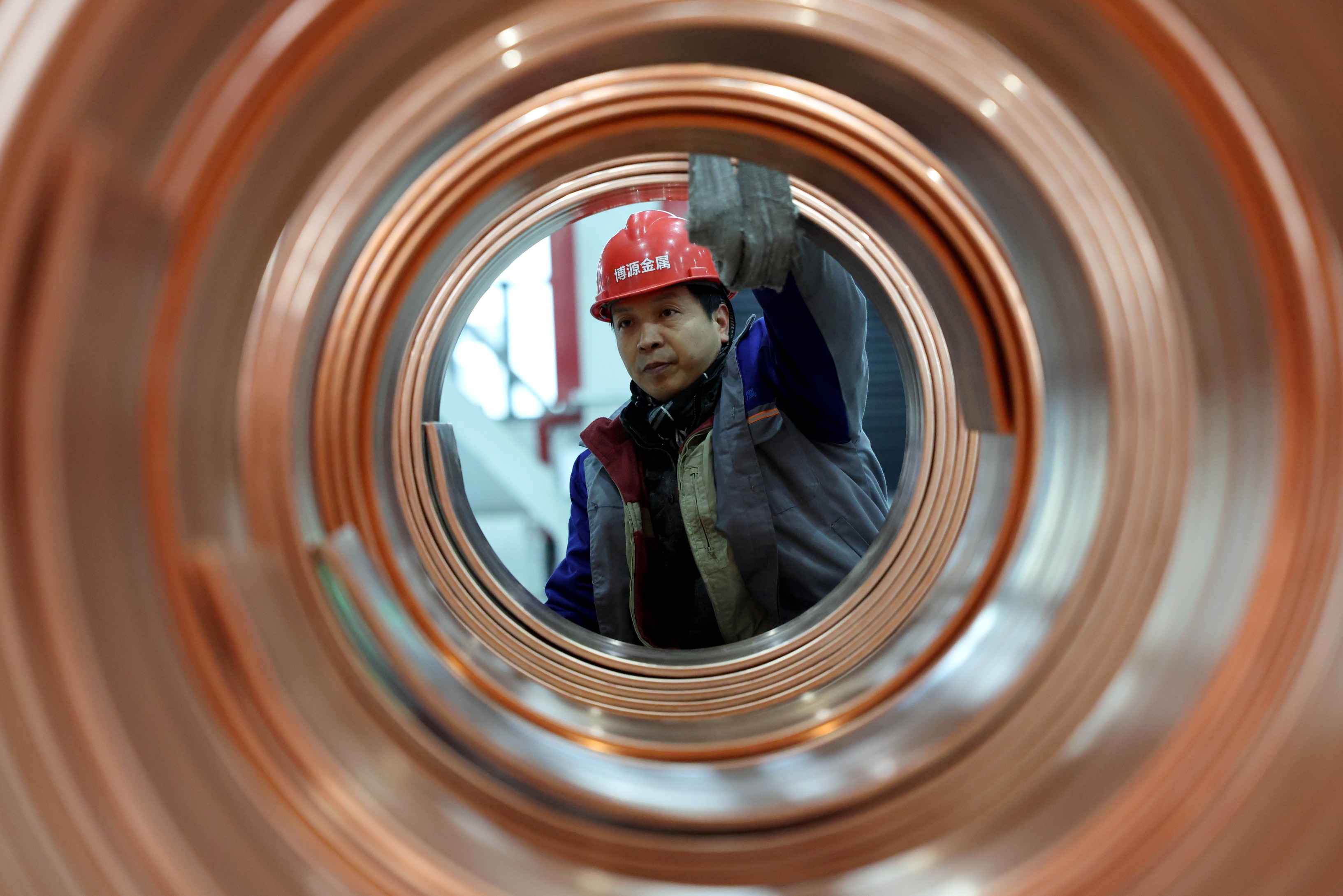
财经聚焦丨铜价高位震荡 “以铝节铜”应用提速
Xin Hua Wang· 2026-02-05 12:46
Core Viewpoint - Copper prices have been experiencing high volatility, driven by supply disruptions, increasing demand, and policy expectations, leading to significant price increases in early 2026 compared to previous years [1]. Supply Factors - Global copper mines are facing long-term constraints due to declining resource quality, rising extraction costs, and increased supply vulnerabilities. The copper grade has decreased from 1.3% in 2005 to 0.65% in 2025, with extraction costs rising over 40% since 2015 [1]. Demand Factors - The demand for copper is being significantly driven by the "green energy" and "artificial intelligence" sectors. For instance, a typical electric vehicle uses 3 to 5 times more copper than a traditional gasoline vehicle, leading to a demand increase of hundreds of thousands of tons. Additionally, AI data centers require much higher copper density compared to traditional data centers [1]. Market Environment - The global liquidity and geopolitical environment have also contributed to the rise in copper prices. Since the beginning of 2026, global liquidity has been ample, and the equity market has strengthened, further pushing copper prices upward [1]. Cost Pressure on Downstream Enterprises - The rise in copper prices has resulted in increased cost pressures for downstream companies, affecting various sectors such as electrical cable production and energy storage battery manufacturing. Companies like Anhui Meibo Intelligent Electric Group and Wuxi Jiangjun Air Conditioning have issued price adjustment notices citing rising copper prices as a key reason [3]. Innovation and Technological Upgrades - Companies are focusing on technological upgrades to mitigate cost pressures. For example, Gree Electric's use of AI dynamic energy-saving technology has improved efficiency without increasing raw material usage. Additionally, companies like Nord and Jintian Copper are innovating in copper foil production and recycling processes to meet high purity requirements for high-tech industries [4]. "Aluminum for Copper" Strategy - The "aluminum for copper" strategy is gaining traction, which involves using aluminum alloy cables and copper-aluminum composite materials in various sectors to save copper resources while ensuring performance. This approach is supported by government initiatives aimed at promoting aluminum applications in renewable energy and household appliances [6]. Performance Improvements - The application of copper-aluminum composite materials has shown significant results, with the amount of copper used in air conditioning units decreasing from 12 kg per unit in 2000 to 4 kg currently, and in electric vehicles from 80 kg to 60 kg [6]. Future Projections - Experts predict that in the next three years, the average copper usage in distribution network equipment will decrease by 65%, with complete switchgear equipment reducing copper usage from 200 kg to 70 kg per unit [7]. Environmental and Competitive Advantages - The use of high-quality copper-aluminum composite materials not only reduces costs but also has environmental benefits, as aluminum recycling consumes only 5% of the energy required for primary aluminum production, which is lower than that for copper recycling. This shift is expected to reduce dependence on imported copper raw materials, particularly copper concentrate [8].