
以铝节铜

Search documents
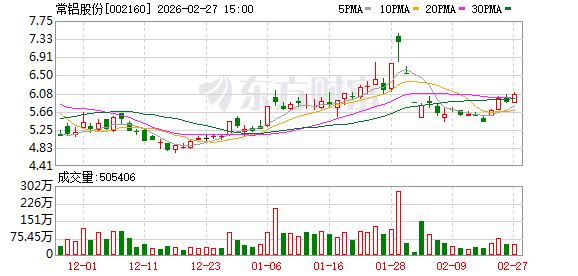
常铝股份:常铝股份长期开展家用空调用高性能铝合金材料研发,为行业提供优质铝合金材料
Zheng Quan Ri Bao· 2026-02-27 13:12
Core Viewpoint - Chang Aluminum Co., Ltd. is actively involved in the "aluminum-saving copper" initiative for household air conditioning, aligning with national industrial policies and trends, while emphasizing the need for a long-term strategy for successful implementation [2] Group 1: Company Involvement - Chang Aluminum is a member of the "Air Conditioning Aluminum Reinforcement Application Research Working Group," recognized by the China Household Electrical Appliances Research Institute and the China Refrigeration Society [2] - The company is the inventor of hydrophilic coated aluminum foil for household air conditioning and has been engaged in the research and development of high-performance aluminum alloy materials [2] Group 2: Industry Trends - The "aluminum-saving copper" strategy is in line with China's industrial policy direction and development trends, indicating a shift towards more efficient materials in the air conditioning sector [2] - The implementation of this strategy requires a relatively long-term layout and execution to achieve the ultimate industrial goals [2] Group 3: Commitment to R&D - Chang Aluminum will continue to focus on the research and development of aluminum alloy technology for air conditioning, contributing positively to the implementation of the national strategy [2]


“以铝节铜”应用提速
Xin Lang Cai Jing· 2026-02-06 12:41
Group 1 - The core viewpoint of the article highlights the significant rise in domestic copper prices in early 2026, following a historical high in 2025, driven by supply disruptions, increased demand, and favorable policy expectations [1][2]. - The global copper ore grade has decreased from 1.3% in 2005 to 0.65% in 2025, with mining costs rising over 40% compared to 2015, indicating long-term supply constraints [2]. - Demand for copper is being significantly boosted by the growth of "green energy" and "artificial intelligence," with electric vehicles using 3 to 5 times more copper than traditional vehicles, leading to substantial demand increases [2]. Group 2 - The rise in copper prices is exerting cost pressure on downstream enterprises, affecting various sectors including electrical production and home appliances [3]. - Companies are focusing on technological upgrades and innovations to mitigate cost pressures, such as optimizing structural designs and employing AI for energy savings [4]. - The exploration of "using aluminum to save copper" is becoming a key strategy in various industries, with applications in power, home appliances, and automotive sectors [5]. Group 3 - The application of copper-aluminum composite materials is gaining traction, with significant reductions in copper usage in air conditioning units and electric vehicles, indicating a shift towards resource-saving technologies [6]. - The use of high-quality copper-aluminum composite materials not only reduces costs but also enhances green value, as aluminum recycling consumes significantly less energy than copper recovery [6]. - The adoption of these materials is expected to alter the trend of dependence on imported copper, particularly copper concentrate, thereby enhancing industrial safety and international competitiveness [6].
财经聚焦|铜价高位震荡 “以铝节铜”应用提速
Xin Hua Wang· 2026-02-06 09:13
Group 1 - The core viewpoint of the article highlights the significant rise in domestic copper prices in early 2026, following a historical high in 2025, driven by supply disruptions, increased demand, and favorable policy expectations [1][2] - The supply side faces long-term constraints due to declining resource quality, rising extraction costs, and increased supply vulnerability, with global copper ore grades dropping from 1.3% in 2005 to 0.65% in 2025, and extraction costs rising over 40% from 2015 to 2025 [2] - Demand for copper is being significantly boosted by the growth of "green energy" and "artificial intelligence," with electric vehicles using 3 to 5 times more copper than traditional vehicles, and AI data centers requiring higher copper density than traditional ones [2] Group 2 - The rise in copper prices is exerting cost pressure on downstream enterprises, leading to price adjustments in various sectors, including electrical appliances and air conditioning [3][4] - Companies are focusing on technological upgrades and innovations to mitigate cost pressures, such as optimizing structural designs and employing AI for dynamic energy savings, which enhance performance without increasing material usage [5] - The strategy of "using aluminum to save copper" is emerging as a significant approach in various industries, allowing for the development of aluminum alloy cables and copper-aluminum composite materials to reduce copper usage while maintaining performance [7][9] Group 3 - The application of copper-aluminum composite materials is expected to reduce copper usage significantly in power distribution equipment, with predictions indicating a 65% average reduction in copper usage per unit over the next three years [8] - The value of copper-aluminum composite materials extends beyond cost reduction, offering green benefits due to lower energy consumption in aluminum recycling compared to copper recovery, and enhancing industrial safety and international competitiveness [9]
铜价高位震荡 “以铝节铜”应用提速
Xin Hua She· 2026-02-05 13:00
Group 1 - In January 2026, domestic copper prices surged significantly compared to both year-on-year and month-on-month figures, following a historical high in 2025, with high volatility observed in early February [1] - The recent increase in copper prices is attributed to a combination of supply disruptions, rising demand, and favorable policy expectations [1] - Global copper mines are facing long-term constraints due to declining resource quality, rising extraction costs, and increased supply vulnerabilities, with copper grades dropping from 1.3% in 2005 to 0.65% in 2025, and extraction costs rising over 40% since 2015 [1] Group 2 - The demand for copper is significantly driven by "green energy" and "artificial intelligence," with electric vehicles using 3 to 5 times more copper than traditional fuel vehicles, leading to a demand increase of hundreds of thousands of tons [1] - AI data centers have a higher copper density compared to traditional data centers, with the explosion of computing power and the construction of supporting power systems driving demand for high-purity copper foil and precision copper cables [1] - The global liquidity and geopolitical environment have also created favorable conditions for rising copper prices, with abundant liquidity and a strong equity market since the beginning of 2026 [1] Group 3 - The rise in copper prices has resulted in increased cost pressures for downstream companies, affecting various sectors from household items to industrial applications [4] - Companies like Anhui Meibo Intelligent Electric Group and Jiangjun Air Conditioning have issued price adjustment notices, citing rising copper prices as a significant reason [4] Group 4 - Some companies are focusing on technological upgrades to mitigate cost pressures, employing advanced technologies such as AI dynamic energy-saving techniques to enhance efficiency without increasing raw material usage [5] - Industry players are accelerating innovation, with companies like Nord Technology producing ultra-thin lithium battery copper foil and Jintian Copper upgrading recycling processes to achieve 99.99% purity for high-tech applications [5] - Long-term strategies include intelligent mining, low-grade utilization, and high-end material research to address cost pressures and achieve excess profits through technological innovation [5] Group 5 - The strategy of "using aluminum to save copper" is emerging as a significant exploration path, involving the development of aluminum alloy cables and copper-aluminum composite materials to conserve copper resources while ensuring performance [6] - The Ministry of Industry and Information Technology has identified key areas for aluminum development, including aluminum conductors for photovoltaic and wind power stations [6] - The application of copper-aluminum composite materials has shown promising results, with copper usage in air conditioning units decreasing from 12 kg per unit in 2000 to 4 kg currently, and in electric vehicles from 80 kg to 60 kg [6] Group 6 - The value of high-quality copper-aluminum composite materials extends beyond cost savings, offering green value with aluminum recycling energy consumption being only 5% of that for primary aluminum, which is lower than copper recycling energy consumption [8] - The adoption of "using aluminum to save copper" technologies enhances resource conservation and may reduce dependence on imported copper materials, particularly copper concentrates [8]
财经聚焦丨铜价高位震荡 “以铝节铜”应用提速
Xin Hua Wang· 2026-02-05 12:46
Core Viewpoint - Copper prices have been experiencing high volatility, driven by supply disruptions, increasing demand, and policy expectations, leading to significant price increases in early 2026 compared to previous years [1]. Supply Factors - Global copper mines are facing long-term constraints due to declining resource quality, rising extraction costs, and increased supply vulnerabilities. The copper grade has decreased from 1.3% in 2005 to 0.65% in 2025, with extraction costs rising over 40% since 2015 [1]. Demand Factors - The demand for copper is being significantly driven by the "green energy" and "artificial intelligence" sectors. For instance, a typical electric vehicle uses 3 to 5 times more copper than a traditional gasoline vehicle, leading to a demand increase of hundreds of thousands of tons. Additionally, AI data centers require much higher copper density compared to traditional data centers [1]. Market Environment - The global liquidity and geopolitical environment have also contributed to the rise in copper prices. Since the beginning of 2026, global liquidity has been ample, and the equity market has strengthened, further pushing copper prices upward [1]. Cost Pressure on Downstream Enterprises - The rise in copper prices has resulted in increased cost pressures for downstream companies, affecting various sectors such as electrical cable production and energy storage battery manufacturing. Companies like Anhui Meibo Intelligent Electric Group and Wuxi Jiangjun Air Conditioning have issued price adjustment notices citing rising copper prices as a key reason [3]. Innovation and Technological Upgrades - Companies are focusing on technological upgrades to mitigate cost pressures. For example, Gree Electric's use of AI dynamic energy-saving technology has improved efficiency without increasing raw material usage. Additionally, companies like Nord and Jintian Copper are innovating in copper foil production and recycling processes to meet high purity requirements for high-tech industries [4]. "Aluminum for Copper" Strategy - The "aluminum for copper" strategy is gaining traction, which involves using aluminum alloy cables and copper-aluminum composite materials in various sectors to save copper resources while ensuring performance. This approach is supported by government initiatives aimed at promoting aluminum applications in renewable energy and household appliances [6]. Performance Improvements - The application of copper-aluminum composite materials has shown significant results, with the amount of copper used in air conditioning units decreasing from 12 kg per unit in 2000 to 4 kg currently, and in electric vehicles from 80 kg to 60 kg [6]. Future Projections - Experts predict that in the next three years, the average copper usage in distribution network equipment will decrease by 65%, with complete switchgear equipment reducing copper usage from 200 kg to 70 kg per unit [7]. Environmental and Competitive Advantages - The use of high-quality copper-aluminum composite materials not only reduces costs but also has environmental benefits, as aluminum recycling consumes only 5% of the energy required for primary aluminum production, which is lower than that for copper recycling. This shift is expected to reduce dependence on imported copper raw materials, particularly copper concentrate [8].

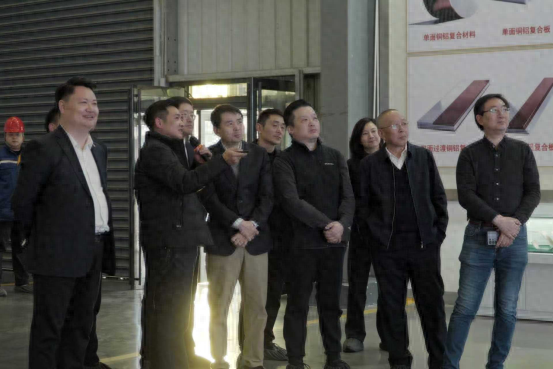
走进永城产业一线 走近复合新材未来
Huan Qiu Wang· 2026-01-19 02:10
Core Viewpoint - The article highlights the significance of copper-aluminum composite materials in achieving resource security and supporting China's dual carbon goals, emphasizing the role of policy and technological innovation in driving industry growth [4][11]. Group 1: Industry Development - The "carbon" initiative in Yongcheng aims to enhance the high-quality development of the aluminum industry, particularly through the promotion of copper-aluminum composites as a strategic resource security measure [4][11]. - The Ministry of Industry and Information Technology, along with ten other departments, has identified "using aluminum to save copper" as a key direction for expanding aluminum consumption, particularly in power, new energy, and home appliance sectors [4][11]. - Yongcheng is positioned as a key area for aluminum processing, aligning with national policies to extend the industrial chain and foster advanced metal material clusters [4][11]. Group 2: Technological Innovation - Yongtong's production line utilizes advanced technology to create copper-aluminum composites that are approximately two-thirds lighter than pure copper while maintaining 98% of copper's conductivity, leading to cost reductions of over 35% [7][11]. - The new production process reduces waste gas emissions by 60% compared to traditional methods and lowers carbon footprints by over 30%, aligning with national dual carbon policies [7][11]. - The company has established partnerships with major industry players and anticipates a demand exceeding 30,000 tons in the electric vehicle sector by 2025, with a projected annual growth rate of over 20% [7][11]. Group 3: Collaborative Development - A collaborative meeting post-factory visit focused on addressing industry challenges and enhancing the supply chain, with experts suggesting participation in industry standard-setting and expanding production to improve competitiveness [10][11]. - Yongtong has formed a research team in collaboration with Beijing University of Aeronautics and Astronautics, holding 23 patents and increasing production capacity from 10,000 tons to 20,000 tons annually [10][11]. - The local government is committed to optimizing the business environment and providing support in policy and resource allocation to foster a complete industrial cycle from research to application [10][11]. Group 4: Future Outlook - Yongtong has outlined a three-year development plan aiming for revenues exceeding 500 million yuan by 2026 and 1 billion yuan by 2027, with expansion into new fields such as electronic communications and artificial intelligence by 2028 [11]. - The copper-aluminum composite market is projected to reach a scale of 100 billion yuan by 2030, playing a crucial role in alleviating copper resource dependency and promoting industrial upgrades [11].
科技周报|国务院调查外卖行业无序竞争问题,多款机器人亮相CES
Di Yi Cai Jing· 2026-01-11 05:58
Group 1: Food Delivery Industry - The State Council's Anti-Monopoly and Anti-Unfair Competition Committee is investigating the competitive landscape of the food delivery service industry, highlighting issues such as subsidy wars, price competition, and traffic control, while emphasizing opposition to "involution-style" competition [2] - Major platforms like Meituan, Taobao Flash, and JD responded collectively, asserting their commitment to maintaining fair and orderly competition in the industry [2] - Experts believe that regulatory investigations will clarify competitive boundaries and behavioral bottom lines, pushing platforms to shift from price competition to efficiency, service, and innovation [2] Group 2: E-commerce and Support Policies - Douyin E-commerce announced an upgraded support plan for merchants, focusing on cost, traffic, conversion, fulfillment, technology, and governance, aiming to enhance long-term operational certainty for merchants [4] - The nine support policies were initially launched in early 2025, and over the past year, Douyin has saved merchants over 32 billion yuan through various initiatives [4] Group 3: Autonomous Driving and Technology - Baidu's "Roborock" received the first full unmanned testing license in Dubai, marking a significant step towards commercial operations planned for Q1 2026, with plans to expand the fleet to over 1,000 vehicles [8] - The establishment of an integrated operation base in Dubai will support the scale of unmanned vehicle operations, indicating China's deep involvement in global transportation ecosystem restructuring [8] Group 4: Battery Technology - Donut Lab introduced what it claims to be the world's first mass-producible all-solid-state battery, featuring an energy density of 400 Wh/kg and rapid charging capabilities [9] - The battery is designed to withstand extreme temperatures and has a minimal capacity degradation after 100,000 charge cycles, with no flammable liquid electrolytes [9][10] Group 5: Air Conditioning Industry - Gree Electric Appliances announced that it will not raise air conditioner prices and has no plans to replace copper with aluminum in its products, despite rising copper prices [11] - The transition to aluminum in air conditioning systems faces technical verification and standardization challenges, with Gree emphasizing that aluminum has not yet reached the same technical reliability as copper [11]

格力称空调不涨价、暂无铝代铜计划,中国空调业以铝节铜为何遇阻?
第一财经· 2026-01-05 12:37
Core Viewpoint - Gree Electric Appliances announced that it will not raise air conditioner prices despite rising copper prices, indicating a strategic decision to maintain market competitiveness while the industry explores aluminum as a substitute for copper in air conditioning systems [3][4]. Group 1: Impact of Rising Copper Prices - The price of copper futures has exceeded $10,000 per ton, leading to increased costs for air conditioning units, where copper constitutes about 40% of the bill of materials (BOM) [5][6]. - Some air conditioning companies have already raised prices due to the surge in copper prices, with one company increasing prices by 5% and another by 2% to 4% [5]. - Gree's decision to keep prices stable is seen as a strategy to enhance its market share and competitiveness amid rising costs [5][6]. Group 2: Aluminum as a Substitute for Copper - The Chinese government has initiated policies to promote the use of aluminum in place of copper, particularly in air conditioning heat exchangers [5][8]. - Gree Electric has been researching aluminum technology for years but has not yet found it to meet the same technical standards as copper, leading to a cautious approach regarding aluminum adoption [3][8]. - Other companies, such as Wanbao, have begun to introduce aluminum-based air conditioners at lower prices compared to traditional copper models, indicating a shift in the market [8]. Group 3: Technical and Market Challenges - The performance standards for aluminum alloy pipes in air conditioning systems are still under development, with ongoing research needed to ensure reliability and efficiency comparable to copper [10][11]. - The industry faces challenges in convincing consumers of the corrosion resistance and overall reliability of aluminum compared to copper, necessitating extensive testing and validation [11][12]. - The transition to aluminum may require significant investment in new manufacturing processes and equipment, as the production techniques for aluminum differ from those for copper [12].


格力称空调不涨价、暂无铝代铜计划,中国空调业以铝节铜为何遇阻?
Di Yi Cai Jing· 2026-01-05 07:47
Core Viewpoint - The rising copper prices and the national policy of "using aluminum to replace copper" have brought the development of aluminum in air conditioning to a critical juncture, with industry standards still under discussion [1][3]. Group 1: Industry Trends - The price of copper futures has exceeded $10,000 per ton, leading to increased pressure on air conditioning prices, with some companies announcing price hikes of 2% to 5% [4]. - The Chinese household appliance research institute has formed a working group to explore the application of aluminum in air conditioning, with 19 member units including major air conditioning manufacturers [3][4]. - The cost of copper constitutes about 40% of the bill of materials (BOM) for air conditioning units, making the industry particularly sensitive to fluctuations in copper prices [4]. Group 2: Company Responses - Gree Electric Appliances has stated that it will not raise air conditioning prices and has no current plans to adopt aluminum in place of copper, citing that aluminum has not yet reached the same technical standards as copper [3][6]. - Other companies, such as Wanbao Air Conditioning, have begun to experiment with aluminum, launching a model priced 20% lower than copper-based units [6]. - Gree's market strategy appears to be focused on maintaining high prices to enhance its competitive position, despite rising material costs [4][5]. Group 3: Technical Considerations - The performance standards for aluminum alloy pipes in air conditioning applications are still being defined, with ongoing research into their thermal conductivity and corrosion resistance [7][9]. - The thickness and structure of aluminum pipes have been adjusted to improve heat exchange efficiency, making them comparable to copper pipes [7]. - There is a consensus that while aluminum may not completely replace copper, a hybrid approach using both materials is likely to develop rapidly [6][9]. Group 4: Future Outlook - The industry anticipates that the national standards for air conditioning heat exchangers will be revised by 2026, which may include guidelines for the use of aluminum [9]. - Research into the long-term reliability and performance of aluminum in air conditioning applications is ongoing, with expectations for improved understanding and technology in the coming years [8][9].
2025年中国铜包铝母线行业物理参数、产业链、市场规模、重点企业经营情况及未来趋势研判:以铝节铜优势显著,铜包铝母线规模达887.66亿元[图]
Chan Ye Xin Xi Wang· 2025-11-27 01:29
Industry Overview - Copper-clad aluminum bus bars are composite conductive materials designed based on the "skin effect" principle, featuring an aluminum core and a copper outer layer, which retains the high current-carrying capacity and low contact resistance of copper while significantly reducing weight and manufacturing costs [1][7] - The copper-clad aluminum bus bar can save 40%-50% of conductor costs compared to traditional copper bars and is widely used in electric control distribution equipment as a high-current conductor [1][7] - The market demand for copper-clad aluminum bus bars is continuously growing due to the ongoing upgrades in power infrastructure, rapid development of the renewable energy industry, and the expansion of emerging fields such as smart grids and electric vehicles [1][7] Market Size and Growth - The market size of the copper-clad aluminum bus bar industry in China is projected to grow from 15.53 billion yuan in 2016 to 88.77 billion yuan in 2024, with a compound annual growth rate (CAGR) of 24.35% [1][7] - The Chinese power transmission and transformation equipment industry market size is expected to increase from 1.12 trillion yuan in 2018 to 1.63 trillion yuan in 2024, with a CAGR of 6.45% [5][6] Industry Chain - The upstream of the copper-clad aluminum bus bar industry includes raw materials and equipment such as aluminum (electrolytic aluminum), copper (refined copper), coating machines, welding equipment, and rolling mills [4] - The midstream involves the production and manufacturing of copper-clad aluminum bus bars, while the downstream applications include power transmission and transformation equipment, energy storage systems, and various industrial sectors [4] Key Enterprises - Major companies in the copper-clad aluminum bus bar industry include Yantai Fuxinda Bimetal Co., Ltd., Suzhou Wujiang Shenzhou Bimetal Cable Co., Ltd., and Zhejiang Shengjin Copper Industry Co., Ltd., among others [2][8] - These companies are focusing on technological innovation and quality control to maintain competitive advantages in the market [8] Development Trends - Future development in the copper-clad aluminum bus bar industry will rely on breakthroughs in material science and connection technology, with a focus on enhancing the metallurgical bonding strength between copper and aluminum [11] - The industry is expected to integrate smart manufacturing and establish unified standard systems to ensure product performance consistency and stability [11] - Cost optimization will be closely linked to green manufacturing concepts, emphasizing process innovation and sustainable practices throughout the production lifecycle [12][13]
