3D打印传感器

Search documents
当机器人长出“橡胶肌肉”:美国西北大学这项突破,让钢铁直男变柔韧高手
机器人大讲堂· 2025-08-09 03:06
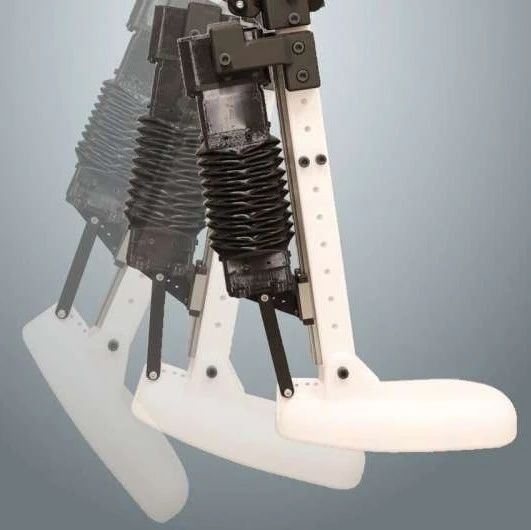
Core Insights - The article discusses the development of bio-inspired artificial muscles by Northwestern University, which aim to provide robots with unprecedented flexibility and adaptability, moving away from traditional rigid mechanical systems [1][3]. Group 1: Breakthrough in Robotics - The new artificial muscles allow robots to perform complex and delicate movements, mimicking biological muscle contractions and expansions, thus enhancing human-robot collaboration and precision tasks [1][4]. - The research addresses the industry challenge of balancing material performance and driving efficiency in flexible robotics, potentially transforming automation in traditional manufacturing [1][3]. Group 2: Design and Functionality - The artificial muscles are based on a bionic design that combines rigid skeletal structures with soft muscle-like actuators, enabling robots to navigate unstructured environments safely and naturally [4][5]. - The team utilized a 3D-printed structure called "HSA" (Hand-Shear-Assisted) that can stretch and expand, simulating muscle behavior, and is encased in a rubber origami structure for effective actuation [4][5]. Group 3: Practical Applications - A life-sized robotic leg was constructed to demonstrate the capabilities of the artificial muscles, featuring a hard plastic skeleton and rubber tendons, which can absorb impacts and mimic biological movement [8][9]. - The robotic leg, powered by a compact battery, can perform thousands of knee bends on a single charge and successfully execute tasks like kicking a volleyball, showcasing the practical utility of the artificial muscles [9].