700

Search documents
特朗普关税威胁“升空”,喷气机站在了美加贸易冲突前线
第一财经· 2026-02-05 09:25
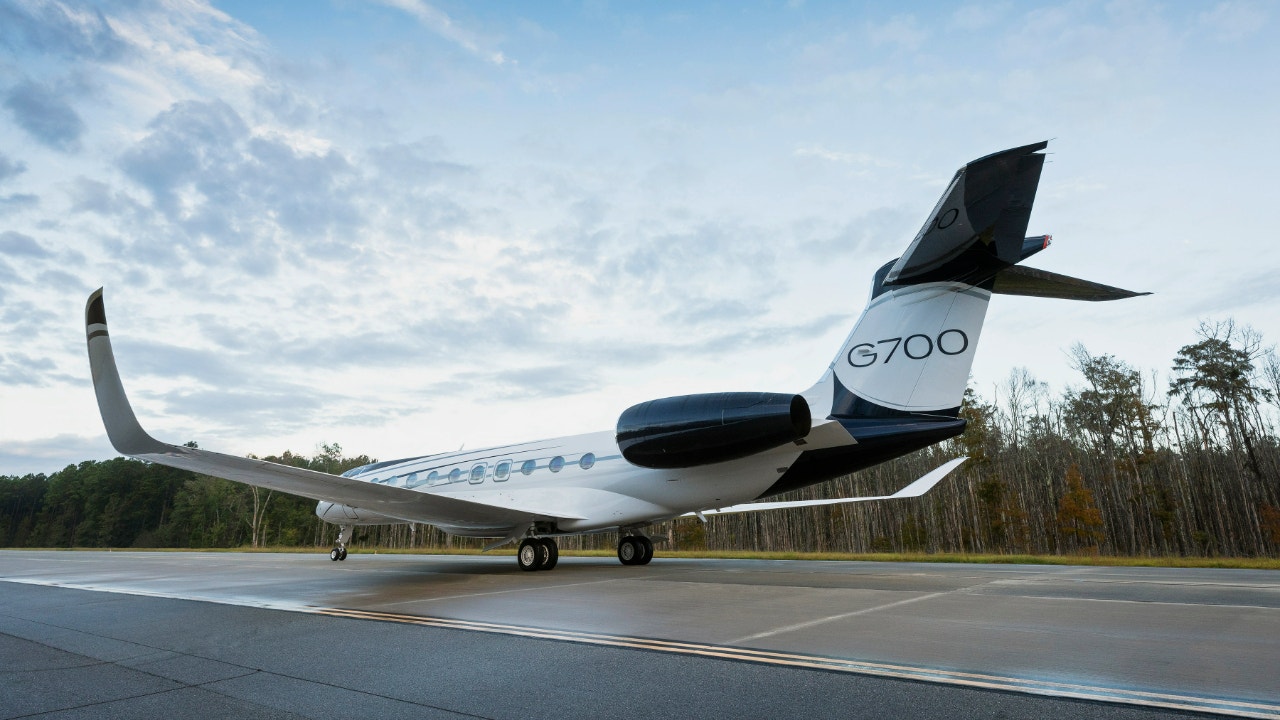
Core Viewpoint - The article discusses the recent trade tensions between the U.S. and Canada regarding the certification of Gulfstream jets, highlighting the complexities of international aviation regulations and the implications for the business jet market [3]. Group 1: Certification Issues - The Canadian Transport Department is collaborating with the FAA to address delays in the approval of certain Gulfstream jet models [4]. - President Trump accused Canada of illegally refusing to certify Gulfstream models 500, 600, 700, and 800, threatening a 50% tariff on Canadian aircraft sold in the U.S. [4][5]. - Without Canadian recognition of FAA certifications, Gulfstream jets cannot be delivered to Canadian buyers or operate in Canadian airspace [4]. Group 2: Regulatory Landscape - Following the Boeing 737 MAX crashes, Canada and the EU have become more cautious and are focusing on their own certification processes rather than relying solely on FAA approvals [7]. - The FAA has granted exemptions for certain Gulfstream models to begin phased deliveries, but Canada has withheld certification due to incomplete fuel system testing [7]. - The article notes that the FAA's approach may be influenced by competitive market dynamics, particularly concerning Bombardier's aircraft [7]. Group 3: Market Dynamics - The business jet market is experiencing a resurgence, with a forecast of 8,500 new jets to be delivered over the next decade, valued at approximately $283 billion [10]. - North America currently holds over 60% of the global business jet fleet and is expected to receive about 70% of new deliveries in the next three years [10]. - Trump's threats have introduced uncertainty into the growing market, affecting ongoing transactions, as noted by industry executives [10][11].



特朗普关税威胁“升空”,喷气机站在了美加贸易冲突前线
Di Yi Cai Jing· 2026-02-05 08:08
Core Viewpoint - The growing business jet market is facing uncertainty due to threats from former President Trump regarding aircraft certification and potential tariffs on Canadian-made planes [1][4]. Group 1: Aircraft Certification Issues - The Canadian Transport Department is collaborating with the FAA to address delays in the certification of certain Gulfstream jet models [1]. - Trump accused Canada of "wrongfully, illegally, and stubbornly refusing" to certify Gulfstream models 500, 600, 700, and 800, threatening a 50% tariff on Canadian aircraft sold in the U.S. [1]. - Experts indicate that without Canadian recognition of FAA certifications, Gulfstream aircraft cannot be delivered to Canadian buyers or operate in Canadian airspace [1][2]. Group 2: Regulatory Landscape - Following the Boeing 737 MAX crashes, countries like Canada and the EU are increasingly focusing on their own airworthiness certification capabilities rather than relying solely on FAA approvals [2]. - The FAA has granted exemptions for the G700 and G800 models, allowing phased deliveries until the end of 2026, but Canada has refused certification due to incomplete fuel system testing [2]. - The Chicago Convention mandates that safety is the priority, and the fuel icing tests are critical for engine fuel supply [2]. Group 3: Market Dynamics - The business jet market is recovering, with a forecast of 8,500 new business jets to be delivered over the next decade, valued at approximately $283 billion [3]. - North America currently holds over 60% of the global business jet fleet and is expected to receive about 70% of new deliveries in the next three years [3]. - The demand for orders is stimulated by the U.S. "Big and Beautiful" Act's 100% bonus depreciation policy and the popularity of fractional ownership models [3]. Group 4: Competitive Landscape - Bombardier is a strong competitor to Gulfstream, with its latest ultra-long-range business jets priced around $80 million, often adjusted based on customer specifications [4]. - Trump's threats have created uncertainty in the market, affecting ongoing transactions, such as a deal to sell Bombardier jets to the U.S. [4]. - Legal experts have noted the unprecedented nature of Trump's actions, which could impact the rights of private jet owners protected by the constitution [4].

Trump threatens 50% tariff on Canadian aircraft in escalating Gulfstream certification fight
Fox Business· 2026-01-30 04:11
Core Viewpoint - President Trump threatens to decertify Canadian-made aircraft and impose a 50% tariff unless Canada certifies Gulfstream jets, accusing Canada of blocking certification while allowing its own planes access to the U.S. market [1][2]. Group 1: Aircraft Certification Dispute - The dispute revolves around the aircraft certification process, which determines whether planes can be sold and operated in a country [1]. - Trump claims Canada has illegally refused to certify Gulfstream jets, which he describes as technologically advanced [2]. - He asserts that Canada is effectively prohibiting the sale of Gulfstream products through the certification process [2]. Group 2: Proposed Tariffs and Impact - Trump announced that if the situation is not corrected, he will impose a 50% tariff on all aircraft sold into the U.S. from Canada [2]. - It remains unclear which specific aircraft, beyond Bombardier's Global Express line, would be affected by the proposed tariffs [5]. - As of early Friday, over 400 Canadian-made aircraft were operating to and from U.S. airports, with 150 Global Express aircraft registered in the U.S. [5]. Group 3: Regulatory Authority and Responses - The authority to decertify aircraft rests with the FAA, and it is uncertain how Trump would implement such a decertification [9]. - The Federal Aviation Administration and the European Union Aviation Safety Agency have certified the Gulfstream G800 jet, while Transport Canada has not responded to requests for comment [8].
Trump Says US To Decertify, Levy Tariff On Canadian Planes
Www.Ndtvprofit.Com· 2026-01-30 01:25
Group 1: Trade Tariffs and Aircraft Certification - President Trump announced a potential 50% tariff on Canadian aircraft sold in the US, contingent on Canada's certification of Gulfstream jets [1] - Trump accused Canada of illegally refusing to certify Gulfstream jets, claiming this prohibition affects Gulfstream's sales in Canada [1] - The threat of decertifying Canadian-made Bombardier aircraft could impact US corporate travel, as many companies rely on Bombardier jets [4][5] Group 2: Impact on Bombardier - Bombardier's CRJ regional jets are widely used by US airlines, with American Airlines operating about 200 CRJ aircraft and Delta Air Lines having over 150 [2] - More than half of Bombardier's global fleet of over 5,200 aircraft operates in the US, with 64% of sales coming from the US market [10] - The majority of Bombardier's Global 7500 jet costs are tied to US manufacturing, with significant components sourced from various states [11] Group 3: Industry Reactions and Context - Aviation analysts expressed concerns about the implications of Trump's actions on safety and certification processes [3] - The ongoing trade tensions between the US and Canada are highlighted by Trump's threats, which coincide with negotiations over the USMCA trade agreement [7] - The US Trade Representative's report does not mention Canada's aircraft certification process as a non-tariff barrier [12]


SSAB (OTCPK:SSAA.F) 2025 Capital Markets Day Transcript
2025-11-04 08:50
SSAB Capital Markets Day 2025 Summary Company Overview - **Company**: SSAB (OTCPK:SSAA.F) - **Event**: Capital Markets Day 2025 - **Date**: November 04, 2025 - **Location**: Oxelosund, Sweden Key Points and Arguments Strategic Direction - SSAB is transitioning from old technology to new technology, emphasizing innovation in steel production [2][14] - The company aims to enhance its premium leadership in the market, focusing on unique customer value and advanced high strength steel [22][23] Market Position - SSAB Special Steel holds a global market share of approximately 30%, with 50% market share in North America, South America, and Europe [24][25] - SSAB Americas has been ranked as the number one supplier for quality and delivery performance [25] - The company is positioned as a preferred supplier for specialty grades and quenched and tempered steel [25] Financial Performance - SSAB has maintained an average EBITDA of 14% over business cycles, outperforming European peers despite challenges from cheap imports [29][30] - The company has a net cash position of approximately SEK 811 billion and is committed to a 40% dividend of net profit [29][31] Investment Strategy - SSAB plans to increase strategic investments to reposition itself in the market, focusing on premium products and reducing dependency on spot market prices [32][36] - The company is investing in electric arc furnaces and new production lines to enhance efficiency and capacity [63][66] Industry Dynamics - The global steel industry is facing overcapacity, particularly from subsidized imports from Asia, which is changing the competitive landscape [41] - SSAB anticipates the implementation of safeguards by the European Commission to protect the European steel industry [41][42] Product Development - SSAB is focusing on advanced high strength steels, which are increasingly in demand across various sectors, including automotive and construction [40][46] - The company is developing unique products like the Dokol 1,700 and ARMORCs for specialized applications [51][53] Sustainability and Low Emission Steel - SSAB is committed to producing low emission steel and anticipates strong demand from automotive companies willing to pay a premium for sustainable products [86][88] - The company is exploring hydrogen-reduced DRI production in partnership with LKB to secure green feedstock [93][95] Future Outlook - SSAB aims to increase its premium product share to 55% by 2030, with ambitions to reach 75% thereafter [60][61] - The company is well-positioned to capitalize on market trends favoring advanced high strength steel and sustainable production methods [70] Additional Important Content - SSAB's operational excellence is demonstrated through continuous improvements in safety and production stability, with a focus on reducing lost time injury frequency [39] - The company is exploring value-added operations, including 3D printing and laser hardening, to enhance its product offerings [55][56] - SSAB's strategy includes a strong emphasis on collaboration with customers to develop tailored solutions that deliver significant value [104][105]
TransAct Technologies rporated(TACT) - 2025 Q2 - Earnings Call Transcript
2025-08-06 21:30
Financial Data and Key Metrics Changes - Total net sales for Q2 2025 were $13.8 million, up 6% sequentially and 19% year over year from $11.6 million [23] - Adjusted EBITDA for the quarter was positive at $478,000, an increase from $89,000 in the prior year period [30] - Gross margin for Q2 was 48.2%, down from 52.7% in the prior year period, attributed to a higher mix of lower-margin FST hardware sales [27] Business Line Data and Key Metrics Changes - Food Service Technology (FST) revenue rose to $4.8 million, up 14% year over year, with recurring FST revenue climbing to $3 million, showing solid gains [13][23] - Casino and gaming revenue reached $7.6 million, up 42% year over year and 14% sequentially, driven by improved market demand and new OEM partnerships [16][26] - POS automation sales declined 49% year over year to $590,000, expected to remain in the $500,000 to $600,000 range per quarter [26] Market Data and Key Metrics Changes - The casino and gaming market is experiencing a rebound, with normalized buying levels from major OEMs and new opportunities in non-casino charitable gaming applications [16][18] - The FST market is seeing strong momentum, with a focus on operational efficiency and sales process improvements contributing to positive results [14][20] Company Strategy and Development Direction - The company has acquired a perpetual license for the BOHA! software source code for $2.55 million, which is expected to generate significant benefits and cost savings in the future [8][12] - The strategy includes a "land and expand" approach to client acquisition, focusing on smaller initial sales with the potential for future expansions [15][37] - Management emphasizes disciplined investments and execution of the corporate plan to maximize shareholder value [20][21] Management's Comments on Operating Environment and Future Outlook - Management is optimistic about the company's trajectory, expecting continued growth in FST and stability in the casino and gaming sectors [21][22] - The company raised its full-year revenue guidance to between $49 million and $53 million, reflecting confidence in ongoing market demand [21] - Management acknowledges the need to monitor broader economic factors affecting the casino and gaming industry but does not foresee long-term concerns [20] Other Important Information - The company expects to capitalize $3.55 million of the acquisition costs and begin amortizing it in early 2027 [12][31] - The balance sheet remains solid, with cash and cash equivalents of nearly $18 million at the end of Q2 [30] Q&A Session Summary Question: Satisfaction with FST sales excluding QSR - Management expressed excitement about progress in selling to newer client bases and emphasized the importance of customer engagement and sales training [34][36] Question: Potential for adding software components to QSR sales - Management confirmed ongoing discussions about adding software components to terminal sales for large QSRs [39][40] Question: Market share gains in casino and gaming - Management indicated a focus on gradually eroding competitors' market positions and emphasized the importance of being present in new opportunities [41][42]