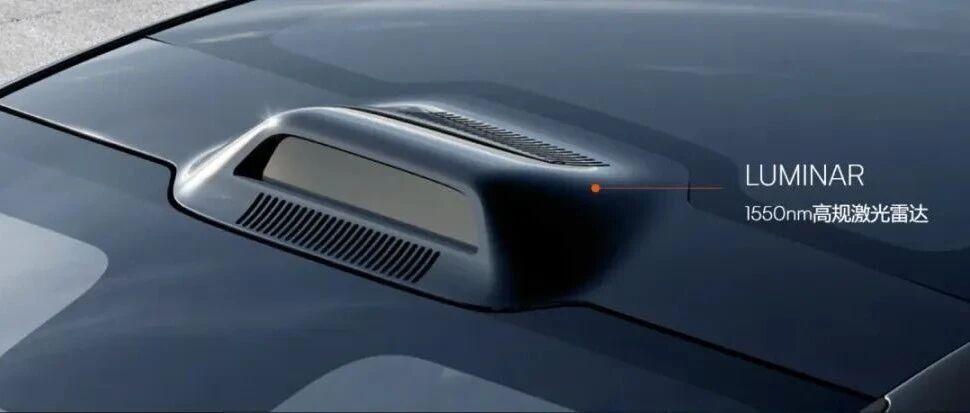
905nm激光雷达

Search documents
一夜蒸发540亿!这家全球市值第一的美国企业,为啥被所有人抛弃?
电动车公社· 2025-12-23 16:06
Core Viewpoint - The article discusses the rise and fall of Luminar, a prominent player in the lidar industry, highlighting its rapid growth, technological innovations, and eventual bankruptcy due to internal management issues and market competition [1][95]. Group 1: Company Overview - Luminar was founded in 2012 by Austin Russell, a prodigy who dropped out of college to pursue entrepreneurship in the lidar sector [13][28]. - The company initially gained significant attention and market share by innovating with a 1550nm wavelength lidar, which offered advantages in safety and performance over the traditional 905nm systems [34][38]. Group 2: Market Position and Performance - Luminar's market value peaked at over $5 billion in 2022, making it the most valuable lidar company globally at that time [9][11]. - The company successfully launched its second-generation lidar, Iris, which featured 300 lines and a detection range of up to 500 meters, priced around $500, making it competitive for mass production [51][52]. Group 3: Challenges and Decline - In late 2025, Luminar faced a catastrophic setback when Volvo canceled its partnership, which accounted for 90% of Luminar's revenue, leading to a rapid decline in stock value and eventual bankruptcy filing [59][62]. - Internal management issues, including the dismissal of CEO Austin Russell and disputes over contract obligations with Volvo, contributed to the company's downfall [65][63]. Group 4: Industry Context - The lidar market has seen a significant shift, with Chinese companies like Hesai and RoboSense capturing over 90% of the global market share, while American firms struggle to compete [98][99]. - The article emphasizes that technological superiority does not guarantee market success, as companies must adapt to market demands to survive [94].

200亿激光雷达第一股诞生:九年早造一只“鹰眼”,两个技术男撞开港股DE-SPAC大门
Xin Lang Cai Jing· 2025-12-10 13:53
Core Viewpoint - The successful listing of Seyond (图达通) on the Hong Kong Stock Exchange through a De-SPAC process marks a significant milestone for hard technology companies in Hong Kong, showcasing a new pathway for tech firms to access capital markets more efficiently [1][2][10]. Group 1: Company Overview - Seyond, founded by Baokun Wei and Li Yimin in 2016, specializes in laser radar technology, which is essential for advanced driver assistance systems and autonomous driving [3][4]. - The company has developed both 1550nm and 905nm laser radar products, making it the only firm globally capable of mass-producing both types [5][13]. - Seyond's revenue surged by 1341% in 2022, driven by partnerships with major automotive manufacturers like NIO, and it delivered over 230,000 units in 2024, ranking second globally in ADAS laser radar solutions [9][12]. Group 2: De-SPAC Listing Process - Seyond's listing was facilitated by TechStar SPAC, which had raised approximately 1 billion HKD and sought to merge with a high-quality private company [6][8]. - The De-SPAC process allowed Seyond to expedite its entry into the public market, providing a transparent valuation and controlled costs compared to traditional IPOs [2][6]. - The transaction involved over 100 stakeholders, including multiple investors and sponsors, requiring extensive negotiations and coordination to align interests [7][8]. Group 3: Market Context - The Hong Kong IPO market has seen a resurgence, with Seyond's successful listing contributing to a broader trend of high-quality tech companies gaining recognition and valuation in the region [10][11]. - The shift in perception of Chinese technology assets has led to increased interest from global investors, recognizing the capabilities of companies like Seyond in competing on a global scale [11][12]. - The successful debut of Seyond may encourage more tech firms to consider the De-SPAC route for listing, potentially transforming the landscape of capital markets in Hong Kong [2][10].
图达通曲线上市,激光雷达“三巨头”或将港股“会师”
Sou Hu Cai Jing· 2025-10-28 06:11
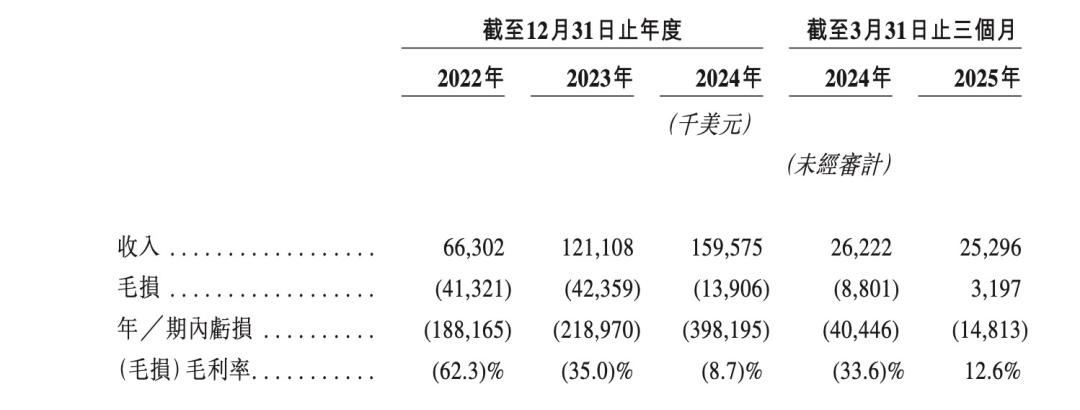
Core Viewpoint - The recent approval of Tuda's overseas listing via SPAC marks a significant milestone for the company, which has faced challenges in its journey to go public, especially in comparison to its competitors in the lidar industry [1][2][5]. Group 1: Company Overview - Tuda plans to issue up to 190.24 million ordinary shares through a SPAC merger to list on the Hong Kong Stock Exchange [1]. - The company has experienced a tumultuous path to listing, having previously attempted to go public on NASDAQ and faced setbacks with its Hong Kong application [2][3]. - Tuda's lidar solutions have ranked first globally in sales revenue for ADAS in 2023, showcasing its strong market presence [6]. Group 2: Competitive Landscape - Tuda's market share has been challenged by competitors like Hesai Technology and RoboSense, which have outperformed Tuda in recent years [7][8]. - According to Yole, Tuda is projected to sell 210,000 units in 2024, significantly lower than its competitors, with Hesai and RoboSense expected to sell 519,800 and 455,200 units, respectively [8]. - Tuda's revenue for 2022, 2023, and 2024 is projected at approximately $6.6 million, $12.1 million, and $16 million, respectively, indicating a slower growth trajectory compared to its rivals [9]. Group 3: Financial Performance - Tuda has reported increasing losses, with projected losses of $188 million, $219 million, and $398 million from 2022 to 2024, reflecting a concerning trend [10][11]. - The company's cash and cash equivalents stood at $24.27 million against current liabilities of $97.75 million as of March 31, 2025, indicating cash flow pressure [12]. Group 4: Strategic Positioning - Tuda's focus on 1550nm lidar technology positions it in the high-end market, but the high costs associated with this technology limit its competitiveness in a price-sensitive market [15][16]. - The company has begun to diversify its product offerings by developing both 1550nm and 905nm lidar technologies, although it may be too late to catch up with competitors who have already established their market presence [21][22]. - Tuda's reliance on NIO as a primary customer has raised concerns about its negotiation power and revenue stability, as seen in the declining average selling price of its products [27][40]. Group 5: Future Prospects - Tuda is actively working to diversify its customer base and has secured orders from various automotive manufacturers and industries, including commercial vehicles and robotics [43][46]. - The company is strategically positioning itself in the growing robotics market, which is expected to provide new growth opportunities and enhance its market competitiveness [46][47]. - Tuda's future performance will likely depend on its ability to expand beyond its reliance on NIO and adapt to the evolving market dynamics [29][42].

激光雷达还有蛋糕分给图达通吗?
3 6 Ke· 2025-10-18 02:05
Core Viewpoint - The company TuDatong is attempting to go public through a SPAC merger after facing challenges in its previous IPO attempts, aiming for a valuation of HKD 11.7 billion in a highly competitive lidar market [1][9]. Financial Performance - TuDatong's gross margin turned positive for the first time in Q4 2022 at 5%, further increasing to 12.6% in Q1 2023, with a gross profit of USD 319.7 million [2][3]. - The company reported revenues of USD 66.3 million in 2022, projected to grow to USD 121.1 million in 2023 and USD 159.6 million in 2024, but it continues to incur significant losses, with total losses expected to reach USD 398.2 million in 2024 [3][4]. Market Position and Competition - TuDatong's market share in the global passenger car lidar market has declined to 12.8%, significantly lower than competitors like Hesai (20.3%), Huawei (19.1%), and RoboSense (16.7%) [9][12]. - The company relies heavily on a single major client, NIO, which accounted for 88.7% to 91.6% of its revenue from 2022 to 2024, leading to reduced bargaining power [4][6]. Technology and Cost Structure - TuDatong's 1550nm lidar technology is more expensive to produce, costing 2-3 times more than the 905nm technology used by competitors, which poses challenges in a price-sensitive market [4][12]. - The average selling price of TuDatong's products has been declining, with the Falcon series dropping from USD 879 per unit in 2022 to USD 704 in 2024 [5][6]. Cash Flow and Financial Health - As of March 2025, TuDatong had cash and equivalents of USD 24.27 million against current liabilities of USD 97.75 million, indicating a tight cash flow situation [7]. - The company's total assets decreased from USD 218.43 million in 2022 to USD 152.75 million by March 2025, reflecting financial strain [7]. Industry Outlook - The global lidar market is expected to grow significantly, with projections indicating a rise from USD 3 billion in 2023 to USD 10 billion by 2025, driven by increasing adoption in smart vehicles [13]. - Despite the growth potential, the industry faces intense price competition, with lidar prices expected to drop from 20,000-30,000 RMB in 2022 to around 1,000 RMB by 2025 [13][15]. Strategic Initiatives - To reduce dependency on NIO, TuDatong is expanding its customer base and has secured partnerships with companies like Hongjing Zhijia and Zhitong Technology, although revenue contributions from these new clients have not been disclosed [6][9]. - The company is also exploring opportunities in the robotics sector, which is experiencing rapid growth, but its current output in this area remains significantly lower than competitors [15].