
AG600鲲龙飞机

Search documents
铸就应急救援的“生命方舟”
Ren Min Ri Bao· 2026-01-22 01:03
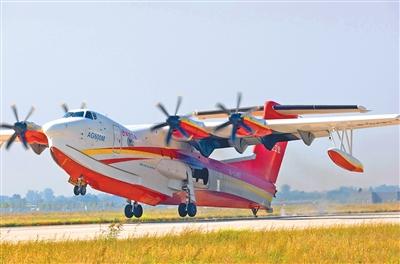
水陆两栖飞机"鲲龙"团队在研制、批产等方面取得重要进展—— 铸就应急救援的"生命方舟"(弘扬科学家精神) 本报记者 邱超奕 水陆两栖飞机"鲲龙"是全球起飞重量最大(60吨)的民用水陆两栖飞机,也是国家应急救援体系建设急 需的重大航空装备。从2009年立项,到2017年技术验证机首飞,再到2025年取得型号合格证和生产许可 证,一路走来,困难重重。"鲲龙"走过了一段怎样的研制路?记者对此进行了采访。 ——编 者 前不久,在吉林省吉林市松花湖水域,一架红白相间、翼展38.8米的AG600"鲲龙"飞机(以下简 称"AG600")从空中轻盈滑至水面,20秒内完成汲水,旋即抬升至100米空中,3分钟后,将12吨水精准 倾泻到指定灭火区域。自此,由中国航空工业集团自主研制的大型水陆两栖飞机AG600圆满完成首次野 外环境汲水投水演练。 2025年,AG600在广东珠海获颁中国民航局生产许可证,AG600飞机正式迈入批量生产阶段。截至目 前,AG600型号批产三架机均已完成生产交付。 攻关 "我们要设计的是一艘会飞的船、会游泳的飞机" 面对重大灾害,航空救援装备的必要性、重要性不言而喻。2009年,AG600研制正式立项。 ...

上天踏海有“鲲龙”——全球最大起飞重量民用水陆两栖飞机研发记
Ke Ji Ri Bao· 2025-06-23 00:31
Core Viewpoint - The AG600 "Kunlong" aircraft, developed entirely independently by China, is the world's largest civil amphibious aircraft, designed to meet the needs of forest firefighting and water rescue. Recent milestones include obtaining the type certificate from the Civil Aviation Administration of China and completing its first production flight [1]. Group 1: Development Milestones - The AG600 received its type certificate on April 20, 2023, and the first assembled aircraft rolled off the production line on May 6, 2023 [1]. - The aircraft successfully completed its production flight on May 18, 2023, and was awarded the production license on June 11, 2023 [1]. Group 2: Technical Innovations - The AG600 is equipped with four large water tanks arranged in a "田" shape, capable of holding a total of 12 tons of water, which is crucial for firefighting efficiency [2]. - The team faced challenges with uneven water filling in the tanks, leading to multiple design iterations before discovering that high-speed water flow created complex vortices that hindered filling [3][4]. - After identifying the issue, the team implemented a design with flow directing plates to ensure simultaneous filling of all tanks, achieving a water intake efficiency that meets world standards, filling 12 tons in just 20 seconds [4]. Group 3: Safety and Design Challenges - The AG600's ability to take off from water posed safety concerns, as initial tests showed inadequate takeoff speeds [5]. - A breakthrough was made when a historical document suggested that under certain conditions, the aircraft could safely return to the water if an emergency occurred during takeoff [6]. - The team conducted extensive simulations and tests, ultimately validating this approach, which led to the establishment of new safety standards for water takeoff and landing [7]. Group 4: Aerodynamic Design - The aircraft's design required innovative solutions to address the significant difference in density between air and water, which posed unique challenges for its aerodynamic and hydrodynamic integration [8]. - The design of the main landing gear's fairing was particularly challenging, as it needed to reduce aerodynamic drag while maintaining stability [9]. - The team conducted over 30,000 wind tunnel and hydrodynamic tests to refine the aircraft's design, ensuring successful flight tests and laying a solid foundation for the AG600's operational capabilities [9].
