AI图片生成工具

Search documents
卖家AI美图,买家AI索赔:电商平台AI攻防战
3 6 Ke· 2026-01-19 11:24
Core Insights - The rise of AI technology is leading to a significant increase in fraudulent activities on e-commerce platforms, undermining trust between merchants and consumers [1][2] - A mature fraud chain has emerged, where "wool party" users generate fake defect images using AI tools to request refunds without returning products, exploiting low-cost and low-skill barriers [2][3] - Merchants are also using AI for deceptive practices, such as enhancing product images and using virtual models, which mislead consumers about the actual quality of products [5][6] Group 1: Fraudulent Activities - The "wool party" users create fake defect images using AI tools like Nano Banana and Midjourney, allowing them to claim refunds while keeping the products [2] - The low entry barrier for AI-generated images contrasts with traditional photo editing, making it easier for fraudsters to operate [2][3] - Fraudulent activities have evolved from individual cases to organized, professional operations, with clear divisions of labor among fraudsters [4] Group 2: Merchant Responses - Larger companies have legal teams and strategies to combat fraud, while smaller merchants often lack resources and choose to compromise due to high legal costs [3][4] - Many small merchants report that the cost of legal action exceeds the losses incurred, leading to a lack of effective recourse [3][4] - Merchants are increasingly facing challenges as fraud becomes more organized and sophisticated, making it difficult to protect their interests [3][4] Group 3: Legal and Regulatory Framework - Current legal frameworks provide avenues for victims to seek redress, but enforcement is often weak, and cases rarely lead to significant penalties for fraudsters [9][11] - There is a call for improved legal standards and unified judicial interpretations to address AI-related fraud effectively [11] - Recommendations include the establishment of timestamp services and AI image verification to aid in evidence collection and reduce the burden on victims [11]
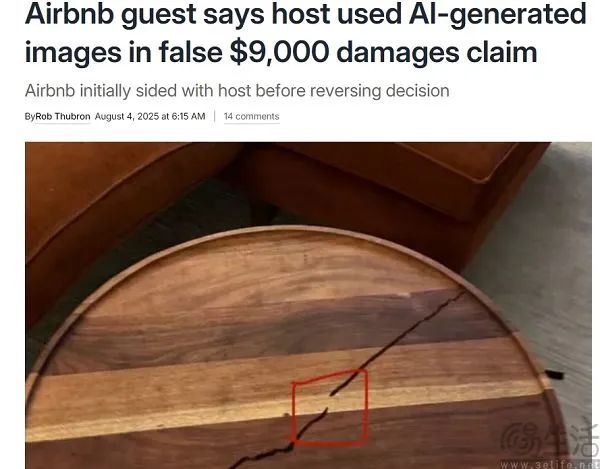
Airbnb也翻车了,房东用AI伪造图片让用户赔钱
3 6 Ke· 2025-08-08 11:47
Core Insights - The article discusses the impact of AI on various industries, highlighting both its efficiency benefits and potential risks, particularly in the context of Airbnb's recent incident involving AI-generated evidence [1][6][19] Company Analysis - Airbnb faced a significant issue when a user was wrongfully penalized for damages based on AI-generated images submitted by a host, leading to a compensation demand of $7,053 [4][11] - The company had previously acquired an AI startup for approximately $200 million to enhance its smart accommodation services, indicating a strong commitment to AI integration [6] - Airbnb's CEO, Brian Chesky, expressed enthusiasm about AI's potential to transform travel and customer service, yet the incident reveals vulnerabilities in their AI systems [6][8] Industry Implications - The incident underscores the challenges of AI in accurately identifying AI-generated content, which remains a significant limitation in the industry [16][19] - The lack of reliable AI content detection tools has led to a reliance on digital watermarking technologies, with major companies forming alliances to address these issues [19] - The event may signal a broader challenge for C2C platforms as they navigate the complexities introduced by generative AI, potentially reshaping relationships between platforms, consumers, and sellers [19]