AI智能马桶

Search documents
海尔智慧家庭与小牧卫浴达成合作
Quan Jing Wang· 2026-01-09 06:39
Core Insights - The collaboration between Haier Smart Home and Xiaomu Sanitary Ware aims to create a smart and comfortable bathroom experience, addressing the growing demand for intelligent and scenario-based home solutions [1][2] - Haier Smart Home emphasizes its commitment to building comprehensive smart home solutions, leveraging its strong interconnectivity capabilities through an open AIoT platform [1] - The partnership will extend the functionality of bathroom spaces from mere cleaning to health management, making it a crucial part of smart homes [1] Group 1 - The collaboration is a deep exploration of future smart home trends, focusing on user needs for intelligent and scenario-based experiences [1] - Haier Smart Home will integrate Xiaomu's smart products, such as AI intelligent toilets and smart showers, into its ecosystem for data sharing and scenario linkage [1] - The smart bathroom will provide users with proactive services, such as voice interaction and automatic adjustments of temperature and humidity based on user habits [1] Group 2 - Haier Smart Home has adopted a more open approach by collaborating with various partners to expand its ecosystem, including partnerships with DeepSeek, Changan Automobile, Baidu, and Chery [2] - The focus on open collaboration and shared capabilities is essential for creating a truly user-centered smart living experience [2] - The ongoing collaboration is expected to lead to smarter bathroom scenarios that will gradually enter households, showcasing the technological advancements of both leading brands [2]



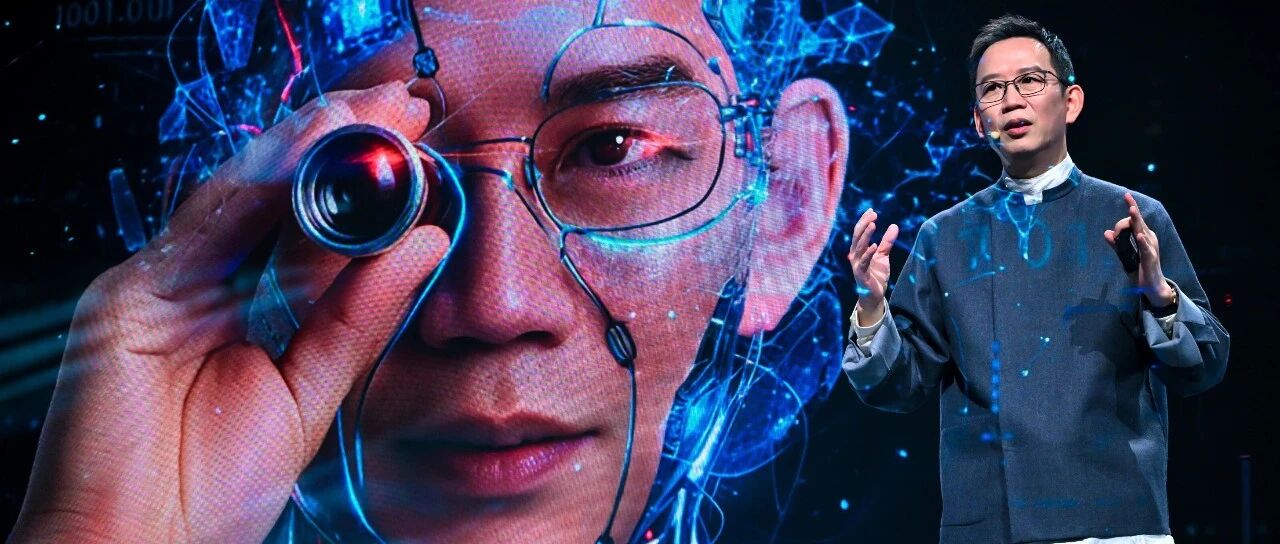
吴晓波:“AI闪耀中国”2025(年度演讲全文)
吴晓波频道· 2025-12-29 01:26
Core Viewpoint - The article emphasizes that the AI revolution is a significant competition that will impact national fortunes, highlighting the rapid advancements and implications of AI technology in various sectors [2][22]. Group 1: AI Development History - The concept of artificial intelligence was first introduced in 1956 at the Dartmouth Conference, marking the beginning of a long journey in AI research [11]. - Key milestones include the introduction of deep learning by Geoffrey Hinton in 2006 and the launch of GPT-3.5 in 2022, which significantly advanced AI capabilities [17][18]. - The article notes that AI has now entered everyday life and industries, with significant developments in China and the U.S. [18][19]. Group 2: AI Investment Landscape - By 2025, the U.S. is expected to invest over $350 billion in AI infrastructure, while China’s investment is projected to reach 630 billion RMB [41]. - The article highlights that the U.S. currently dominates AI computing power, holding 74.5% of global capacity, compared to China's 14% [43]. - The investment in AI infrastructure in China is compared to the historical investment in high-speed rail, indicating a significant commitment to AI development [41]. Group 3: AI Applications and Innovations - The article discusses the emergence of AI in various industries, including banking, where Shanghai Bank has become the first AI-native mobile bank [75]. - It highlights the rapid growth of AI-driven content production, such as AI-generated comics, which have seen a 600% increase in production [67]. - The use of AI in sectors like healthcare, logistics, and manufacturing is emphasized, showcasing its transformative potential [78][81]. Group 4: Competitive Landscape - The article outlines the competitive dynamics between the U.S. and China in AI, with both countries pursuing different strategies: the U.S. focusing on closed-source models and China on open-source models [54][55]. - It mentions that by 2025, over 80% of the world's large models will be developed in the U.S. and China, with significant advancements in image generation and text capabilities [46][49]. - The competition extends to autonomous driving, with both countries making strides in developing self-driving technologies [57]. Group 5: Future Trends and Predictions - The article predicts that the next decade will see the emergence of four trillion-dollar markets in China, including the robotics sector, which is expected to play a crucial role in manufacturing upgrades [118][120]. - It discusses the potential for AI to redefine personal capabilities and the importance of adapting to new technologies in various industries [72][98]. - The article concludes with a call for recognition of the ongoing AI revolution and its implications for the future [58].