AI相关技术与产品

Search documents
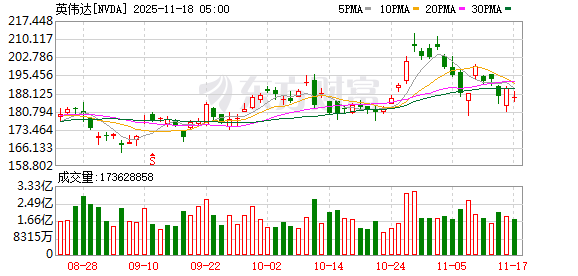
【环球财经】“AI泡沫”担忧加剧 多家对冲基金减持英伟达
Xin Hua Cai Jing· 2025-11-18 08:42
Core Viewpoint - The recent decline in technology stocks has led to significant volatility in the U.S. stock market, with major indices like the S&P 500 and Nasdaq Composite falling below their 50-day moving averages, indicating a potential shift in market sentiment towards caution regarding tech investments [2][4]. Market Performance - On November 17, the U.S. stock market experienced a sharp downturn, with the S&P 500 and Nasdaq Composite both losing ground, while the Dow Jones faced its worst three-day performance since April [2]. - As of November 18, the MSCI Asia-Pacific index dropped by 2% to 221.28 points, with the South Korean composite index falling over 3% [2]. Hedge Fund Activity - Several hedge funds have reduced their holdings in Nvidia, a key player in the AI sector, reflecting a cautious stance on technology stocks. Notably, Peter Thiel's fund completely exited its Nvidia investment, selling approximately 537,700 shares valued at nearly $100 million [4][5]. - Bridgewater Associates reported a 65.3% reduction in its Nvidia shares, holding only 2.51 million shares by the end of Q3 [5]. AI Sector Valuation Concerns - High valuations and expectations in the AI sector have raised concerns about a potential bubble, with Goldman Sachs indicating that the AI market has seen a valuation increase of $18-19 trillion since 2022, nearing long-term growth expectations [3][6]. - The top eight companies in the U.S. stock market are now all AI-related, contrasting with the internet bubble era when only four of the top eight were internet companies [4]. Future Outlook - Analysts suggest that the next 2-3 years will be critical for validating the actual value of AI investments. If substantial changes are not observed within this timeframe, investor confidence may wane, leading to a shift in market sentiment [8]. - The market is expected to experience a complex environment in the latter half of 2025, influenced by economic slowdowns and reassessments of AI's future potential [7][8].