AI赛车

Search documents
AI赛车开创世界纪录背后的“弯道”与“换道”
Xin Lang Cai Jing· 2026-01-24 05:10
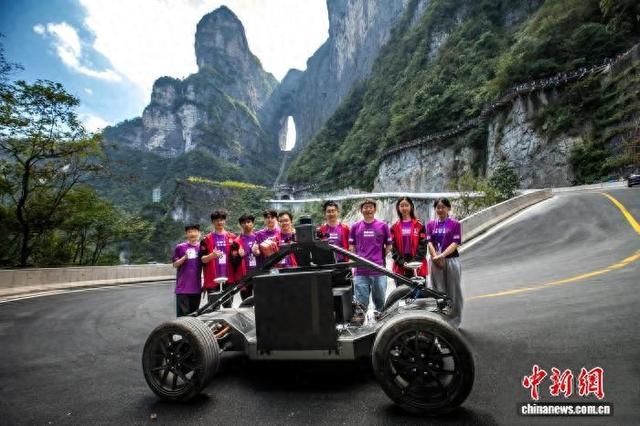
Core Insights - The AI racing team from Tsinghua University set a world record by completing the 10.77 km Tianmen Mountain course in 16 minutes and 10.838 seconds, showcasing advancements in AI-driven autonomous racing technology [1][3]. Group 1: Technical Challenges and Innovations - The Tianmen Mountain course presents a "composite extreme" testing environment due to satellite signal interruptions, steep slopes, and numerous sharp turns, requiring AI to make precise decisions in milliseconds [3]. - The team developed a dynamic local map loading algorithm to address issues with traditional full-load 3D point cloud maps, enabling real-time high-precision positioning [3][4]. - Data collection methods were enhanced through vehicle-cloud collaboration and a combination of virtual and real-world data, integrating factors like corner entry angles and road conditions into the AI model [3]. Group 2: Learning and Development Pathways - Since 2018, the Tsinghua research team has focused on a new end-to-end autonomous driving approach centered on reinforcement learning, significantly reducing training costs compared to traditional methods reliant on vast amounts of real vehicle data [4]. - The team introduced China's first fully neural network-based end-to-end autonomous driving system, marking a significant technological breakthrough in the industry [4]. Group 3: Real-World Application and Future Directions - The success at Tianmen Mountain serves as a critical test for autonomous technology, emphasizing the need for AI algorithms to be validated in real and extreme scenarios to ensure their effectiveness and robustness [5]. - The developed perception-positioning fusion technology allows vehicles to achieve high real-time and high-precision trajectory estimation, enhancing stability in critical situations [5]. - Despite rapid advancements in autonomous driving technology, there remains a notable gap between AI capabilities and human performance in extreme road conditions, indicating ample opportunities for future research and innovation [5].

在AI赛道跑出创新加速度
Xin Lang Cai Jing· 2025-12-29 20:21
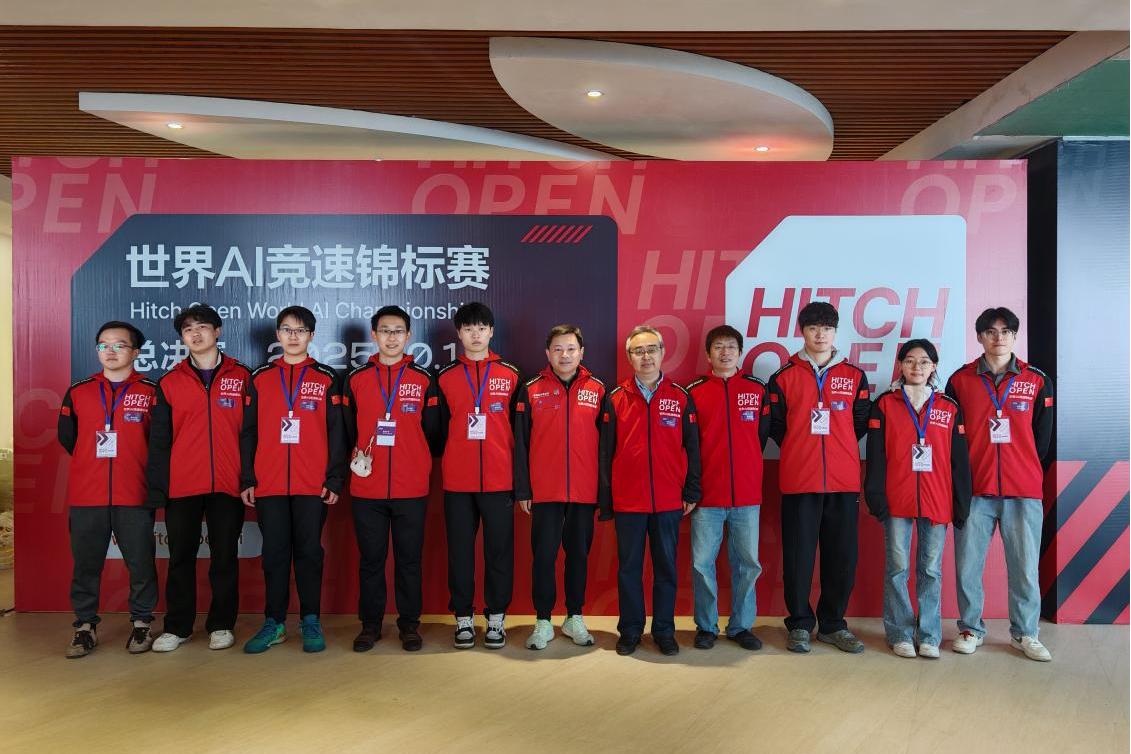
Core Viewpoint - The article highlights the success of the "Extreme Racing" team in winning the "Hitch Open World AI Racing Championship," showcasing the dedication and innovation of students in developing AI-driven racing technology [2]. Group 1: Competition Overview - The "Hitch Open World AI Racing Championship" is noted as Asia's first AI-driven open-world electric vehicle extreme racing challenge [2]. - The team achieved a remarkable finishing time of 16 minutes and 10 seconds, securing the championship title [2]. Group 2: Team Efforts and Challenges - The team, composed of master's and doctoral students, faced numerous challenges, including learning complex algorithms and systems from scratch within a limited timeframe [2]. - Significant efforts were made in collaboration and late-night work sessions to overcome technical difficulties, such as map loading issues and positioning frequency drops during real vehicle tests [2][3]. Group 3: Technological Achievements - The AI racing car demonstrated centimeter-level positioning and millisecond-level response times, marking a victory for the algorithms developed [3]. - The experience is framed as a practical application of self-innovation and a testament to the importance of perseverance in technology development [3]. Group 4: Future Aspirations - The article emphasizes the importance of technological self-reliance as a mission for the current generation, urging continued efforts in intelligent driving algorithms and tackling future challenges [3].
Hitch Open世界AI竞速锦标赛总决赛圆满收官 物理智能加速落地中国
Huan Qiu Wang· 2025-10-20 04:47
Core Insights - The Hitch Open World AI Racing Championship concluded successfully in Zhangjiajie, Hunan, showcasing AI's capabilities in extreme natural environments [1][3][4] Group 1: Event Overview - The championship featured AI teams from seven universities, including Tsinghua University and Hunan University, competing on a challenging 10.77 km track with a vertical drop of 1100 meters [3][6] - Tsinghua University's team won the championship with a record lap time of 16 minutes 10.838 seconds, setting a world record for AI autonomous driving on this extreme track [3][6] Group 2: Technological Significance - The event emphasized the importance of real-world testing for AI algorithms, moving beyond laboratory settings to practical applications in complex environments [6][9] - The competition utilized advanced technologies, including China Telecom's 5G-A network, enabling millisecond-level decision-making and centimeter-level positioning accuracy [8][9] Group 3: Industry Implications - The data generated during the competition, exceeding 3 TB per race, will contribute to a "Physical Intelligence Open Data Platform," fostering collaboration between research institutions and industry partners [8][9] - The event is seen as a catalyst for industrial transformation, promoting AI's integration into real-world applications, such as smart transportation and tourism [9][10] Group 4: Government and Academic Support - The event received support from various provincial government departments and academic leaders, highlighting its role in advancing AI innovation and industry collaboration [10] - The successful execution of the event is viewed as a significant step towards developing new productive forces driven by AI technology in China [10]