Activewear

Search documents
Gap's Full-Price Selling Improves: Can AUR Gains Continue Ahead?
ZACKS· 2026-03-31 17:36
Core Insights - The Gap, Inc. (GAP) is enhancing its pricing discipline by shifting towards higher full-price selling, which is positively impacting its profitability profile [1] - The company's brand reinvigoration strategy is leading to improved product acceptance and stronger merchandising execution, reducing reliance on heavy promotions [1] - The transition indicates a growing consumer confidence in Gap's product assortments, suggesting a turnaround supported by healthier demand dynamics rather than discount-driven sales [1] Financial Performance - In Q4 of fiscal 2025, GAP achieved a gross margin of 38.9%, a decrease of 80 basis points year over year, primarily due to a 200-basis point tariff headwind [2] - Despite the tariff impact, underlying merchandise margins improved due to stronger full-price selling and reduced markdown activity [2] - Higher average unit retail (AUR) has helped mitigate some cost pressures, particularly in core categories like denim, fleece, and activewear [2] Operational Strategy - Operational discipline, including tighter inventory management and improved demand forecasting, has been crucial in sustaining pricing gains [3] - These strategies have allowed GAP to align supply more closely with consumer demand, reducing excess inventory that typically leads to heavy promotions [3] - Enhanced brand perception through stronger storytelling and culturally relevant marketing initiatives has enabled GAP to maintain pricing strength without sacrificing customer traffic [3] Future Outlook - The sustainability of AUR gains will depend on GAP's ability to maintain product relevance while navigating external pressures such as tariffs and competitive pricing [4] - If promotional activity increases in the apparel industry, GAP may face renewed pressure to discount [4] - Continued strength in product innovation, category leadership, and disciplined inventory management could help sustain full-price selling momentum, making AUR performance a critical metric to monitor [4] Valuation and Estimates - GAP trades at a forward price-to-earnings ratio of 10.15X, compared to the industry average of 14.81X [10] - The Zacks Consensus Estimate for GAP's fiscal 2026 sales and earnings implies year-over-year growth of 2.5% and 7.9%, respectively [11] - For fiscal 2027, the consensus estimate indicates a 2.7% rise in sales and 13.7% growth in earnings [11]




THG H2 Earnings Call Highlights
Yahoo Finance· 2026-03-26 08:05
Group 1: Financial Performance and Guidance - THG guided to mid-single-digit group revenue growth for the full year, expecting meaningful EBITDA progression driven by sales growth and margin improvements despite high commodity prices [1] - The company reported a full-year performance ahead of guidance with adjusted EBITDA of GBP 76.6 million, marking a "landmark year" following the demerger of THG Ingenuity [3] - THG ended the year with over GBP 330 million in cash and available facilities, providing significant financial flexibility [2] Group 2: Business Segments and Growth - THG Beauty and THG Nutrition both delivered full-year revenue growth in 2025, with THG Beauty seeing a 16.2% uplift in cyber sales and strong performance in the U.S. market [1][6] - THG Nutrition returned to growth at 6.4%, although margins were pressured by high whey prices, prompting a shift towards partnerships and licensing [5][14] - The company highlighted a record year for new brand launches in THG Beauty, with significant engagement through platforms like TikTok [9][11] Group 3: Strategic Initiatives and Market Position - THG is focusing on geographic priorities, with current investments centered on the U.K. and U.S. markets, having exited Asia and scaled back in Europe [12] - The company emphasized its multi-model strategy in THG Nutrition, with Myprotein recognized as the world's number one sports nutrition brand [14] - THG is exploring potential partnerships and new product launches, including a collaboration with Mars, to expand its market presence [19] Group 4: Operational and Financial Outlook - THG expects free cash flow of GBP 25 million to GBP 50 million, citing flat year-on-year capex and expected working capital inflows [20] - The company anticipates steady progress in opening additional Lookfantastic stores, estimating each store could add around GBP 2 million of revenue [21] - Management indicated that a successful VAT claim could potentially halve net debt by year-end, with expectations of a resolution later in the year [7][22]
Torrid (CURV) - 2026 Q4 - Earnings Call Transcript
2026-03-19 21:32
Financial Data and Key Metrics Changes - For fiscal 2025, the company achieved net sales of $1 billion and adjusted EBITDA of $63.6 million, reaching the top end of its guidance [4][22] - In Q4, net sales were $236.2 million, down from $275.6 million in the prior year, with a comparable sales decline of 10% [23] - Gross profit for Q4 was $70.9 million, with a gross margin of 30%, compared to 33.6% in the prior year [23] - SG&A expenses decreased by $11.4 million to $62.4 million, representing 26.4% of net sales [23][24] - The net loss for Q4 was $8.1 million, or $0.08 per share, compared to a net loss of $3 million, or $0.03 per share, in the previous year [24] Business Line Data and Key Metrics Changes - The company saw strength in dresses, with growth for four consecutive quarters, and a turnaround in knit tops in the latter half of Q4 [6][7] - Sub-brands generated over $70 million in sales in 2025, with projected growth of approximately 60% in 2026 to around $110 million [11] - The footwear category was successfully reintroduced, with sold-out limited assortments, and is expected to contribute positively in the back half of 2026 [7][15] Market Data and Key Metrics Changes - The company closed 151 stores in fiscal 2025, with an additional 11 closures in Q1 2026, optimizing its store footprint [8][25] - Customer retention rates from closed locations have performed consistently with historical levels, validating the network strategy [25][26] - The company entered 2026 with a balanced inventory position of $136.5 million, down 8% [25] Company Strategy and Development Direction - The primary focus for 2026 is accelerating customer file growth through retention, reactivation, and acquisition [4][7] - The company aims to optimize its channel, product, and pricing platforms, with a disciplined approach to product development [20][19] - The opening price point strategy now represents approximately 30% of total assortment and is expected to grow to nearly 40% [16][20] Management Comments on Operating Environment and Future Outlook - Management acknowledged economic pressures affecting customer spending and emphasized the importance of accessible pricing [36][51] - The company expects to face headwinds in the first half of 2026 but anticipates a positive impact in the second half, particularly from the footwear category [15][47] - The outlook for fiscal 2026 includes expected net sales of $940 million to $960 million and adjusted EBIT of $65 million to $75 million [27] Other Important Information - The company has completed a substantial two-year transformation, optimizing its channel, product, and pricing platforms [20] - The marketing investment decreased by $1.9 million to $13.5 million, reflecting a more disciplined approach [24] - The company has over 7 million lapsed customers reachable through owned marketing channels, presenting a significant opportunity for reactivation [19][20] Q&A Session Summary Question: Insights on sub-brands performance and growth expectations - Management expressed satisfaction with sub-brands, highlighting strong performers and adjusting growth expectations to mid-teens for 2026 [31][32] Question: Reasons for customer lapses and reactivation strategies - Management noted economic pressures as a primary reason for lapses and emphasized targeted segmentation and personalized messaging for reactivation [36][37] Question: Sales cadence during the holiday season and tariff impacts - Management reported improvement in January sales and acknowledged tariff pressures affecting margins, particularly in footwear [42][44] Question: Marketing plans for pricing and loyalty program changes - Management discussed a shift towards less reliance on Torrid Cash and more focus on opening price points and targeted promotions to drive frequency [50][51] Question: Future pricing and promotional strategies - Management indicated a more personalized approach to promotions and pricing, leveraging opening price points and sub-brands to engage customers [67][68] Question: Consumer behavior changes and expectations regarding refunds - Management observed consistent consumer behavior but noted economic pressures influencing spending; no outsized expectations related to tax refunds were embedded in guidance [75][77]

Torrid (CURV) - 2026 Q4 - Earnings Call Transcript
2026-03-19 21:32
Financial Data and Key Metrics Changes - For fiscal 2025, the company achieved net sales of $1 billion and adjusted EBITDA of $63.6 million, reaching the top end of its guidance [4][22] - In Q4, net sales were $236.2 million, a decline from $275.6 million in the prior year, with a comparable sales decline of 10% [23] - Gross profit for Q4 was $70.9 million, with a gross margin of 30%, down from 33.6% the previous year [23] - SG&A expenses decreased by $11.4 million to $62.4 million, representing 26.4% of net sales [23] Business Line Data and Key Metrics Changes - The company saw strength in dresses, with growth for four consecutive quarters, and a positive turnaround in knit tops during the latter half of Q4 [6][14] - Sub-brands generated over $70 million in sales in 2025, with projected growth of approximately 60% to $110 million in 2026 [11] - The footwear category was successfully reintroduced, with sold-out limited assortments, and is expected to contribute positively in the second half of 2026 [7][15] Market Data and Key Metrics Changes - The company closed 151 stores in fiscal 2025, with an additional 11 closures in Q1 2026, optimizing its store footprint [8][25] - Customer retention rates from closed locations have met or exceeded historical levels, indicating strong brand health [25] Company Strategy and Development Direction - The primary focus for 2026 is to accelerate customer file growth through targeted marketing strategies aimed at acquiring new customers and reactivating lapsed ones [7][19] - The company is implementing a disciplined approach to product development, balancing innovation with reliability, and enhancing its merchandising process [10][14] - The opening price point strategy now represents approximately 30% of total assortment, expected to grow to nearly 40% in stores [16] Management Comments on Operating Environment and Future Outlook - Management acknowledged economic pressures affecting consumer spending, which have been addressed through the opening price point initiative [36] - The company expects to face headwinds in the first half of 2026 due to footwear reintroduction but anticipates positive impacts in the second half [15][47] - The outlook for fiscal 2026 includes expected net sales of $940 million to $960 million and adjusted EBIT of $65 million to $75 million, reflecting margin expansion [27][28] Other Important Information - The company ended Q4 with $200 million in cash and cash equivalents, providing adequate liquidity for its plans [24][25] - Inventory totaled $136.5 million, down 8%, reflecting tighter management and the reduction of the store base [25] Q&A Session Summary Question: Insights on sub-brands performance and growth expectations - Management expressed satisfaction with sub-brands, highlighting strong performers and adjusting growth expectations to mid-teens for the upcoming year [31][32] Question: Reasons for customer lapses and reactivation strategies - Management noted economic pressures as a primary reason for customer lapses and emphasized targeted segmentation and personalized messaging for reactivation [36][37] Question: Sales cadence during the holiday season and tariff impacts - Management reported improvement in sales in January and acknowledged tariff pressures affecting margins, particularly in the footwear category [42][44] Question: Marketing plans for 2026 regarding pricing and loyalty - Management indicated a shift towards less reliance on Torrid Cash redemption and a focus on everyday opening price point opportunities to drive customer engagement [50][51] Question: Strategic outlook for 2026 and pricing promotions - Management confirmed a pivot towards a more offensive strategy, focusing on customer file growth and personalized marketing efforts [62][68]
Torrid (CURV) - 2026 Q4 - Earnings Call Transcript
2026-03-19 21:30
Financial Data and Key Metrics Changes - For fiscal 2025, the company achieved net sales of $1 billion and adjusted EBITDA of $63.6 million, reaching the top end of its guidance [4][21] - In Q4, net sales were $236.2 million, down from $275.6 million in the prior year, with a comparable sales decline of 10% [22] - Gross profit for Q4 was $70.9 million, with a gross margin of 30%, compared to 33.6% in the prior year [22] - SG&A expenses decreased by $11.4 million to $62.4 million, representing 26.4% of net sales [22] - The net loss for Q4 was $8.1 million, or $0.08 per share, compared to a net loss of $3 million, or $0.03 per share, in the previous year [23] Business Line Data and Key Metrics Changes - The company saw strength in dresses, with growth for four consecutive quarters, and a positive turnaround in knit tops during the latter half of Q4 [5][6] - Sub-brands generated over $70 million in sales in 2025, with a projected growth of approximately 60% to $110 million in 2026 [10] - The footwear category was successfully reintroduced, with sold-out limited assortments, and is expected to contribute positively in the second half of 2026 [6][12] Market Data and Key Metrics Changes - The company closed 151 stores in fiscal 2025, with an additional 11 closures in Q1 2026, optimizing its store footprint [7][24] - Customer retention rates from closed locations have performed consistently with historical levels, validating the network strategy [24] Company Strategy and Development Direction - The primary focus for 2026 is to accelerate customer file growth through retention, reactivation, and acquisition strategies [6][15] - The company is implementing targeted, segmented marketing to acquire new customers and reactivate lapsed ones, with over 7 million lapsed customers reachable through owned marketing channels [17][18] - The company aims to leverage its omni-channel ecosystem to enhance customer engagement and retention [8][9] Management's Comments on Operating Environment and Future Outlook - Management acknowledged economic pressures affecting customer spending, which has been addressed through the opening price point strategy [34][35] - The company expects to enter 2026 with a stronger operating structure and anticipates capturing an additional $40 million in expense savings from store closures [25][26] - For fiscal 2026, the company projects net sales of $940 million to $960 million and adjusted EBIT of $65 million to $75 million, indicating margin expansion [26] Other Important Information - The company has strategically right-sized its channels and optimized its pricing platforms, entering a phase of maximization and scale [18] - The opening price point strategy now represents approximately 30% of the total assortment and is expected to grow to nearly 40% [14] Q&A Session Summary Question: Insights on sub-brands and their performance - Management expressed satisfaction with the progress of sub-brands, highlighting strong performers and adjusting growth expectations [31][32] Question: Customer retention and reactivation strategies - Management noted that economic pressures were a primary reason for customer lapses and emphasized the effectiveness of the opening price point strategy in reactivating customers [35][36] Question: Sales cadence during the holiday season and tariff impacts - Management reported positive sales momentum in January and acknowledged tariff pressures affecting margins, particularly in the footwear category [42][44] Question: Marketing plans and loyalty program changes - Management discussed a shift in promotional strategies, reducing reliance on Torrid Cash and focusing on price point messaging to drive customer engagement [51][52] Question: Future growth and pricing strategies - Management indicated a pivot towards a more offensive strategy, focusing on refining customer segmentation and promotional efforts to enhance frequency and engagement [62][66]
Lululemon CEO Search Continues as Former Levi’s Chief Chip Bergh Joins the Board
Yahoo Finance· 2026-03-17 22:00
Core Insights - Lululemon Athletica Inc. exceeded Wall Street expectations in the fourth quarter but is projecting only modest growth for the current year [1] - Investors are currently more focused on leadership changes rather than financial performance [2] Leadership Changes - Former CEO Calvin McDonald left the company in January, creating a vacancy for the top position [2] - Interim co-CEOs are CFO Meghan Frank and President André Maestrini while the company seeks a permanent CEO [3] - Activist investor Elliott Investment Management is advocating for Jane Nielsen, a former Ralph Lauren executive, to be appointed as CEO [4] - Founder Chip Wilson is attempting to influence board changes through a proxy battle to ensure the selection of a knowledgeable CEO [4] - Chip Bergh, former president and CEO of Levi Strauss & Co., has been added to the board and will stand for election later this year [5] Financial Performance - In the fourth quarter ending February 1, net revenues rose by 1% to $3.6 billion; excluding an extra week from the previous year, revenues increased by 6% [7] - On a constant currency basis, revenues for the quarter grew by 4% [7] - Comparable sales saw a 3% increase [7] Strategic Focus - The company is committed to ongoing board refreshment and is focused on finding a new CEO while executing its growth plans [6]

Lululemon’s Chip Wilson is giving the company a severe case of ‘post-founder syndrome’
Yahoo Finance· 2026-03-17 09:14
Core Insights - Lululemon faces challenges stemming from founder Chip Wilson's ongoing criticism of the company's leadership and strategy since his departure from the board in 2015 [1][4] - The phenomenon of "post-founder syndrome" is highlighted, where founders criticize successors, believing only they can lead effectively [2] - Wilson has initiated a proxy war to replace three directors, blaming the current board for a decline in the company's culture of innovation [3] Financial Performance - Lululemon's revenue tripled in the nine years following Wilson's departure, with projections of $11 billion in annual revenue by 2025 [4] - However, the company's shares have fallen 68% from their all-time high in 2023, indicating significant market concerns [4] Market Position - There are fears that Lululemon has not introduced enough new merchandise and has lost its technical leadership in activewear, leading to a decline in U.S. sales [4] - Competitors like Alo Yoga are gaining brand cache, further complicating Lululemon's market position [4]
Caracol Knits launches digital platform to boost Central America nearshoring
Yahoo Finance· 2026-03-16 11:45
Core Insights - Caracol Knits has launched a digital platform that provides direct access to its vertically integrated capabilities, enhancing supply chain management for brands [1][4] - The company is strategically located 60 miles from Puerto Cortés, allowing for rapid delivery to US East Coast markets within four days, significantly faster than the 40-60 days from Asia, and benefits from 0% import duty under CAFTA-DR [2] - Caracol Knits emphasizes its full vertical integration across the textile supply chain, which includes yarn production, knit fabrics, and garment production, enabling brands to maintain proximity and capability simultaneously [2] Company Capabilities - The company offers a range of yarn production options, including carded, combed, and compact combed yarns made from various materials such as cotton, recycled fiber, and polyester-rich blends, with traceability through the US Cotton Trust Protocol [2] - Circular knitting technology is utilized to produce performance fabrics with features like UV protection, moisture-wicking, antimicrobial properties, and water repellency [3] - Full-package garment production services cover a variety of categories including activewear, athleisure, undergarments, sleepwear, winterwear, and workwear, with on-site certified laboratories for testing and color management [4]
SFIX Posts Narrower Q2 Loss, Lifts FY26 View on Improving Momentum
ZACKS· 2026-03-12 16:35
Core Insights - Stitch Fix, Inc. (SFIX) reported second-quarter fiscal 2026 results that exceeded both top and bottom line estimates, with year-over-year growth in both metrics [1][4] Financial Performance - The company reported an adjusted loss of 2 cents per share, better than the Zacks Consensus Estimate of a 5-cent loss, and narrower than the 5-cent loss from the previous year [4][11] - Net revenues reached $341.3 million, surpassing the Zacks Consensus Estimate of $339 million, and reflecting a 9.4% increase from the year-ago quarter [4][11] - The number of active clients was 2,288,000, a decline of 3.5% year-over-year, while the average net revenues per active client (RPAC) increased by 7.4% to $577, marking the highest RPAC since the company went public [5][6][11] Operational Highlights - The average order value (AOV) increased by 9.8% year-over-year, driven by a 7.7% rise in average unit retail, marking six consecutive quarters of growth [7] - Category performance showed significant growth, with outerwear up 26%, denim up 17%, activewear and athleisure combined up 37%, special-occasion styles up 46%, footwear up 33%, and accessories up 51% [8] Margins and Expenses - Gross profit increased by 7.3% to $148.9 million, but gross margin decreased by 90 basis points to 43.6% [9] - Selling, general and administrative expenses (SG&A) rose by 3.9% to $153.7 million, with SG&A as a percentage of net revenues decreasing to 45% [10] Future Outlook - For fiscal 2026, Stitch Fix raised its revenue guidance to between $1.33 billion and $1.35 billion, indicating year-over-year growth of 5-6.5% [19] - The company expects adjusted EBITDA to be between $42 million and $50 million, with a margin of 3.2-3.7% [19] - The fiscal third quarter is projected to have net revenues of $330-$335 million, reflecting year-over-year growth of 1.5-3.1% [16]


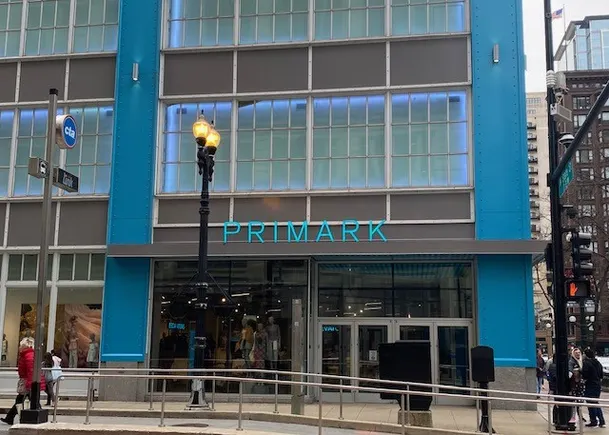
Primark is retail’s ‘best kept secret.’ It’s ready to move beyond that.
Retail Dive· 2026-03-09 15:03
Core Insights - Primark has appointed Eoin Tonge as CEO, transitioning from his role as interim CEO, and is focusing on expanding its presence in the U.S. market with new store openings and a flagship store in New York City [1][6][14] Company Developments - The company is celebrating its 10-year anniversary in the U.S. and has been expanding its footprint with new locations in Texas, Illinois, Tennessee, and Florida [1] - Primark's U.S. head of marketing, Rene Federico, emphasizes the need for greater brand awareness and aims to move away from being perceived as a "best kept secret" in retail [2] - The retailer has reported a 12% increase in constant currency sales in the U.S., driven by international store expansion despite challenging trading conditions [11] Leadership Changes - Eoin Tonge has improved Primark's product offerings and digital capabilities during his interim period, and he is now leading the company into a new era [6][9] - Filip Ekvall has been appointed as chief commercial officer, a new role aimed at integrating product, retail, digital, and customer functions [7] Market Position and Strategy - The apparel market has shown resilience, with a 4% increase reported in January, and Primark is capitalizing on this trend with its expansion strategy [10] - Primark is enhancing its value proposition through improved product offerings and stronger communication regarding prices [12] - The company is also focusing on sustainability, with nearly 75% of its clothes made from recycled or sustainably sourced fibers, up from 66% last year [17] Expansion Plans - Primark is set to open a flagship store in Herald Square, New York City, which will serve as a significant marketing tool and brand experience hub [14][13] - The retailer plans to open five new locations in the Middle East, including three in Dubai, and is also expanding its presence in Romania [20][21] Future Considerations - Analysts suggest that separating Primark from its parent company, Associated British Foods, could be beneficial due to differing business models [18][19] - The company is undergoing a review of its structure to assess the potential for a split, which could enhance its focus on international operations and supply chain resilience [20]