Agile ONE

Search documents
蛰伏后的爆发:思灵机器人从工业场景迈向物理AI
Tai Mei Ti A P P· 2025-12-02 00:25
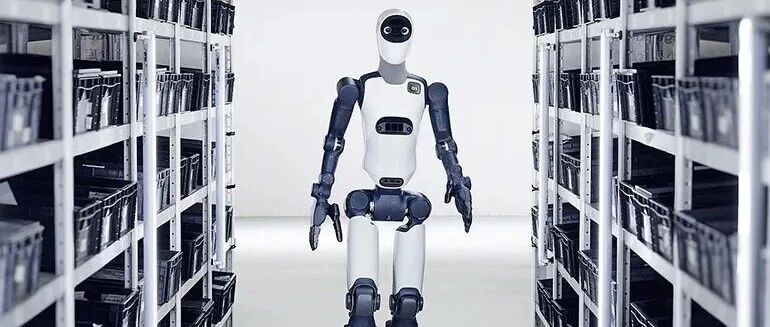
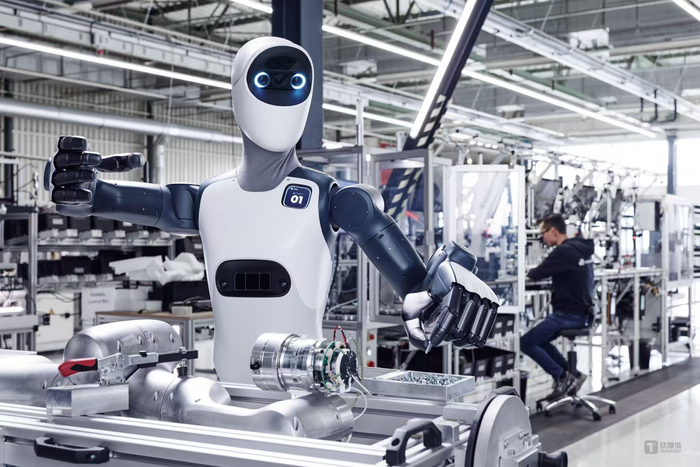
Core Insights - The industrial scene has become a competitive battleground for leading embodied intelligence companies, driven by the global restructuring of supply chains and the manufacturing industry's shift towards smart and flexible operations [2] - A report from Crunchbase indicates that 70% of global robotics funding in 2024 will be directed towards industrial applications, with the International Federation of Robotics (IFR) predicting the industrial robotics market will reach 10 million units by 2030 [2] - Despite the demand, challenges such as precision, stability, durability, and collaboration between machines and humans hinder the widespread adoption of industrial robots [2] Company Overview - Agile Robots, founded in 2018, has gained attention with the release of its full-sized industrial humanoid robot, Agile ONE, and the acquisition of Thyssenkrupp Automation Engineering [3] - The company has completed multiple funding rounds, attracting investments from notable firms such as SoftBank Vision Fund, Sequoia Capital, and Hillhouse Capital, among others [3] - The founder, Dr. Chen Zhaopeng, is a recognized expert in robotics, previously holding a senior position at the German Aerospace Center [3] Product Development - Agile Robots has delivered over 30,000 robots across various industries, including automotive and consumer electronics, achieving a remarkable revenue growth of 100% for seven consecutive years [5] - Agile ONE integrates core technologies developed over years, representing a complete ecosystem for factory automation and embodying the concept of "physical artificial intelligence" [5] - The Agile Hand, a high-freedom dexterous hand, features advanced sensors and control systems, enhancing precision and adaptability in various industrial tasks [7][10] Technological Innovation - The robot's "three-layer brain" architecture distinguishes it from traditional models, enabling complex decision-making, task planning, and precise operations [13] - Agile Robots has developed a vast dataset from over 30,000 deployed robots, enhancing the adaptability and performance of Agile ONE in real-world industrial scenarios [14] - The company emphasizes creating a comprehensive physical AI ecosystem rather than just standalone robots, facilitating collaboration between machines and humans [15][17] Market Expansion - Agile Robots has expanded its offerings beyond traditional industrial applications, venturing into healthcare with its 7-degree-of-freedom medical robot, Diana7 Med, and exploring solutions in agriculture, education, and energy sectors [21][23] - The company has strategically acquired other firms to enhance its industrial robotics ecosystem, including notable companies like Franka and idealworks [19] Conclusion - Agile Robots' journey reflects a commitment to addressing real-world challenges across various sectors, continuously evolving its technology and expanding its market presence while adhering to its mission of linking artificial intelligence with the physical world [25]


全尺寸人形机器人Agile ONE来了!思灵机器人推进物理AI落地
机器人大讲堂· 2025-11-25 06:20
Core Viewpoint - Agile Robots, a leading provider of intelligent robotic solutions, has launched its full-sized humanoid robot, Agile ONE, which embodies the vision of Physical AI, capable of perceiving, understanding, and acting in the physical world [1][3]. Group 1: Company Background and Achievements - Founded in 2018, Agile Robots has approximately 2,500 employees and has seen its revenue multiply several times over the past four years, deploying over 20,000 robots globally, particularly in the automotive and consumer electronics sectors [3]. - The launch of Agile ONE is supported by a strong existing product portfolio, including Agile Hand, FR3 force-controlled robotic arm, and Diana 7 intelligent control robot [3]. Group 2: Key Advantages of Agile ONE - Agile ONE integrates three key advantages: a layered AI system trained on real-world data, dexterous hands derived from the German Aerospace Center (DLR), and a human-robot interaction philosophy based on trust [3][5]. - The layered approach to AI is structured as a "data pyramid," with a foundation of vast multimodal data, high-fidelity physical simulations, and extensive real-world interaction data from over 20,000 deployed robotic systems [5]. Group 3: Cognitive Architecture - Agile Robots employs a "three-layer brain" cognitive architecture, which includes slow thinking (strategic planning), fast thinking (dynamic response), and high-frequency control (instinctive manipulation) [5][6]. Group 4: Dexterous Manipulation Technology - The dexterous hand technology, developed over nearly two decades, allows for precise control and perception of force, enabling the robot to perform complex tasks such as manipulating small screws and operating tools [8][11]. - The integration of joint force sensors and fingertip tactile sensors provides the robot with advanced proprioceptive capabilities, addressing challenges in industrial automation that require human-like flexibility and judgment [8][11]. Group 5: Human-Robot Interaction and Safety - Agile Robots emphasizes that safety should be an inherent characteristic of the system rather than an add-on, aiming to create robots that are trustworthy and enjoyable to work alongside [9][10][14]. - The design of Agile ONE includes responsive features such as illuminated eye rings and proximity sensors to enhance communication and predictability in human-robot interactions [14]. Group 6: Market Potential and Strategic Vision - The humanoid robot market is projected to grow rapidly, with estimates suggesting a global market size of $38 billion by 2035 and the industrial robot solutions market reaching $51.8 billion by 2029 [15]. - Agile ONE is designed for structured industrial environments, focusing on tasks like material handling and precision operations, while its software platform, AgileCore, enables connectivity and data sharing among various robotic systems [15][17].