BOOXOS系统

Search documents
艰难的“中国版Kindle”,上市前先给股东分2个亿
阿尔法工场研究院· 2026-01-29 00:07
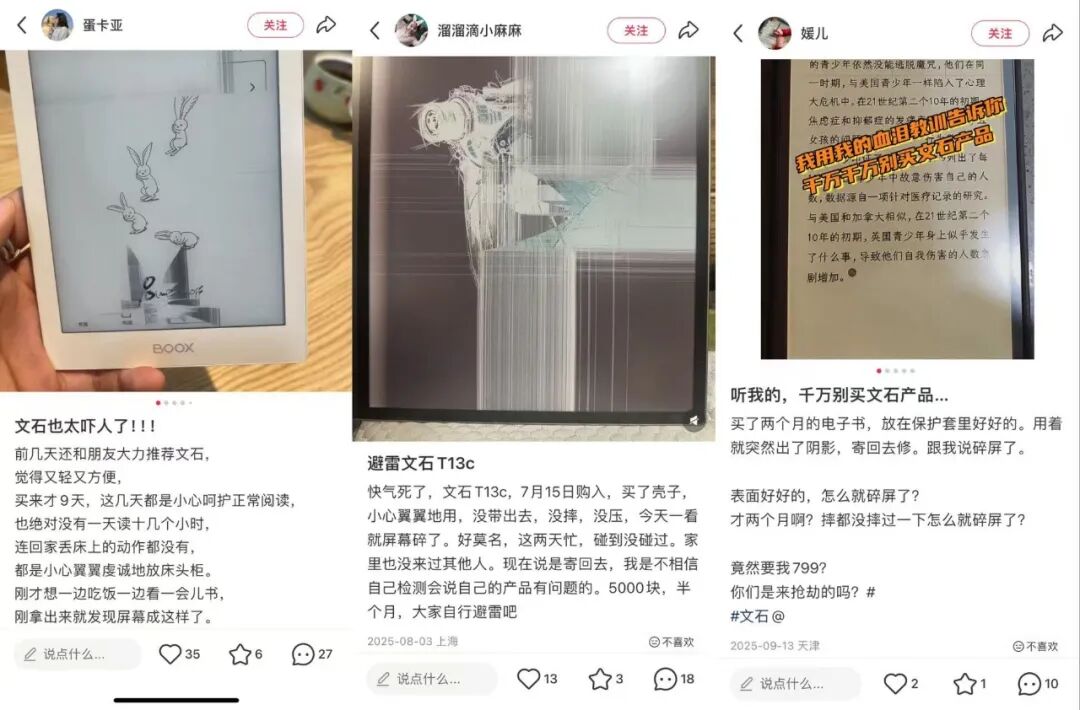
Core Viewpoint - The article discusses the challenges and opportunities faced by the company Wenshi (BOOX) as it prepares for its IPO, highlighting its reliance on E Ink technology from Yuantai Technology and the competitive landscape in the e-paper market [5][9][29]. Group 1: Market Dynamics - The global e-paper tablet shipment is projected to reach 16.24 million units by Q3 2025, marking a year-on-year increase of 71.3%, while the core e-reader segment in China saw a significant growth of 33.4% in sales volume [9]. - Wenshi differentiates itself from Kindle by offering an open system (BOOXOS) that supports multiple formats and third-party applications, addressing a broader range of user needs beyond just reading [9][10]. - The company aims to position itself as a "e-paper tablet" rather than just an e-book reader, expanding its product applications into office and educational settings [12]. Group 2: Technological Innovations - Wenshi has developed proprietary BSR high-refresh technology to enhance the user experience by improving page-turning speed, approaching that of LCD screens [12]. - The company is investing in color e-paper technology to address issues with color saturation, although users have reported concerns about screen fragility [12][14]. Group 3: Supply Chain and Dependency - Yuantai Technology dominates the e-paper market with a 90% market share, and Wenshi's relationship with Yuantai is crucial, as it provides the latest screen technology [15][19]. - Wenshi's procurement from Yuantai accounted for 29.1% to 27.4% of its total procurement from 2023 to Q3 2025, indicating a significant dependency that poses risks if Yuantai alters its supply terms [19][20]. Group 4: Financial Performance - Wenshi's revenue growth has been slow, with figures of 804 million yuan, 1.018 billion yuan, and 799 million yuan from 2023 to Q3 2025, while net profit has declined from 124 million yuan in 2023 to 103 million yuan in Q3 2025 [24][26]. - The company's cash flow situation is concerning, with a net cash flow from operating activities of -41.21 million yuan in Q3 2025, a significant drop from the previous year [24][28]. - Despite financial difficulties, Wenshi has declared substantial dividends, totaling nearly 200 million yuan, raising questions about its cash flow health [28]. Group 5: Competitive Landscape - Following Kindle's exit from the Chinese market, domestic competitors like Hanwang and Keda Xunfei are intensifying their focus on the e-paper sector, increasing competition for Wenshi [26]. - Wenshi faces pressure from both domestic and international brands, as well as the risk of losing its competitive edge if Yuantai shares its technology with rivals [20][26].


艰难的“中国版Kindle”,上市前先给股东分了2个亿
Feng Huang Wang· 2026-01-28 06:13
Core Viewpoint - The company Wenshih is challenging Kindle with an open system but is heavily reliant on the monopolistic screen supplier E Ink Technology, revealing concerns over cash flow, performance difficulties, and substantial dividends amid its IPO plans [1] Group 1: Market Dynamics - Following Amazon Kindle's exit from the Chinese market, the electronic paper industry showed unexpected growth, with global electronic paper tablet shipments projected to reach 16.24 million units by Q3 2025, a year-on-year increase of 71.3% [2] - Despite a decline in overall online sales in China by 11.6%, the core e-reader segment saw a significant increase in sales volume by 33.4% and revenue growth of 43.5% to 800 million yuan [2] - Wenshih aims to establish a foothold in overseas markets and submitted its IPO application to the Hong Kong Stock Exchange on January 19, 2026 [2] Group 2: Product Differentiation - Wenshih's BOOXOS system supports multiple formats and third-party applications, distinguishing itself from Kindle's closed ecosystem [3][4] - The company positions itself as a "e-ink tablet" rather than just an e-reader, targeting various use cases in office and education settings [5] - Wenshih has developed proprietary BSR high-refresh technology to enhance user experience, although some users report issues with screen fragility [5][7] Group 3: Supply Chain Dependency - E Ink Technology dominates the global electronic ink market with a market share exceeding 90%, making it a critical supplier for Wenshih [9][10] - Wenshih's procurement from E Ink accounted for 29.1%, 28.1%, and 27.4% of total purchases in 2023, 2024, and the first three quarters of 2025, respectively, indicating a deep dependency [12] - The dual role of E Ink as both supplier and shareholder (owning 4.9% of Wenshih) creates a complex relationship that could pose risks if E Ink alters its supply strategy [12] Group 4: Financial Performance - Wenshih's revenue for 2023, 2024, and the first three quarters of 2025 was 804 million yuan, 1.018 billion yuan, and 799 million yuan, respectively, indicating slow growth [15] - The net profit decreased from 124 million yuan in 2023 to 121 million yuan in 2024, with a further decline of 4.1% to 103 million yuan in the first three quarters of 2025 [15] - The company's cash flow situation worsened significantly, with a net cash flow from operating activities of -41.21 million yuan in the first three quarters of 2025, a drop of over 390% compared to the previous year [15] Group 5: Strategic Challenges - Wenshih faces internal challenges with declining sales of its flagship products, as the sales volume of productivity tablets slightly decreased from 224,000 units in 2023 to 216,000 units in 2024 [16] - The company also contends with external competition from domestic and international brands, including Hanwang and Sony, following Kindle's exit [16] - Despite increased R&D spending, Wenshih has not achieved significant technological breakthroughs, focusing instead on optimizing existing technologies [16] Group 6: Dividend Policy - Wenshih's dividend strategy has raised concerns about its financial health, with total dividends nearing 200 million yuan despite declining profits [19] - The company declared dividends of 10 million yuan in 2023, 90 million yuan in 2024, and 100 million yuan in the first three quarters of 2025, distributing 97% of its net profit for that period [19]