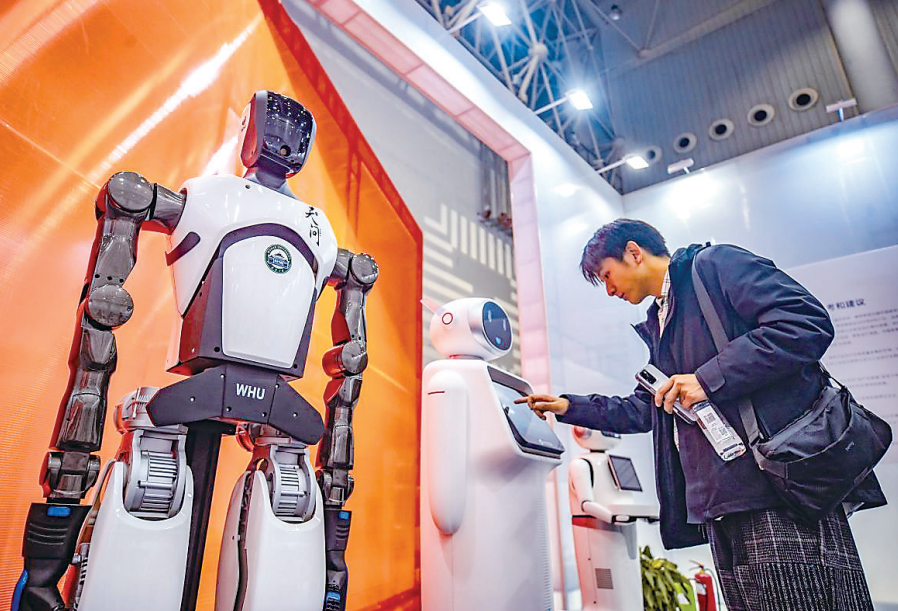
AI融合

Search documents
机械设备行业行业深度报告:“十五五”规划纲要解读(机械篇)-自主可控、AI融合、外拓升级
Zhong Guo Yin He Zheng Quan· 2026-03-14 06:24
Investment Rating - The report suggests a focus on investment opportunities in the mechanical equipment industry, particularly in areas of domestic substitution and AI integration [4]. Core Insights - The "14th Five-Year Plan" emphasizes technological self-reliance and the autonomy of industrial chains, with a focus on key sectors such as integrated circuits, industrial mother machines, high-end instruments, and advanced materials [6]. - The report identifies significant growth potential in the domestic production of industrial mother machines and scientific instruments, driven by increased policy support and funding [6][19]. - AI integration into mechanical equipment is highlighted as a major trend, with the industry expected to benefit from AI-driven infrastructure investments [32]. - The report notes the ongoing trend of Chinese engineering machinery companies expanding overseas, transitioning from product exports to capacity exports [4][37]. Summary by Sections 1. Breakthrough in "Choke Point" Areas: Industrial Mother Machines and Scientific Instruments - The report indicates that the domestic substitution process for industrial mother machines and scientific instruments will accelerate, supported by government policies [6]. - The high-end machine tool market remains heavily reliant on imports, with opportunities for domestic manufacturers to increase their market share [7][18]. - The scientific instruments sector is characterized by a high import dependency, with over 70% of instruments imported, indicating a strong potential for domestic manufacturers to fill this gap [22][26]. 2. Deep Integration of AI and Mechanical Equipment - The report highlights that the mechanical equipment industry will benefit from AI-driven infrastructure investments, with significant capital expenditure expected from major cloud service providers [32]. - AI applications, particularly in embodied intelligence, are identified as having substantial growth potential, with various industrial and consumer applications anticipated [38]. 3. Engineering Machinery's Global Expansion - The report notes that the engineering machinery sector is transitioning from product exports to capacity exports, with a focus on high-quality international cooperation [4]. - The export value of China's engineering machinery is projected to reach $60.17 billion by 2025, reflecting a compound annual growth rate (CAGR) of 23% during the "14th Five-Year Plan" period [4]. 4. Investment Recommendations - The report recommends focusing on sectors where domestic substitution is expected to continue, such as industrial mother machines and scientific instruments [4]. - It also suggests monitoring the integration of AI with mechanical equipment and the engineering machinery sector's international expansion [4].




京东(JD):外卖业务亏损收窄,日百和服务收入强劲增长
Shenwan Hongyuan Securities· 2026-03-10 12:44
Investment Rating - The report maintains a "Buy" rating for JD [1][11] Core Insights - JD's Q4 FY25 revenue reached RMB 352.3 billion, a 1.5% year-on-year increase, exceeding Bloomberg consensus estimates. Service income grew by 20.1% year-on-year to RMB 79.3 billion, while Non-GAAP net profit was RMB 1.1 billion, down 90.4% year-on-year but above expectations [5][6][11] - The company's retail revenue decreased by 1.7% year-on-year to RMB 301.9 billion, impacted by high base effects in electrical categories. However, general merchandise revenue increased by 12.1% year-on-year to RMB 119.7 billion, marking five consecutive quarters of double-digit growth [6][9] - The food delivery business is expected to improve its unit economics (UE) as the company gradually opens up to commission collection and enhances operational efficiency. The report anticipates that the food delivery market share will reach 30% by 2026 [9][11] Financial Data and Profit Forecast - Projected revenues (in RMB million) for JD are as follows: - 2024: 1,158,819 - 2025: 1,309,085 - 2026E: 1,412,535 - 2027E: 1,493,139 - 2028E: 1,571,590 - Non-GAAP net profit projections (in RMB million): - 2024: 47,827 - 2025: 27,032 - 2026E: 29,132 - 2027E: 48,208 - 2028E: 59,277 - The report indicates a decrease in adjusted net profit forecast for FY26 from RMB 30.2 billion to RMB 29.1 billion, while maintaining FY27 at RMB 48.2 billion and introducing FY28 at RMB 59.3 billion [2][13][11] Market Data - As of March 9, 2026, JD's closing price was USD 27.47, with a market capitalization of USD 43.8 billion. The stock has a 52-week high of USD 44.44 and a low of USD 24.51 [3][4]

60%毛利率却亏损近9000万,按摩器龙头实控人减持套现后遭立案
Xin Lang Cai Jing· 2026-02-28 03:46
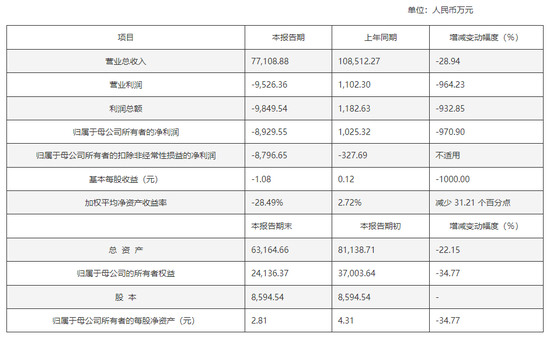
Core Viewpoint - The company Beiliang Song has once again fallen into a loss situation, reporting a significant decline in revenue and a substantial net loss for the fiscal year 2025 [1][16]. Financial Performance - Total revenue for 2025 was 771 million yuan, a year-on-year decrease of 28.94% [2][17]. - The net profit attributable to the parent company was a loss of approximately 89.3 million yuan, a staggering decline of 970.90% compared to the previous year [2][17]. - Basic earnings per share were -1.08 yuan, down from 0.12 yuan, marking a 1000% decrease [2][17]. - The weighted average return on equity dropped to -28.49%, a decrease of 31.21 percentage points from the previous year [2][17]. Market Position and Strategy - Beiliang Song, once a leader in the massage device market with a gross margin close to 60%, has seen its stock price plummet from a peak of 185 yuan per share to below 23 yuan [3][18]. - The company has struggled to maintain its market position due to intensified competition and has failed to achieve significant progress in its attempts to expand internationally and launch new product categories [3][18]. - The marketing strategy, heavily reliant on celebrity endorsements and extensive physical store presence, has not yielded the expected results, leading to increased operational costs that have eroded profit margins [7][22]. Challenges and Risks - The company has faced continuous revenue and net profit declines for five consecutive quarters since 2022, with a significant loss of nearly 150 million yuan in 2022 [6][21]. - The high fixed costs associated with a large number of physical stores have further pressured profit margins, making it difficult for the company to balance high gross margins with cost control [8][23]. - The company has acknowledged potential risks of continued losses if market conditions do not improve, and if new product launches and sales channels do not meet expectations [9][24]. International Expansion and R&D - Beiliang Song is pursuing a global strategy, focusing on Southeast Asia and the Middle East, with plans to open 10-20 new stores in these regions by 2026 [10][25]. - However, the company's international revenue has shown a decline, with a 39.32% drop in the first half of 2025 compared to the previous year [11][26]. - Despite efforts to diversify its product offerings and enhance its service model, R&D expenditures have decreased, raising concerns about the company's ability to innovate and compete effectively [12][27]. Regulatory Issues - The company and its actual controller, Ma Xuejun, are under investigation by the China Securities Regulatory Commission for alleged information disclosure violations [14][29]. - This investigation could impact the company's management and operations, especially in light of ongoing financial pressures and the need for effective new product strategies to recover from losses [15][30].


春节档红包大战背后的支付考验
Bei Jing Shang Bao· 2026-02-11 13:53
Core Viewpoint - The Spring Festival red envelope competition has intensified, with major companies like Tencent, Baidu, Alibaba, and ByteDance launching significant cash giveaways, highlighting the integration of AI and marketing strategies, while the underlying battle focuses on payment settlement capabilities [1][3][8] Group 1: Red Envelope Competition - Tencent has announced a distribution of 1 billion yuan in cash red envelopes through its Yuanbao app, while Baidu is offering 500 million yuan linked to its AI features [1][3] - Alibaba's Qianwen app has introduced a 3 billion yuan "treating guests" plan, and ByteDance is giving away 100,000 tech gifts and cash red envelopes up to 8,888 yuan during the Spring Festival [1][3] - The scale of red envelope distribution has reached new heights, with companies leveraging AI integration and scenario binding as new highlights [1][3] Group 2: Payment Settlement Challenges - The red envelope competition is not just about consumer engagement but also tests the payment settlement systems of these companies, which must handle high concurrency and ensure accurate and timely transactions [3][4] - The ability to process millions of transactions per second and maintain system stability during peak times is crucial for payment institutions [4][7] - Companies are focusing on enhancing their payment systems to support high-volume transactions and ensure seamless user experiences during promotional events [6][7] Group 3: Technological and Compliance Considerations - The competition is evolving into a test of technological strength, compliance levels, and ecosystem collaboration capabilities among payment institutions [8][9] - Future competition will center on the flexibility of settlement architectures, automated error handling, and support for digital currency transactions [8][9] - Companies are encouraged to develop cloud-native, modular payment systems that integrate with merchants and regulatory bodies to create a fully automated transaction ecosystem [8][9] Group 4: Security and Risk Management - Payment institutions must conduct capacity assessments and stress tests on their settlement systems to ensure business continuity and security during peak transaction periods [5][7] - Companies are implementing advanced security measures to protect against cyber threats and ensure the safety of user accounts and funds [6][7] - The focus on risk management includes identifying and intercepting fraudulent activities to maintain the integrity of the payment process [7][9]



2.4犀牛财经早报:黄金进入“未知领域” 投资者心态极限拉扯
Xi Niu Cai Jing· 2026-02-04 01:37
Group 1: Public Fund Industry - In 2026, public fund companies showed strong enthusiasm for self-purchase, with 24 companies implementing self-purchases totaling 406 million yuan, over 80% of which was directed towards equity funds [1] - Among the self-purchases, stock funds received 100 million yuan and mixed funds received 248 million yuan, while bond funds received 30 million yuan [1] - Ruifeng Fund led the self-purchase with 100 million yuan, while several other companies, including GF Fund and China Merchants Fund, each self-purchased 20 million yuan [1] Group 2: Payment Industry - The number of third-party payment licenses is continuously decreasing, with the first company, Henan Jubao Payment, exiting the market in 2026 [2] - The decline in payment institutions is attributed to structural reshuffling and regulatory upgrades within the industry [2] - Traditional payment businesses are under pressure, with many companies reporting declines in net profit after excluding non-recurring gains, prompting a need for transformation towards cross-border payments and AI integration [2] Group 3: Refrigerant Industry - The refrigerant market remains strong despite being in the traditional off-season, with prices for R32 and R134a increasing by approximately 45% and 32% year-on-year, respectively [2] - The industry is expected to see long-term price increases due to strict global supply constraints and growing downstream demand [2] - Major companies are primarily executing long-term contracts, but market prices are expected to exceed contract prices, indicating a robust pricing environment [2] Group 4: Smartphone Market in India - The Indian smartphone market saw a 1% year-on-year increase in shipments in 2025, with sales revenue growing by 8% due to a shift towards high-end devices [3] - However, a single-digit decline in shipments is anticipated for 2026, particularly in the segment priced below 15,000 Indian Rupees, due to rising costs of components [3] - The average selling price (ASP) is expected to increase by 5%-7% as major OEMs focus on high-end strategies [3] Group 5: Nanobody Research - Research indicates that nanobodies extracted from llamas show potential in treating various diseases, including depression, prompting significant investment from pharmaceutical companies [4] - The development of next-generation nanobody drugs is seen as a breakthrough in precision medicine [4] Group 6: Cancer Burden Quantification - The IARC and WHO quantified the global burden of preventable cancers, revealing that nearly 40% of new cancer cases in 2022 were linked to modifiable risk factors [4] - The findings emphasize the importance of reducing smoking, infections, and alcohol consumption in cancer prevention efforts [4] Group 7: PayPal's Financial Performance - PayPal's fourth-quarter earnings and revenue fell short of expectations, leading to a significant drop in stock price and a change in CEO [5] - The company reported earnings of $1.23 per share and total revenue of $8.68 billion, both below analyst forecasts [5] Group 8: Tianqi Lithium Industry - Tianqi Lithium suspended trading in Hong Kong as it plans to dispose of part of its stake in SQM, with a maximum of 3.566 million A shares to be sold [6] - The company has already disposed of 748,500 B shares, and as of the announcement date, it holds 62.556 million A shares, representing 21.90% of SQM's total shares [6] Group 9: Corporate Governance Issues - Gaoxin Retail announced difficulties in contacting its CEO, but the board believes this will not significantly impact operations [7] - The Shanghai Stock Exchange issued a regulatory warning to Pengxin Resources for failing to appoint a board secretary, which has been vacant since January 2022 [8]
传统业务承压,支付机构亟待转型
Xin Lang Cai Jing· 2026-02-03 23:53
Core Viewpoint - Several payment institutions, including Lakala and New Guodu, have recently released their performance forecasts for 2025, indicating that while some companies have achieved profit growth through non-recurring gains, their net profit after excluding these gains has generally declined due to ongoing pressures in traditional acquiring businesses from market competition and shrinking transaction volumes [1] Group 1 - Companies are experiencing profit growth primarily due to non-recurring gains, but their net profit excluding these gains is declining [1] - The traditional acquiring business is under pressure from market competition and a reduction in transaction volumes [1] - Looking ahead to 2026, the exploration of cross-border payments and AI integration is seen as crucial for the payment industry to find new growth opportunities [1]
传统业务承压 支付机构亟待转型
Zhong Guo Zheng Quan Bao· 2026-02-03 20:27
Core Insights - Several payment institutions, including Lakala and Newland, have recently released their 2025 performance forecasts, indicating that while some companies show profit growth due to non-recurring gains, their core net profits have generally declined after excluding these gains [1][2] Group 1: Financial Performance - Lakala expects a net profit attributable to shareholders of between 1.06 billion to 1.2 billion yuan for 2025, representing a growth of 202% to 242% year-on-year. However, its net profit after excluding non-recurring gains is projected to decline by 26% to 46%, amounting to 300 million to 410 million yuan [1] - Newland anticipates a net profit attributable to shareholders of 400 million to 500 million yuan for 2025, reflecting a year-on-year increase of 70.79% to 113.49%. Its net profit after excluding non-recurring gains is expected to decrease by 8.60% to 28.91%, totaling 350 million to 450 million yuan [1] - Highsun Technology, the parent company of Suixing Pay, reported an operating loss of approximately 240 million Hong Kong dollars for the first 11 months of 2025, with expectations of continued losses for the entire year [2] - Cuiwei Co., the parent company of Haike Rongtong, forecasts a net loss of between 490 million to 450 million yuan for 2025, which is a reduction in losses by 197 million to 237 million yuan compared to the previous year [2] Group 2: Business Challenges - The decline in net profit after excluding non-recurring gains is attributed to multiple factors, including the impact of digital payment competition, shrinking acquiring business, and a decrease in bank card payment transaction volumes [2][3] - Newland reported that its transaction volume for domestic acquiring business is expected to be approximately 14.7 trillion yuan for 2025, remaining stable compared to the previous year, but revenue and gross margin from acquiring and value-added services have decreased [3] - Cuiwei Co. indicated that its subsidiary Haike Rongtong is facing intense market competition and declining gross margins in the acquiring industry, leading to anticipated operating losses [3] Group 3: Business Transformation - In response to the pressures on traditional payment businesses, many payment institutions are seeking to explore new business areas, such as cross-border payments and AI integration [4] - Newland is increasing resource investment in cross-border payment business, focusing on product development and bank channel construction to enhance competitiveness [4] - Lakala plans to further integrate payment services with SaaS and AI in 2026 to drive transformation [4]
从火箭到算力,SpaceX收购xAI释放了什么信号?
Jin Shi Shu Ju· 2026-02-03 09:13
Core Viewpoint - SpaceX has acquired Elon Musk's AI company xAI, which may enhance Tesla's stock price by reinforcing market expectations of integration among Musk's companies [2][3]. Group 1: Acquisition and Strategic Vision - SpaceX aims to create an ambitious, vertically integrated innovation engine through the acquisition of xAI, focusing on understanding the universe and extending consciousness beyond Earth [2]. - The company plans to expand its AI capabilities by building data center capacity and has submitted an application to the FCC for a "space cloud" consisting of up to 1 million satellites, which is 100 times larger than its current Starlink product [2]. Group 2: Financial Implications and Valuation - xAI's recent funding round valued the company at approximately $200 billion, while SpaceX is seeking an IPO valuation of up to $1.5 trillion, about 60 times its projected sales for 2026 [3]. - Tesla has invested $2 billion in xAI, and the merger could encourage bullish investors who want to see all of Musk's AI companies integrated [3][4]. Group 3: Challenges and Market Reactions - There are concerns about valuation mismatches, as Tesla's current trading price reflects a 200 times multiple of its expected earnings for 2026, while SpaceX's estimated P/E ratio is closer to 400 times [3][4]. - A full merger may require Tesla to issue approximately 35% more shares, which could lead to hesitation among existing institutional investors due to uncertainties related to aerospace and communications business contributions [4].
艰难的“中国版Kindle”,上市前先给股东分了2个亿
Feng Huang Wang· 2026-01-28 06:13
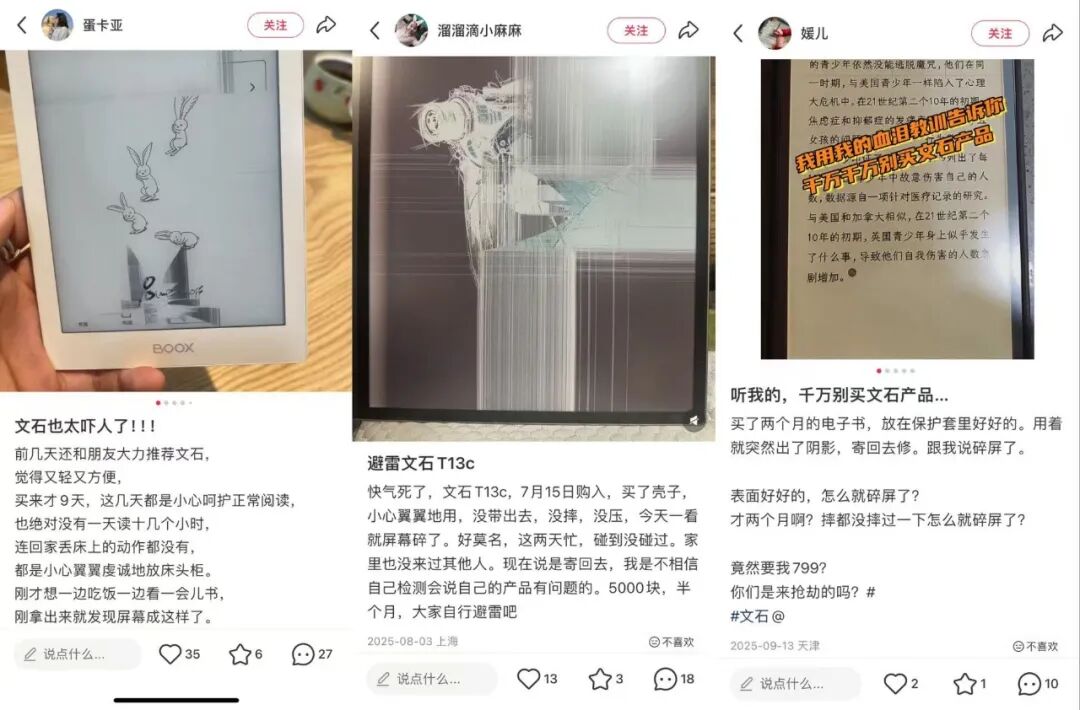
Core Viewpoint - The company Wenshih is challenging Kindle with an open system but is heavily reliant on the monopolistic screen supplier E Ink Technology, revealing concerns over cash flow, performance difficulties, and substantial dividends amid its IPO plans [1] Group 1: Market Dynamics - Following Amazon Kindle's exit from the Chinese market, the electronic paper industry showed unexpected growth, with global electronic paper tablet shipments projected to reach 16.24 million units by Q3 2025, a year-on-year increase of 71.3% [2] - Despite a decline in overall online sales in China by 11.6%, the core e-reader segment saw a significant increase in sales volume by 33.4% and revenue growth of 43.5% to 800 million yuan [2] - Wenshih aims to establish a foothold in overseas markets and submitted its IPO application to the Hong Kong Stock Exchange on January 19, 2026 [2] Group 2: Product Differentiation - Wenshih's BOOXOS system supports multiple formats and third-party applications, distinguishing itself from Kindle's closed ecosystem [3][4] - The company positions itself as a "e-ink tablet" rather than just an e-reader, targeting various use cases in office and education settings [5] - Wenshih has developed proprietary BSR high-refresh technology to enhance user experience, although some users report issues with screen fragility [5][7] Group 3: Supply Chain Dependency - E Ink Technology dominates the global electronic ink market with a market share exceeding 90%, making it a critical supplier for Wenshih [9][10] - Wenshih's procurement from E Ink accounted for 29.1%, 28.1%, and 27.4% of total purchases in 2023, 2024, and the first three quarters of 2025, respectively, indicating a deep dependency [12] - The dual role of E Ink as both supplier and shareholder (owning 4.9% of Wenshih) creates a complex relationship that could pose risks if E Ink alters its supply strategy [12] Group 4: Financial Performance - Wenshih's revenue for 2023, 2024, and the first three quarters of 2025 was 804 million yuan, 1.018 billion yuan, and 799 million yuan, respectively, indicating slow growth [15] - The net profit decreased from 124 million yuan in 2023 to 121 million yuan in 2024, with a further decline of 4.1% to 103 million yuan in the first three quarters of 2025 [15] - The company's cash flow situation worsened significantly, with a net cash flow from operating activities of -41.21 million yuan in the first three quarters of 2025, a drop of over 390% compared to the previous year [15] Group 5: Strategic Challenges - Wenshih faces internal challenges with declining sales of its flagship products, as the sales volume of productivity tablets slightly decreased from 224,000 units in 2023 to 216,000 units in 2024 [16] - The company also contends with external competition from domestic and international brands, including Hanwang and Sony, following Kindle's exit [16] - Despite increased R&D spending, Wenshih has not achieved significant technological breakthroughs, focusing instead on optimizing existing technologies [16] Group 6: Dividend Policy - Wenshih's dividend strategy has raised concerns about its financial health, with total dividends nearing 200 million yuan despite declining profits [19] - The company declared dividends of 10 million yuan in 2023, 90 million yuan in 2024, and 100 million yuan in the first three quarters of 2025, distributing 97% of its net profit for that period [19]
2025武汉国际工业设计博览会点燃新质生产力引擎
Chang Jiang Ri Bao· 2025-12-15 00:35
Core Insights - The Wuhan International Industrial Design Expo successfully showcased over 240 exhibitors from various countries and regions, attracting more than 20,000 visitors [1][2] - The event highlighted China's industrial design innovation and its role in promoting high-quality manufacturing development in Wuhan, aligning with the city's goal of becoming a "design strong city" [2][3] Group 1: Exhibition Highlights - The expo featured international companies from nearly 10 countries, including France, Italy, and South Korea, presenting cutting-edge designs in high-end intelligent equipment, green low-carbon products, and AI industrial applications [2] - Notable Chinese enterprises such as ShenGu Group and CRRC Dalian showcased significant technological breakthroughs in high-end manufacturing [3] - The event included over 10 high-level forums and activities, with participation from more than 2,000 experts and industry leaders, emphasizing the collaborative potential of industrial design [2][3] Group 2: Local Innovations - Wuhan's local enterprises displayed innovative products, including advanced communication equipment and laser technology, indicating the city's industrial design development potential [4] - The Wuhan East Research Institute utilized industrial design tools to create efficient manufacturing solutions for major automotive companies, demonstrating the integration of production services and design [4] Group 3: AI Integration and Consumer Trends - The expo introduced an AI-enabled innovation design section, showcasing local toy brands and highlighting the potential for the toy industry in Wuhan [5][8] - Industrial design has permeated various aspects of daily life, with products like advanced cleaning machines demonstrating innovative design techniques [8][9] Group 4: Ecosystem Development - The expo facilitated numerous design IP activities aimed at building bridges across the industrial ecosystem, enhancing collaboration between design and manufacturing sectors [10] - Events such as the "Design Strong City" supply-demand matching activity showcased the latest trends in Wuhan's design landscape, fostering new ideas for transformation [10][11] Group 5: Future Directions - The "Youth Designer Salon" attracted over 150 participants, focusing on shared opportunities in design innovation and strategic collaborations [11] - The event concluded with awards for outstanding design works, emphasizing the importance of technology innovation and market expansion in the industrial design sector [11][12]