Base Die

Search documents
HBM芯片,走到岔路口
半导体行业观察· 2025-08-30 02:55
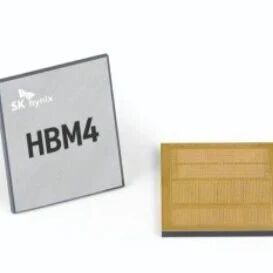
Core Viewpoint - The article discusses the evolution of Base Die in HBM (High Bandwidth Memory) technology, highlighting the shift from DRAM manufacturing processes to foundry processes as companies prepare for the HBM4 era, driven by the increasing performance demands of AI servers [1][3][4]. Group 1: Base Die Evolution - The global memory companies are significantly improving the Base Die structure in preparation for the mass production of the next generation HBM4, as its role becomes increasingly critical due to the exponential growth in AI computing [3][4]. - Base Die is described as the "brain" of HBM, responsible for signal processing and power efficiency, which determines the overall performance and stability of HBM [3][4]. Group 2: Manufacturing Process Changes - Samsung and SK Hynix have decided to transition the Base Die to a foundry process to address heat and signal delay issues, enhancing energy efficiency and performance for high-performance computing [4][5]. - Micron Technology has chosen to continue using existing DRAM processes for Base Die production until HBM4 mass production, while utilizing TSMC's foundry for HBM4E, which may lead to long-term competitive disadvantages [4][5]. Group 3: Strategic Differences - Industry insiders suggest that Samsung and SK Hynix's rapid shift to foundry technology is to meet the demands of major GPU clients like NVIDIA and AMD, ensuring technological leadership [5]. - Micron's conservative strategy aims to leverage existing DRAM infrastructure for cost competitiveness, but this may negatively impact its competitiveness with performance-focused clients [5].