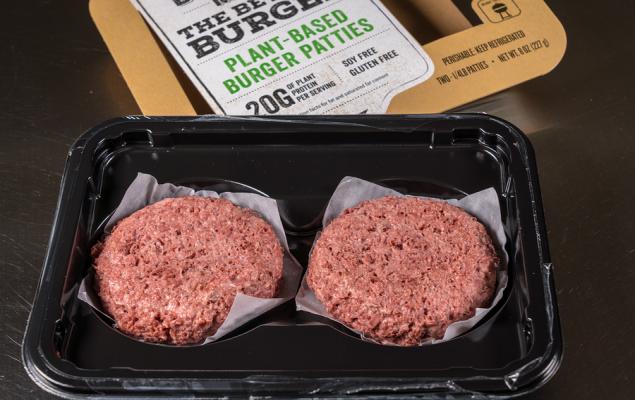
Beyond Ground

Search documents
Natural Food Stocks in Focus as Health & Wellness Trend Grows
ZACKS· 2026-02-23 14:30
Industry Overview - The natural foods industry is experiencing rapid growth driven by consumer awareness of health, wellness, and environmental responsibility [2][3] - Clean ingredients, sustainable agriculture, and ethical sourcing are now essential features of the modern food landscape [2][4] - The global healthy foods market is projected to reach 2,101.9 billion by 2035, indicating significant future growth potential [5] Consumer Trends - Consumers are increasingly choosing products that are transparent about their ingredients and minimally processed, with labels such as organic, non-GMO, and preservative-free gaining popularity [3] - Clean eating is becoming the norm rather than a trend, supported by government initiatives promoting healthier eating habits [3] Company Strategies - Vital Farms, Inc. (VITL) is simplifying its portfolio to focus on higher-margin categories, divesting its North American snacks business for $115 million to concentrate on markets with stronger margins [7] - United Natural Foods, Inc. (UNFI) is enhancing its business model to prioritize higher-margin natural and organic foods, achieving a 10.5% growth in its Natural segment in the first quarter of fiscal 2026 [11] - Beyond Meat, Inc. (BYND) is pivoting towards clean-label standards and medical-grade nutritional profiles, launching products with limited ingredients and achieving significant taste and nutrition accolades [14][15] Product Innovations - Companies are investing in plant-based alternatives and functional foods enriched with vitamins and probiotics, with a focus on sustainable farming technologies [5] - Hain Celestial is concentrating on three flagship categories: tea, yogurt, and baby and kids, with initiatives driving double-digit growth in these segments [8] - Beyond Meat's new product offerings, such as Beyond Ground and Beyond Steak Filet, emphasize clean ingredients and high protein content [15][16] Operational Enhancements - UNFI is implementing lean Kaizen workshops to improve operational efficiency and reduce new item setup times, enhancing its ability to support emerging health-focused brands [12] - The company is also investing in its private brand portfolio to provide value-conscious organic options, ensuring consistent availability of high-quality products [13]





3 AgTech & Food Innovation Stocks With Long-Term Growth Exposure
ZACKS· 2026-01-22 15:06
Industry Overview - The AgTech and food innovation sector is experiencing significant transformation as technology adoption accelerates in farming, food production, and distribution, focusing on sustainability and efficiency [1] - Structural pressures such as climate volatility, labor constraints, and rising input costs are driving the need for innovation, with consumers increasingly favoring transparency and responsible sourcing [2] Digitization and Technological Advancements - A major trend is the digitization of farm operations, with precision agriculture, connected machinery, and real-time analytics optimizing yields while minimizing waste [3] - Companies like Deere & Company are central to this shift, utilizing GPS-guided equipment and data platforms to enhance productivity [3] Food Innovation Trends - Food innovation is evolving as producers adapt to health-oriented diets and sustainability considerations, influencing product development strategies [4] - Tyson Foods is investing in alternative proteins and automation to align its offerings with long-term consumer trends [4] Investment Opportunities - The AgTech and Food Innovation sector presents compelling investment opportunities as companies balance short-term volatility with long-term necessity [5] - Key players such as Corteva, Beyond Meat, and Ingredion are highlighted for their alignment with trends in precision agriculture and protein demand [6] Company Insights: Corteva - Corteva is positioned as a leader in AgTech, focusing on advanced seed genetics and crop protection solutions to meet rising demand driven by climate variability and pest pressures [7] - The company is rolling out new hybrids and investing in gene editing technologies to accelerate innovation [8] - Corteva's initiatives include developing environmentally aligned crop protection solutions, reinforcing its role in the AgTech ecosystem [9] Company Insights: Ingredion - Ingredion is focusing on clean-label ingredients and functional nutrition, responding to inflation and shifting consumer preferences [11] - The company's Texture & Healthful Solutions segment is experiencing solid growth, particularly in clean-label ingredients and protein fortification [12] - Ingredion is also advancing food innovation through targeted solution development and technology adoption, including sugar reduction technologies [13] Company Insights: Beyond Meat - Beyond Meat is adapting to changing protein consumption patterns by focusing on health, sustainability, and resource efficiency [14] - The company is enhancing the nutritional quality of its plant-based proteins, aligning with consumer demand for transparency [15] - Beyond Meat's innovation strategy includes faster product iteration through the Beyond Test Kitchen and ongoing supply-chain improvements [16]



业绩持续亏损 别样肉客盯上功能饮料
Bei Jing Shang Bao· 2026-01-19 15:17
Core Viewpoint - Beyond Meat is expanding from the plant-based meat sector into the beverage market with the launch of Beyond Immerse, a plant-based functional drink aimed at muscle recovery, gut health, and immune support [1][2] Group 1: Product Launch and Strategy - Beyond Immerse is made primarily from pea protein and includes tapioca fiber, vitamin C, and electrolytes, and is free from GMOs and sugar alcohols [1] - The drink is currently available exclusively on Beyond Meat's new direct sales website, Beyond Test Kitchen, with future retail expansion dependent on customer feedback [1] - This marks Beyond Meat's first non-meat product launch, driven by rising consumer interest in obtaining protein from various product forms [1][2] Group 2: Financial Performance - Beyond Meat has faced declining revenues and ongoing losses since 2022, with revenues of $419 million in 2022, $343 million in 2023, and projected $326 million in 2024, alongside losses of $366 million, $338 million, and $160 million respectively [2] - In the first three quarters of 2025, the company reported revenues of $214 million, a year-over-year decline of 14.37%, with net losses widening to $193 million [2] Group 3: Market Trends and Competitive Position - The launch of Beyond Immerse aligns with a growing market for high-protein beverages, which saw a 122% increase in product offerings from 2020 to 2024 [3] - Innova Market Insights identifies "Powerhouse Protein" as a key trend for 2026, with nearly 60% of global dining consumers actively seeking to increase protein intake [3] - Beyond Meat's competitive edge lies in its expertise in plant protein extraction and flavor masking technology, as well as its established supply chain for pea protein, which offers cost and quality advantages [3] Group 4: Industry Insights - Experts suggest that Beyond Meat's move into beverages is a short-term strategy to address performance pressures, while also representing a long-term trend of horizontal expansion in the plant protein category [4]
业绩持续亏损 功能饮料会是别样肉客的出路吗?
Bei Jing Shang Bao· 2026-01-19 15:15
Core Viewpoint - Beyond Meat, known as the "first plant-based meat stock," is entering the beverage market with its new product, Beyond Immerse, a plant-based functional drink made primarily from pea protein, marking its first significant foray into functional foods and beverages [2][3] Expansion into Beverage Business - Beyond Meat has launched Beyond Immerse, a plant-based functional drink that includes pea protein, cassava fiber, vitamin C, and electrolytes, available in two protein versions (10g and 20g) with corresponding calorie counts of 60 and 100 [3] - The drink is offered in three flavors: Peach Mango, Lemon Lime, and Orange Tangerine, and is positioned for post-workout or daily supplementation, focusing on muscle recovery, gut health, and immune support [3] - Currently, Beyond Immerse is sold exclusively through Beyond Meat's new direct-to-consumer website, Beyond Test Kitchen, with future retail expansion contingent on customer feedback [3][4] Breaking Through "Plant Meat" Limitations - The launch of Beyond Immerse comes as Beyond Meat faces significant financial losses, with revenues declining from $419 million in 2022 to an expected $326 million in 2024, alongside increasing net losses [5][6] - The company aims to diversify its offerings beyond meat substitutes, with CEO Ethan Brown stating the goal is to become a "global protein company of the future" [6][7] Market Trends and Competitive Landscape - The global market for high-protein shakes and beverages has seen a 122% increase from 2020 to 2024, with a growing consumer interest in protein intake [8] - Traditional beverage giants and sports nutrition brands are also entering the high-protein plant-based beverage space, indicating a competitive landscape for Beyond Meat [8] - Despite the challenges, Beyond Meat's expertise in plant protein extraction and flavor masking, along with its sustainable brand image, positions it favorably against competitors [9] Strategic Positioning - The introduction of Beyond Immerse reflects a strategic shift towards product diversification and tapping into faster-growing markets, moving away from a sole focus on meat alternatives [7][8] - Industry experts suggest that while this move may be seen as a temporary measure due to financial pressures, it represents a necessary evolution towards a more resilient business model [9]
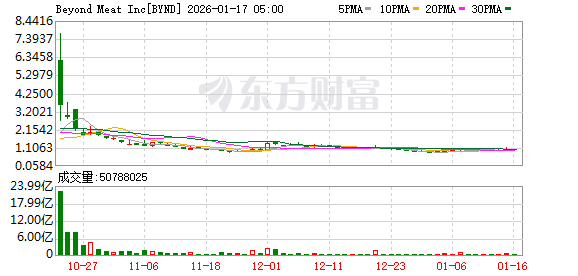
业绩持续亏损,功能饮料会是别样肉客的出路吗?
Bei Jing Shang Bao· 2026-01-19 13:53
Core Insights - Beyond Meat has officially entered the beverage market with the launch of Beyond Immerse, a plant-based functional drink made primarily from pea protein, marking its first significant foray into functional foods and beverages [1][2] - The company aims to diversify beyond its core plant-based meat products amid ongoing revenue declines, seeking new growth avenues [1][4] Product Details - Beyond Immerse features two protein versions (10g and 20g) with corresponding calorie counts of 60 and 100, and includes 7g of dietary fiber, with no GMOs or sugar alcohols [2] - The drink is available in three flavors: Peach Mango, Lemon Lime, and Orange Tangerine, and is positioned for post-workout or daily consumption, focusing on muscle recovery, gut health, and immune support [2] Market Context - The launch comes at a time when Beyond Meat is experiencing significant financial losses, with revenues dropping from $419 million in 2022 to an expected $326 million in 2024, alongside increasing net losses [4][5] - The global plant-based meat industry is facing a downturn, with a 64% drop in venture capital investment in 2024, leading to challenges for companies like Nestlé and Unilever, which have scaled back their plant-based meat operations [5] Strategic Shift - Beyond Meat is shifting its brand focus from meat alternatives to traditional plant proteins, gradually phasing out the "Meat" designation from its branding [6] - The introduction of Beyond Immerse reflects a deeper strategy to diversify product offerings and tap into faster-growing markets [6][7] Competitive Landscape - The high-protein beverage market is rapidly expanding, with a reported 122% growth in high-protein shakes and drinks from 2020 to 2024, indicating a strong consumer interest in protein intake [7] - Competitors in the beverage space include major brands like Danone and Protein Works, which have launched their own high-protein plant-based drinks [7] Consumer Insights - The company is leveraging a Direct-To-Consumer (DTC) model through its new website, Beyond Test Kitchen, to test market acceptance and gather consumer feedback, which is crucial given its current cash flow challenges [3][8] - Despite the potential for growth, there is a risk that consumers may still associate Beyond Meat primarily with plant-based meat, which could hinder the acceptance of its new beverage line [8]
Top Natural and Organic Food Stocks for 2026 as Consumers Go Healthier
ZACKS· 2025-12-31 15:11
Industry Overview - The natural foods industry has transformed from a niche market to a mainstream powerhouse, driven by consumer health consciousness and environmental awareness [1] - Consumers are prioritizing clean eating and ethical sourcing, leading to increased demand for natural and organic foods [1][2] - The global healthy foods market is projected to reach $2,101.9 billion by 2035, indicating significant growth potential [4] Consumer Trends - There is a heightened consumer preference for products with transparent sourcing and minimal processing, with organic, non-GMO, and preservative-free options becoming standard [2] - Governments are reinforcing this trend through stricter food labeling regulations, which enhances consumer trust and expands the market [2] Company Responses - Companies like The Hain Celestial Group, Inc. and Conagra Brands, Inc. are adapting to the rising demand for organic and clean-label foods, focusing on transparency, sustainability, and minimal processing [3] - United Natural Foods, Inc. (UNFI) is leveraging its extensive distribution network to connect health-focused brands with over 30,000 retail locations, achieving a 10.5% growth in its Natural segment in Q1 fiscal 2026 [6] Strategic Initiatives - UNFI is enhancing "speed-to-shelf" for innovative natural brands and has implemented lean Kaizen workshops to improve operational efficiency [7] - Beyond Meat is focusing on clean-label standards and has launched products with limited ingredients, achieving significant taste and nutrition accolades [10][11] - Vital Farms is committed to animal welfare and sustainable agriculture, with a rise in brand awareness to 33% and egg-related revenues increasing to $192.6 million in Q3 2025 [13][14] Future Outlook - Vital Farms aims to reach $1 billion in net sales by 2027, expanding its farm network and increasing production capacity [15] - General Mills is leveraging its diverse portfolio to meet consumer demands for cleaner labels and sustainable options, with a projected 25% increase in sales from new products in fiscal 2026 [18][19]


净亏损扩大 “植物肉第一股”别样肉客押注植物蛋白
Bei Jing Shang Bao· 2025-11-13 14:57
Core Viewpoint - Beyond Meat, known as the "first plant-based meat stock," reported a 14.37% decline in revenue for the first three quarters of 2025, with net losses widening, and projected fourth-quarter sales below market expectations [2][4][5] Financial Performance - For the first three quarters, Beyond Meat achieved revenue of $214 million, down 14.37% year-over-year, and a net loss of $193 million compared to a net loss of $115 million in the same period last year [4] - In Q3 alone, revenue was $70.22 million, a 13.32% decrease year-over-year, with a net loss of $111 million, significantly larger than the $26.58 million loss in the same quarter last year [4] - The revenue decline was attributed to a 10.3% decrease in product sales volume and a 3.5% drop in average selling price [4] - The U.S. retail channel saw a net revenue decline of 18.4% to $28.54 million, with a 12.6% drop in sales volume [4] Market Outlook - Beyond Meat's projected net revenue for Q4 2025 is between $60 million and $65 million, lower than the market expectation of $70.03 million [5] - Analysts suggest that the weak demand for plant-based meat may stem from its inability to meet mainstream market needs, as indicated by the product lifecycle theory [5][7] Industry Context - Since 2021, the enthusiasm in the capital market for plant-based meat has waned, with many companies exiting the sector [7] - The plant-based meat industry faces significant uncertainty, with consumer acceptance and business models still needing maturation [7][8] Strategic Transformation - To address current challenges, Beyond Meat is pursuing a transformation plan, including cost reduction and strategic growth initiatives [8][9] - The company has completed key transformation steps, including debt restructuring and increasing liquidity [8] - Beyond Meat aims to shift its focus from meat imitation to traditional plant proteins, launching products like "Beyond Ground" that do not mimic meat [9] - This strategic pivot is seen as aligning with health trends and enhancing profit margins by leveraging existing supply chains [9]
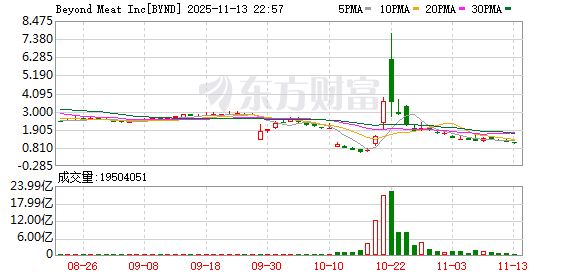
净亏损扩大,“植物肉第一股”别样肉客押注植物蛋白
Bei Jing Shang Bao· 2025-11-13 13:07
Core Viewpoint - Beyond Meat, known as the "first plant-based meat stock," reported a 14.37% decline in revenue for the first three quarters of 2025, with net losses widening, prompting a strategic shift to expand beyond plant-based meat products [1][3][6] Financial Performance - For the first three quarters, Beyond Meat achieved revenue of $214 million, down 14.37% year-over-year, and a net loss of $193 million, compared to a net loss of $115 million in the same period last year [3][6] - In Q3 alone, revenue was $70.22 million, a 13.32% decrease year-over-year, with a net loss of $111 million, significantly larger than the $26.58 million loss in the same quarter last year [3][6] - The decline in revenue is attributed to a 10.3% decrease in product sales volume and a 3.5% drop in average selling price [3][4] Market Dynamics - The U.S. market has seen the most significant decline, with net revenue from U.S. retail channels dropping 18.4% to $28.54 million and sales volume decreasing 12.6% [3][4] - The overall demand for plant-based meat appears weak, as the products struggle to meet mainstream market needs, remaining largely in niche segments [4][7] Strategic Shift - Beyond Meat is transitioning its focus from meat imitation to traditional plant proteins, as evidenced by the launch of "Beyond Ground," which contains only plant-based ingredients and no meat analogs [8][9] - The company aims to become a "global protein company" by diversifying its product offerings and enhancing its operational efficiency [8][9] Industry Context - The plant-based meat sector is facing significant challenges, with many companies exiting the market due to unmet consumer expectations regarding taste, price, and nutrition [7][8] - Analysts suggest that the capital market's enthusiasm for plant-based meat has waned, shifting towards more diverse protein solutions with technological barriers [7][8]
Beyond Meat® Reports Third Quarter 2025 Financial Results
Globenewswire· 2025-11-10 22:38
Core Insights - Beyond Meat reported a significant decline in net revenues for Q3 2025, with a decrease of 13.3% year-over-year to $70.2 million, primarily due to weak category demand and reduced distribution points [4][5][10] - The company is undergoing a transformation to improve its balance sheet, reduce leverage, and enhance liquidity while facing ongoing challenges in the plant-based meat market [3][19] Financial Performance - Net revenues decreased to $70.2 million from $81.0 million in the same quarter last year, driven by a 10.3% decrease in volume sold and a 3.5% decrease in revenue per pound [4][10] - Gross profit fell to $7.2 million with a gross margin of 10.3%, down from $14.3 million and 17.7% in the prior year [5][12] - Loss from operations increased to $112.3 million, compared to a loss of $30.9 million in the previous year, influenced by higher operating expenses and impairment charges [14][16] Revenue Breakdown - U.S. retail channel revenues decreased by 18.4% to $28.5 million, with a 12.6% drop in volume sold [5][10] - U.S. foodservice channel revenues fell by 27.3% to $10.5 million, primarily due to a 27.1% decrease in volume sold [7][10] - International retail channel revenues decreased by 4.6% to $15.8 million, while international foodservice channel revenues increased by 2.3% to $15.3 million [8][9] Operational Highlights - The company is focusing on cost reductions and gross margin expansion investments to achieve sustainable operations [3] - Adjusted EBITDA loss was $21.6 million, or -30.8% of net revenues, compared to a loss of $19.8 million, or -24.4% of net revenues, in the prior year [17] Balance Sheet and Cash Flow - As of September 27, 2025, the company had cash and cash equivalents of $131.1 million and total outstanding debt of $1.2 billion [18] - Net cash used in operating activities was $98.1 million for the nine months ended September 27, 2025, compared to $69.9 million in the previous year [18] Future Outlook - For Q4 2025, the company expects net revenues to be in the range of $60 million to $65 million, reflecting ongoing uncertainty in the operating environment [22]

BYND Stock Rallies as Walmart Deal Boosts Retail Comeback
ZACKS· 2025-10-22 14:46
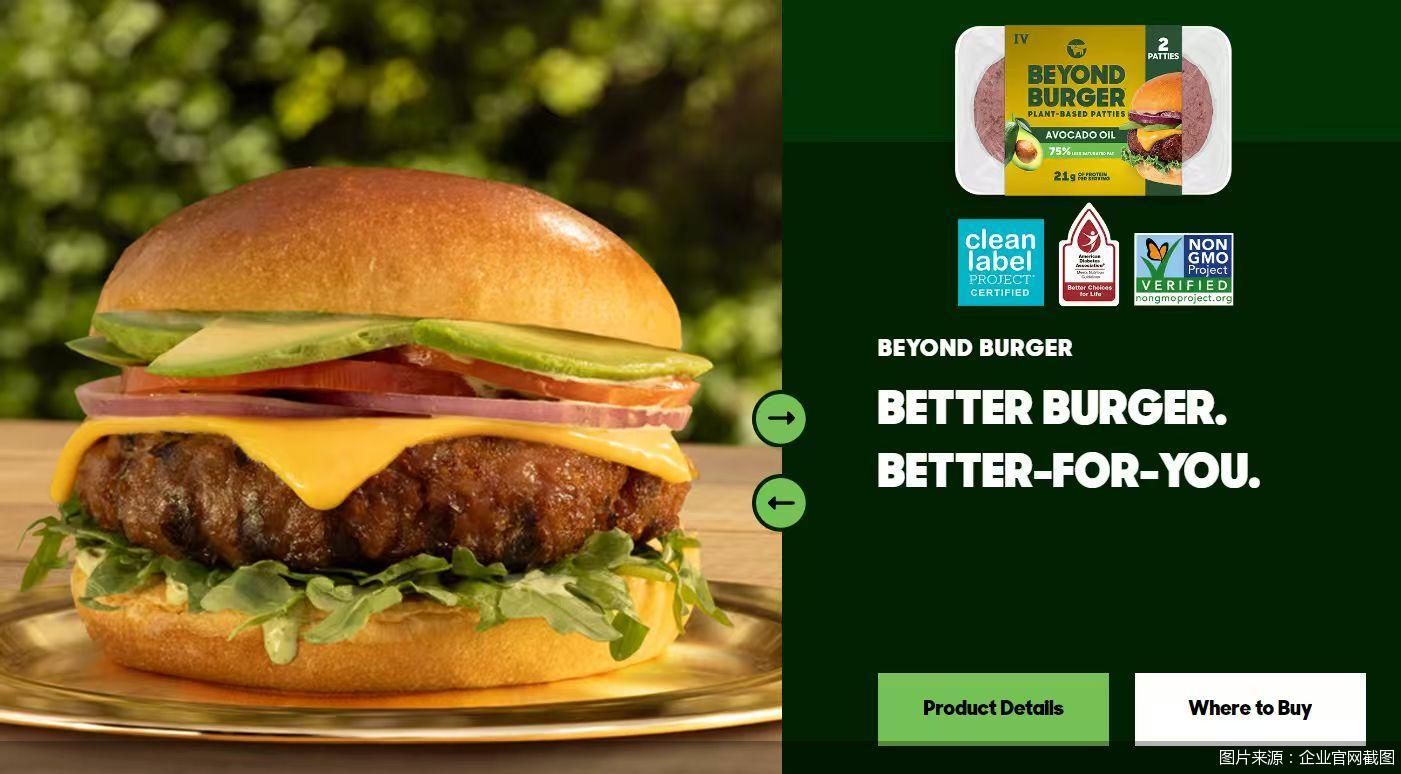
Core Insights - Beyond Meat, Inc. (BYND) shares surged 146% following the announcement of an expanded partnership with Walmart, indicating renewed optimism for the company [1][8] - The rollout will make Beyond Meat's products, including the new six-pack version of the Beyond Burger, available in over 2,000 Walmart stores, marking a significant retail gain for BYND [1][8] Product Strategy - The new value pack aims to make Beyond Meat's products more affordable, appealing to consumers who previously found plant-based options too expensive [2] - The latest Beyond Burger features improved taste, a cleaner ingredient list, and avocado oil for better nutrition, aligning with consumer demand for healthier, high-protein foods [2] Market Positioning - The partnership with Walmart reflects Beyond Meat's strategy to regain its presence in grocery stores, addressing challenges faced over the past year due to cooling plant-based meat sales and retailer shelf space restructuring [3] - Beyond Meat is focusing on strategic distribution gains and refreshed product lines to revive consumer interest [3] Product Innovation - Beyond Meat's expanding portfolio includes products like Beyond Chicken Pieces and Beyond Steak Korean BBQ-Style, which are designed to reestablish momentum with retailers and restaurant operators [4] - The company is also experimenting with broader protein offerings, such as the upcoming Beyond Ground, which aims to deliver clean protein and simple nutrition, positioning Beyond Meat as a broader protein brand [5] Future Outlook - The new retail exposure through Walmart offers a potential growth catalyst for Beyond Meat after several challenging quarters marked by declining sales [6] - While the plant-based category faces ongoing challenges, the Walmart deal enhances accessibility, affordability, and consumer awareness, strengthening Beyond Meat's recovery path [6] - If the company can maintain this momentum, it may set the stage for a genuine retail comeback, potentially reigniting consumer enthusiasm and long-term investor confidence [9]