BridgeV2W

Search documents
仅凭"动作剪影",打通视频生成与机器人世界模型!BridgeV2W让机器人学会"预演未来"
机器之心· 2026-02-21 02:57
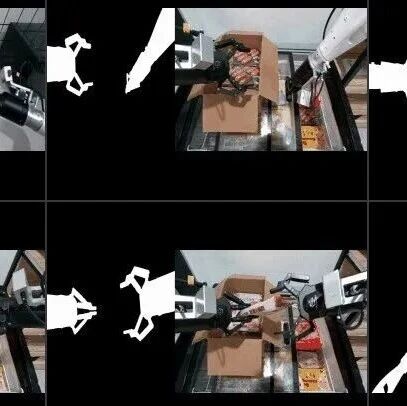
Core Insights - The article discusses the concept of "embodied world models" that enable robots to simulate future actions before execution, akin to human cognitive processes [2][3] - The introduction of BridgeV2W, a solution developed by a collaboration between a robotics company and the Chinese Academy of Sciences, aims to bridge the gap between video generation models and robotic action representation [2][5] Challenges in Embodied World Models - Three main challenges are identified: 1. The language barrier between robot actions (joint angles and poses) and video generation models (pixels) [6] 2. The variability of actions from different camera angles, which can lead to a drop in prediction quality [7] 3. The need for custom architectures for different robotic platforms, making it difficult to create a unified world model [7] Innovative Solution: Embodiment Masks - BridgeV2W introduces "embodiment masks," which render robot actions as binary silhouettes in video frames, allowing for seamless mapping between action coordinates and pixel space [9][10] - This design effectively addresses the three challenges by providing a natural pixel-level signal that aligns robot actions with video model inputs [15] Experimental Validation - The research team validated BridgeV2W across various settings, demonstrating its robustness in unseen camera viewpoints and scenes [12][13] - The DROID dataset, a large-scale real-world robot operation dataset, showed that BridgeV2W outperformed state-of-the-art methods in key metrics such as PSNR and SSIM [13][14] Downstream Applications - BridgeV2W is not just a video generation model; it has practical applications in strategy evaluation and action planning based on visual goals [20] - The model can simulate different strategies in a world model, significantly reducing the cost of strategy iteration [20] Scalability and Generalization - The model's ability to utilize vast amounts of unannotated human video data allows for scalable training without the need for extensive geometric prior knowledge [21][25] - The architecture of BridgeV2W enables it to benefit from advancements in video generation technology, enhancing its predictive capabilities [25] Future Prospects - The potential for BridgeV2W to evolve as video generation models and training datasets expand is highlighted, suggesting significant advancements in robotic "pre-execution" capabilities [28] - The article posits that the integration of video generation models with embodied masks could lead to a new era of general embodied intelligence in robotics [25][28]

中科第五纪联合中科院自动化所团队推出 BridgeV2W,让机器人学会"预演未来"
机器人大讲堂· 2026-02-12 09:15
Core Insights - The article discusses the development of BridgeV2W, a system designed to enhance robots' predictive capabilities by allowing them to simulate actions before execution, bridging the gap between video generation models and embodied world models [1][20]. Group 1: Challenges in Embodied World Models - Current embodied world models face three main challenges: the language barrier between robot actions (joint angles and positions) and video generation models (pixels), leading to difficulties in understanding and prediction [3][4]. - The appearance of the same action can vary significantly from different camera angles, causing a drop in prediction quality when the viewpoint changes [3]. - Different robot structures require unique model architectures, making it hard to create a unified world model [4]. Group 2: Innovations of BridgeV2W - BridgeV2W introduces the concept of an "Embodiment Mask," which renders robot actions as binary silhouettes in images, effectively mapping action coordinates to pixel space [5][6]. - This design addresses the aforementioned challenges by integrating the mask as a conditional signal in pre-trained video generation models, enhancing their ability to understand robot actions while maintaining strong visual priors [6]. Group 3: Experimental Validation - The research team validated BridgeV2W across various settings, including different robot platforms and unseen viewpoints, demonstrating its robustness and adaptability [7][8]. - The DROID dataset, one of the largest real-world robot operation datasets, showed BridgeV2W outperforming state-of-the-art methods in key metrics like PSNR and SSIM, particularly in unseen viewpoint tests [8][10]. Group 4: Practical Applications - BridgeV2W can utilize vast amounts of unannotated human video data for training, allowing for scalable and effective world model training without the need for extensive calibration [14][15]. - The system can evaluate strategies in the world model without real robots, significantly reducing the cost of strategy iteration [14]. - It can also plan actions based on target images, enabling a closed-loop from visual goals to physical actions [14]. Group 5: Future Prospects - The article suggests that the capabilities demonstrated by BridgeV2W are just the beginning, with potential advancements as video generation models and training data scale up [21][22]. - The integration of video generation models with embodiment masks presents a promising path for developing scalable and accurate robotic world models, paving the way for general embodied intelligence [17][19].
仅凭"动作剪影",打通视频生成与机器人世界模型!BridgeV2W让机器人学会"预演未来"
AI科技大本营· 2026-02-11 06:50
Core Insights - The article discusses the innovative approach of BridgeV2W, which aims to enhance robots' predictive capabilities by bridging the gap between video generation models and embodied world models through the use of embodiment masks [2][4][22]. Group 1: Challenges in Robotic Prediction - Current embodied world models face three major challenges: the language barrier between robot actions and video generation models, the variability of actions from different perspectives, and the need for customized architectures for different robot types [5][6][4]. Group 2: Core Innovations of BridgeV2W - BridgeV2W introduces the concept of embodiment masks, which render robot actions as binary silhouettes in video frames, allowing for seamless mapping between coordinate space and pixel space [8][9]. - The model employs a ControlNet-style bypass injection, integrating the masks as conditional signals into pre-trained video generation models, enhancing their ability to understand robot actions while maintaining strong visual priors [9]. Group 3: Experimental Validation - The research team validated BridgeV2W across various settings, demonstrating its effectiveness with different robot platforms and in unseen scenarios, achieving superior performance metrics compared to state-of-the-art methods [11][12]. - In the DROID dataset, BridgeV2W outperformed existing methods in key indicators such as PSNR and SSIM, particularly excelling in unseen viewpoint tests [12][14]. Group 4: Generalization and Adaptability - The framework allows for cross-embodiment generalization, enabling different types of robots to utilize the same model architecture by simply providing their URDF [13][16]. - The model's adaptability was showcased with the AgiBot-G1 dataset, where it achieved comparable prediction quality to single-arm robots without modifying the model structure [16]. Group 5: Practical Applications - BridgeV2W is not just a model for generating visually appealing videos; it has practical applications in real-world tasks, leveraging vast amounts of unannotated human video data for training [19][20]. - The model can effectively utilize human video data to enhance its training process, demonstrating the potential for scalability and accuracy in robotic applications [21][22]. Group 6: Future Prospects - The article suggests that the capabilities demonstrated by BridgeV2W are just the beginning, with future advancements in video generation models and training data expected to significantly enhance robotic predictive abilities [25].