COSTA即饮咖啡饮料

Search documents
茶叶保质期100年?COSTA回应
新浪财经· 2026-01-09 11:21
Group 1 - The article discusses a consumer complaint regarding a COSTA organic Pu-erh tea product that has a production date of October 1, 2025, and a shelf life of 100 years, raising questions about the validity of such a long shelf life [2] - Customer service representatives from the COSTA coffee flagship store stated that the tea can be stored for a long time if kept properly, but did not provide details on how the shelf life was determined or if there were any certifications [2] - The article mentions that the Pu-erh tea is categorized into raw and ripe tea, with ripe tea undergoing a fermentation process that makes it milder in taste compared to raw tea [4] Group 2 - It is reported that raw Pu-erh tea has better storage capacity and can improve in flavor over time, but the optimal shelf life is only about 10 years, and the concept of "the older, the better" applies only within this period [5] - The article highlights that only high-quality products stored under appropriate conditions can improve in quality over time, and poor initial quality or improper storage will not yield better results regardless of storage duration [5] - The history of COSTA, which began in 1971 in London and was acquired by Coca-Cola in 2019, is briefly mentioned, along with the introduction of ready-to-drink coffee and tea products under the brand [5]

保质期9999天,COSTA茶叶越陈越香?客服回应
2 1 Shi Ji Jing Ji Bao Dao· 2026-01-09 08:05
Group 1 - The core point of the article discusses the shelf life of Pu-erh tea sold by COSTA, which was reported to be 100 years, but the product has since been taken down from their official flagship store [1] - A different e-commerce platform still lists Pu-erh tea from COSTA with a shelf life of 9999 days, equivalent to over 27 years [1] - Customer service initially stated that Pu-erh tea can be stored for 3 to 5 years, depending on the storage environment, and emphasized the importance of proper storage conditions to prevent spoilage [1] Group 2 - COSTA, founded in 1971 in London, was acquired by The Coca-Cola Company in 2019, which led to the introduction of ready-to-drink coffee and milk tea products under the COSTA brand [1]
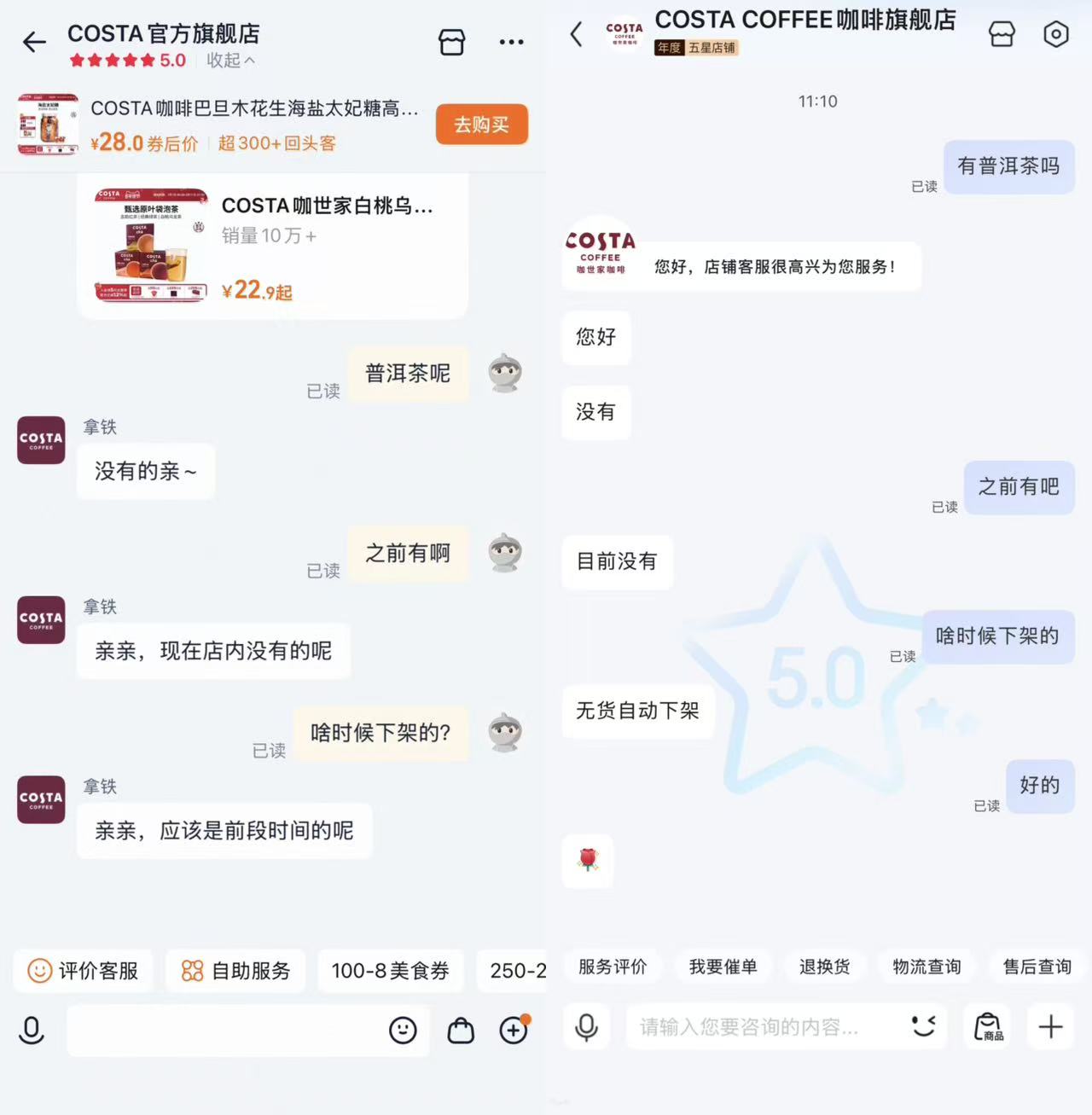
茶叶保质期100年?COSTA电商平台旗舰店已无相关产品
Xin Lang Cai Jing· 2026-01-09 04:14
Core Viewpoint - A consumer reported that a product from COSTA, specifically an organic Pu-erh tea, has an unusually long shelf life of 100 years, raising questions about the validity of such claims and the product's quality assurance [1][4]. Group 1: Product Details - The packaging of the COSTA organic Pu-erh tea indicates a production date of October 1, 2025, and an expiration date of October 1, 2125, suggesting a 100-year shelf life [1]. - The customer service representative stated that the tea can be stored for a long time if kept in proper conditions, but did not provide details on how the expiration date was determined or if there were any certifications [1]. Group 2: Market Availability - As of January 9, searches on major e-commerce platforms like Tmall and JD did not reveal any listings for the Pu-erh tea, with customer service indicating that the product had been taken off the shelves [3]. - Tmall's customer service mentioned that the tea was likely removed recently, while JD's service indicated that it was automatically taken down due to lack of stock [3]. Group 3: Tea Characteristics - Pu-erh tea is categorized into raw (sheng) and ripe (shou) types, with ripe tea undergoing a fermentation process that makes it milder in flavor compared to raw tea [3]. - The best shelf life for Pu-erh tea is generally around 10 years, and the concept of "aging well" applies only within this timeframe; improper storage can shorten its optimal quality [4]. Group 4: Company Background - COSTA Coffee was founded in 1971 in London and was acquired by The Coca-Cola Company in 2019, which expanded its product line to include ready-to-drink coffee and tea beverages [4]. - There have been considerations regarding the potential sale of COSTA's global store operations by Coca-Cola, indicating strategic shifts within the company [4].