Caliptra 2.0

Search documents
微软披露了一颗独特的芯片
半导体行业观察· 2025-08-28 01:14
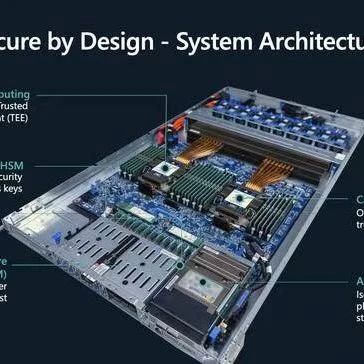
Core Viewpoint - Microsoft, a major player in the cybersecurity field, is facing challenges in its performance within this sector, particularly in protecting cloud customers' data and workloads [2]. Group 1: Security Architecture - Bryan Kelly, a security architect at Microsoft, discussed the multi-layer silicon security relied upon by Azure computing products at the Hot Chips conference [2]. - A key aspect of Microsoft's hardware security is isolation, with encryption keys stored in integrated hardware security modules (HSM) and virtual machines utilizing trusted execution environments (TEE) for mutual isolation [2][6]. - The new security chips, including HSM and Caliptra 2.0 RoT modules, are now standard for Azure's fleet deployment by 2025 [4][7]. Group 2: Challenges and Solutions - Traditional HSMs, which serve multiple systems and virtual machines, present challenges such as remote access and latency issues when workloads need to access keys [5]. - Microsoft has opted to decentralize HSM functionality, equipping each system with its own HSM to enhance performance and reduce latency [5][6]. - The integrated HSM complements Azure's existing confidential computing stack, ensuring data is encrypted during rest, transit, and in memory, while also isolating execution from other VMs [6]. Group 3: Caliptra 2.0 and Open Source - Caliptra 2.0, developed with partners like AMD, Google, and Nvidia, ensures that all components of the computing stack are as claimed and free from tampering [6][7]. - The module introduces quantum-safe encryption accelerators and open computing platform specifications for NVMe key management [6]. - Despite concerns about open-source software quality, the transparency it offers is invaluable for applications like RoT [6][7].