Canadian Dollar

Search documents
加央行维稳利率美加政策分化
Jin Tou Wang· 2026-01-26 02:48
Group 1 - The Canadian dollar continues to experience a range-bound trading pattern, influenced by its commodity currency characteristics, the monetary policy dynamics between Canada and the U.S., and trade uncertainties, resulting in a slight strengthening against the U.S. dollar while remaining within a volatile range since the beginning of the year [1] - The Bank of Canada has maintained its benchmark interest rate at 2.25%, with a 75% market expectation that rates will remain stable throughout 2026, indicating a conclusion to the rate-cutting cycle, which provides a foundational support for the Canadian dollar [1] - The U.S. Federal Reserve exhibits a "hawkish but still accommodative" stance, with rate cut expectations pushed to June, but a projected reduction of 54 basis points within the year, leading to a narrowing interest rate differential that weakens the relative advantage of the U.S. dollar [1] Group 2 - The Canadian dollar, being an energy-export-oriented currency, is closely tied to international oil prices, with recent geopolitical risks supporting oil price stabilization, thus improving expectations for Canadian crude oil export revenues [2] - However, medium to long-term oil prices are pressured by expectations of global oversupply, leading to a decline in oil prices since the beginning of the year, which has previously caused significant depreciation of the Canadian dollar [2] - Domestic economic recovery in Canada is insufficient, with the unemployment rate projected to rise to 6.8% by December 2025, the highest level outside of the pandemic, and declining consumer confidence impacting corporate investment [2] Group 3 - The technical indicators show that the USD/CAD pair is in a bearish trend, with the price recently breaking below the key psychological level of 1.3700 and testing new lows [3] - The Relative Strength Index (RSI) is in a neutral to low range, indicating potential for further downward movement, while the MACD remains in a bearish state, suggesting a continuation of the downtrend [3] - Key pivot points for the USD/CAD pair are identified, with resistance levels between 1.3729-1.3762 and support levels at 1.3670-1.3650, indicating a need to monitor these critical levels for potential price movements [3]
FX Markets Look To Switzerland For Dollar Cues
Benzinga· 2026-01-20 15:40
Core Insights - The US dollar ended the previous week softer, influenced by inflation signals, rising Treasury yields, and uncertainty surrounding the Federal Reserve and the White House [1] - Mixed inflation data, with Core CPI undershooting expectations and PPI meeting them, did not significantly alter the Federal Reserve's near-term policy stance [2] - The breakout in the 10-year yield above 4.2% suggests a potential increase in long-term US yields, yet the dollar struggled to gain traction due to resilient equity sentiment and reduced geopolitical fears [3] Currency Performance - The New Zealand dollar led the G10 currencies, supported by strong domestic manufacturing data, while the Canadian dollar benefited from optimism regarding renewed trade engagement with China [4] - European currencies, particularly the Euro, Swiss Franc, and Sterling, performed poorly due to political issues and declining growth momentum [4] - The Yen traded unevenly, influenced by speculation over US-Japan FX intervention and expectations of further Bank of Japan tightening, but overall demand for safe havens remained low [5] Currency Pairs Analysis - GBP/AUD has weakened significantly, with expectations for the trend to continue lower, potentially testing the key level of 1.98820 [6][8] - EUR/NZD has formed a head-and-shoulders pattern, with a baseline around 2.007; a break below this level could lead to a nearly 3% decline, testing the previous key level at 1.96225 [9][10] Market Outlook - Upcoming events, including the Davos summit and US-EU tensions over Greenland, are expected to create volatility in the Euro and Swiss Franc [11] - The acceleration of the equity earnings season, with results from major companies like Netflix and Intel, will shape risk sentiment and influence Dollar-sensitive carry trades [12] - The 10-year yield's movement above 4.2% will be closely monitored, as its trajectory could significantly impact the US dollar's performance against improving global risk appetite [13]


Dollar Weakens As Market Prices In Rate Cut, Questions Path For 2026
Benzinga· 2025-12-08 16:38
Core Viewpoint - The first week of December exhibited a dip-buying seasonal pattern with major indices rising, while significant price movements occurred in the forex market due to changing central bank expectations and improved global risk sentiment [1] Forex Market Analysis - The U.S. Dollar underperformed against G10 currencies, influenced by softer private employment data, mixed labor indicators, and a decrease in the Fed's preferred inflation gauge to its lowest year-on-year level since May, reinforcing expectations for a rate cut [2] - Despite a rebound in longer-dated Treasury yields, this did not significantly boost the Dollar as investors shifted towards higher-beta currencies amid improved risk sentiment [3] Currency Performance - The Swiss Franc lagged as defensive positioning faded, with rising yields outside Switzerland and stable equity markets [4] - The Euro struggled to gain traction despite the Dollar's weakness, hindered by concerns over the euro area's growth and yield advantages [4] - The Australian Dollar rose sharply, driven by market speculation that the RBA may need to resume tightening in 2026, supported by comments from Governor Michele Bullock regarding inflation risks [4][5] - The Canadian Dollar also strengthened due to robust labor market data, leading to expectations that the Bank of Canada will maintain rates into 2026, while Sterling benefited from positive sentiment following the Autumn Budget [5] Market Focus and Expectations - The upcoming week is centered on the Fed's December decision, with the CME FedWatch tool indicating a nearly 90% probability of a rate cut [10] - With the rate cut already priced in, the focus will shift to how the Fed communicates its easing trajectory into 2026 and whether upcoming market data supports a more aggressive rate-cut profile [11]

Global Markets Brace for Fed Rate Cut Uncertainty, Geopolitical Developments, and Mixed Economic Signals
Stock Market News· 2025-11-17 03:38
Market Overview - Global financial markets are influenced by shifting monetary policy expectations, geopolitical developments, and varied economic data [2] - Commodity markets, currency pairs, and equity futures are reacting to these influential factors [2] Commodities Sector - Copper prices have declined, with the LME three-month contract dropping to USD 10,669.00 per ton [3] - The decline is attributed to skepticism regarding a potential US Federal Reserve interest rate cut in December, with only a 46% chance of a 25-basis-point cut indicated by the CME FedWatch Tool [3] Geopolitical Developments - The UN Security Council is preparing for a vote on a US-drafted resolution for an International Stabilization Force (ISF) in Gaza, which includes a controversial clause on a "pathway to a Palestinian state" [4] - The proposed ISF is expected to comprise approximately 20,000 troops, with initial deployment anticipated by January 2026 [4] Currency Markets - The Japanese Yen has weakened to a nine-month low against the US Dollar, trading around 154.82 per dollar, driven by uncertainty surrounding the Bank of Japan's rate-hike decisions [5] - The USD/CAD pair is maintaining gains near 1.4050, while the Canadian Dollar struggles due to declining crude oil prices, with WTI trading at approximately $59.30 per barrel [5] US Equity Markets - NASDAQ and S&P 500 futures indicate a higher open, supported by optimism surrounding the anticipated end of a US government shutdown [6] - Donald Trump has reversed his stance, now advocating for a vote to release Jeffrey Epstein files while simultaneously suing the Wall Street Journal for $10 billion [6] Economic Data - Thailand's economy grew by 3.2% year-on-year in Q4 2024, an acceleration from the 3.0% growth in Q3 [7] - Private consumption increased by 3.4% year-on-year, contributing positively to overall economic expansion [8]


【UNFX课堂】外汇市场一周回顾(2025年5月5日-5月9日)
Sou Hu Cai Jing· 2025-05-10 07:01
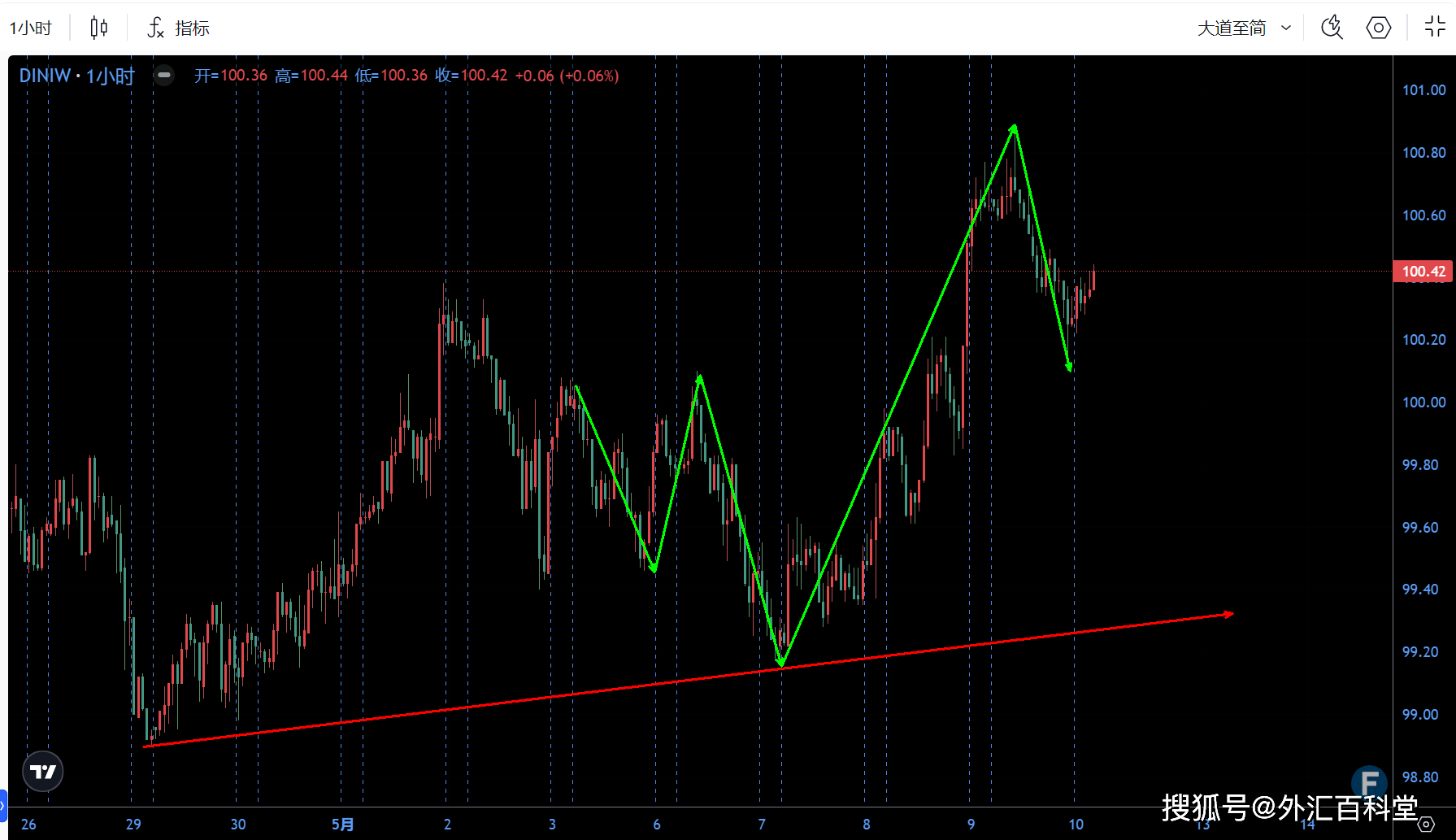
Group 1: Market Overview - The global foreign exchange market experienced significant volatility this week, influenced by trade negotiations, Federal Reserve interest rate decisions, global central bank policy dynamics, and geopolitical risks [1][6] - The focus of the market is on the progress of tariff negotiations, the direction of Federal Reserve policies, and the performance of global economic data, with geopolitical risks and trade policy uncertainties remaining key factors affecting market sentiment [6] Group 2: Dollar Performance - The US dollar index showed a fluctuating trend, opening around 99.8, reaching a high of 100.64, with an increase of approximately 1.03% [3] - Initially pressured by expectations that the Federal Reserve might maintain interest rates, the dollar rebounded after comments from Fed Chair Powell regarding inflation and trade policy, closing at 100.42 [3] - The dollar exhibited "bull-bear divergence," with investors remaining cautious due to the complexity of US economic data and global economic uncertainties [3] Group 3: Euro and Pound Performance - The euro experienced a volatile week, initially rising for two consecutive trading days before declining on Wednesday and Thursday, closing with a slight rebound at 1.12511 [3] - The euro is expected to face long-term resistance at 1.2150, with insufficient upward momentum, likely maintaining a narrow ascending channel in the short term [3] - The British pound weakened due to uncertainties surrounding the Bank of England's interest rate decision and economic data, closing around 1.3300 [3] Group 4: Safe-Haven and Commodity Currencies - Safe-haven currencies like the yen and Swiss franc performed poorly this week, with the USD/JPY pair showing a V-shaped trend as market risk aversion eased amid tariff negotiations [4] - Commodity currencies were mixed, with the Australian dollar weakening due to global economic growth concerns and commodity price fluctuations, while the Canadian dollar stabilized and rebounded due to rising oil prices [5] Group 5: Global Central Bank Dynamics - Several central banks maintained their policies this week, including the Federal Reserve and the Bank of Japan, which continued their accommodative stances [7] - The Norwegian central bank kept high interest rates to address rising inflation [7] - The Hong Kong Monetary Authority took actions to stabilize the Hong Kong dollar, emphasizing the importance of regional financial stability [6][7]