CentOS

Search documents
环球问策:撬开全球操作系统传统格局 中国“云+AI”路线会是一场豪赌吗?
Huan Qiu Wang Zi Xun· 2025-11-18 08:16
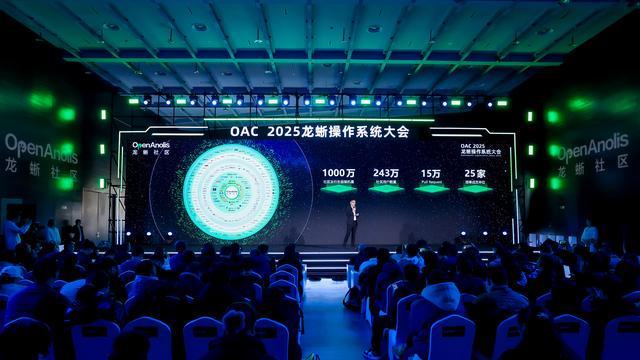
Core Insights - The cessation of CentOS support serves as a wake-up call and a turning point for the development of domestic operating systems in China, with a clear community vision to promote an ecosystem rather than engage in low-level competition [1] - The Longxin operating system has surpassed 10 million installations, capturing nearly 50% of the domestic server operating system market, indicating a strong willingness among enterprise users to migrate to this system [1] - The shift from being a "follower" to a "definer" in the operating system landscape is being debated, particularly in the context of cloud computing and AI reshaping technology [1] Group 1: Open Source and Community Structure - The understanding of open source in China has historically oscillated between viewing it as a free resource or a utopian solution, highlighting the need for a supportive ecosystem [2] - The Longxin community comprises 24 governing units and over 1,000 ecosystem partners, covering the entire industry chain from chips to cloud vendors, fostering a collaborative environment [2][4] - The community's governance model differs from foreign counterparts, focusing on efficiency and commercial interests, which has led to the successful incubation of 14 derivative versions and nearly 4,800 hardware compatibility certifications [5] Group 2: AI and Operating System Evolution - The role of operating systems is evolving from resource management to being a critical factor in the success of AI applications, necessitating a balance between different computing philosophies [6][7] - Longxin's strategy emphasizes a model-centric approach, where the operating system facilitates collaboration among various processing units, akin to a conductor in an orchestra [7] - The community aims to build an open AI engine ecosystem through initiatives like the "Longteng Plan 3.0," which seeks to integrate over 1,000 industry, academic, and research forces [7] Group 3: International Standards and Community Influence - Longxin community members are increasingly participating in international standard-setting bodies, marking a shift from being mere contributors to co-creators of standards [9][10] - The community's governance and technical direction must be driven by models, allowing for a redefinition of system interfaces and behaviors in the AI era [10][11] - The challenge remains to transition from being participants in defining standards to leading the definition process, which requires a robust ecosystem and user adoption [11][12]

腾讯云:2025年CentOS替代指南白皮书
Sou Hu Cai Jing· 2025-05-18 01:03
Core Insights - Tencent Cloud provides a comprehensive guide for replacing CentOS, addressing the risks associated with CentOS's discontinuation and offering solutions for a smooth transition to TencentOS Server [1][4]. Group 1: CentOS Discontinuation and Its Impacts - CentOS has been a significant player in the server operating system market, especially in industries like finance, energy, and manufacturing, with over 350,000 companies globally using it [8]. - The discontinuation of CentOS maintenance began in December 2020, with CentOS 7 set to stop service on June 30, 2024, leading to increased security risks, lack of technical support, and compatibility challenges for applications [9][11]. - The risks include heightened security vulnerabilities due to the absence of official patches, increased difficulty in resolving technical issues without official support, and challenges in application compatibility with new software and hardware [11][12]. Group 2: Replacement Strategies - Companies can choose from three main replacement strategies: 1. **In-place Replacement**: Directly replacing the existing CentOS system with TencentOS using tools, which is quick but may fail in complex environments [13][15]. 2. **New Deployment**: Setting up TencentOS on new hardware, which is safer but requires additional resources and time [17][19]. 3. **Managed Services**: Keeping the existing environment while receiving support from a vendor, suitable for legacy systems that cannot afford downtime [18][20]. Group 3: TencentOS Server Advantages - TencentOS Server V3, based on the Linux kernel, is designed to be compatible with various domestic CPU architectures and offers a 30% performance improvement in database operations and over 15% memory savings [2]. - The server also enhances resource utilization, with a reported 43% reduction in operational costs for WeChat after implementing energy control solutions [2]. - It integrates AI capabilities, doubling GPU utilization for large model inference tasks [2]. Group 4: Case Studies and Implementation - A provincial government cloud project successfully used in-place replacement and new cluster deployment of TencentOS, ensuring service continuity and rapid business expansion [3]. - A central government unit completed the in-place replacement of 400 servers in just 10 days with a near 100% success rate, demonstrating the effectiveness of Tencent's migration tools [41]. - A city metro system faced compliance risks and successfully migrated over 30 core business systems to TencentOS, achieving a migration success rate close to 100% and reducing operational costs by approximately 30% [45]. Group 5: Migration Tools and Processes - Tencent's migration solution includes the TOSAM automation platform and the migrate2tencentos tool, facilitating a seamless transition without the need for intrusive installations [46][48]. - The migration process is designed to minimize downtime, with successful migrations reported to take less than 15 minutes [43]. - The tools ensure compatibility with existing applications, allowing for a smooth transition from CentOS to TencentOS without requiring additional adaptations [32].