Computer chips

Search documents
How War in Iran Could Cripple the Global Digital Economy
Yahoo Finance· 2026-03-12 17:00
The semiconducting industry is in trouble, which means the global economy is in trouble. The sector that creates the computer chips that increasingly power our world requires a huge amount of resources to operate efficiently, including a number of different critical minerals and a whole lot of energy. And those supply chains are now facing major disruptions thanks to the war that the United States and Israel are waging in Iran. Though Donald Trump stated on Monday that the war will end “very soon”, ther ...
Asia shares are mixed following Wall Street's losses, as oil edges lower
ABC News· 2026-03-06 07:18
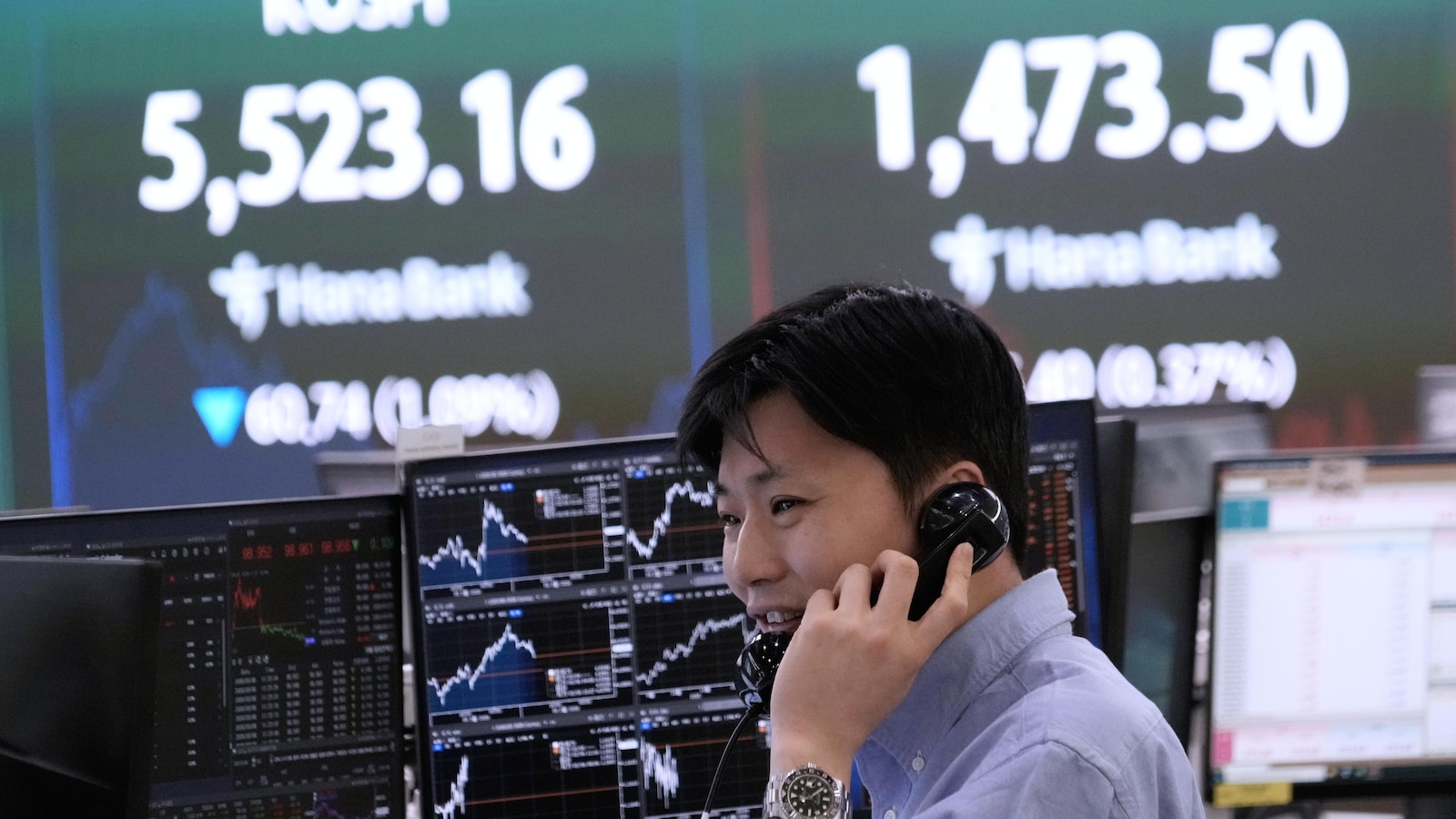
Market Overview - Asian shares exhibited mixed performance following a mild retreat on Wall Street, with South Korea's Kospi index experiencing significant volatility, including a 12% loss on Wednesday and a nearly 10% rebound on Thursday [2][3] - The Nikkei 225 index in Tokyo gained 0.4%, while Hong Kong's Hang Seng jumped 1.6%. Conversely, Australia's S&P/ASX 200 declined by 1.1% [3] Oil Market Dynamics - Oil prices fell more than $1 after reaching the highest levels since summer 2024, with U.S. crude dropping 1.2% to $80.07 per barrel and Brent crude losing 1% to $84.59 per barrel [4] - Analysts noted that if oil prices were to spike to $100 per barrel and remain there, it could pose significant challenges for the global economy [5] - A temporary waiver from the U.S. allowing Indian refiners to purchase Russian oil was seen as a factor in the easing of crude prices, although it was not considered a major game-changer [6] Financial Market Reactions - The S&P 500 and Dow Jones futures showed slight gains amid ongoing geopolitical tensions, with the S&P 500 futures up 0.2% and Dow futures up 0.3% [2] - Airline stocks faced significant losses due to rising fuel costs linked to higher oil prices, with American Airlines down 5.4%, United Airlines down 5%, and Delta Air Lines down 3.9% [8] Currency and Precious Metals - The U.S. dollar strengthened against the Japanese yen, rising to 157.80 from 157.56, while the euro remained unchanged at $1.1611 [9] - Prices for gold and silver increased, with gold rising by 1.1% and silver climbing by 2.7% [10]


Should You Forget Nvidia and Buy 2 Other Artificial Intelligence (AI) Stocks Instead?
The Motley Fool· 2026-02-14 13:30
Core Viewpoint - Nvidia is currently the largest company by market capitalization, but its future growth may be challenged due to high P/E ratios, competition from customers, and reliance on AI infrastructure spending [1][2]. Group 1: Nvidia's Market Position - Nvidia has experienced rapid growth, particularly in the AI sector, making it a significant player in the market [1]. - The company's current market cap stands at $4.6 trillion, with a P/E ratio of 46, indicating a premium valuation [2][12]. Group 2: Amazon's Strategy - Amazon is one of Nvidia's largest customers, investing heavily in AI-related chips for its AWS business [4]. - The company is diversifying its chip procurement by developing in-house brands, which may reduce its reliance on Nvidia over time [5]. - Amazon's revenue from North American commerce grew 10% year-over-year to $127 billion, while AWS revenue increased 24% year-over-year to $35.6 billion [7]. Group 3: Alphabet's Competitive Edge - Alphabet, the parent company of Google, has invested in its own chips, specifically Tensor Processing Units (TPUs), which are used in its data centers and cloud infrastructure [8]. - Like Amazon, Alphabet remains a customer of Nvidia but is also working to reduce its dependency on third-party chips [9]. - Alphabet's Google Search revenue rose 17%, and Google Cloud revenue increased 48%, benefiting from the AI trend [11].




I Predicted TSMC Would Be a Must-Own Stock in 2025. I Still Think It's a Fantastic Buy in 2026
The Motley Fool· 2026-01-24 15:35
Core Viewpoint - Taiwan Semiconductor Manufacturing Company (TSMC) is expected to experience similar growth in 2026 as it did in 2025, driven by strong demand in the AI sector and its dominant position in chip manufacturing [1][3]. Group 1: Company Performance - TSMC's stock rose nearly 54% throughout 2025, indicating strong market performance [2]. - In Q4, TSMC's revenue increased by 26% year-over-year in U.S. dollars, reflecting robust demand for chips [9]. - For 2026, TSMC anticipates approximately 30% revenue growth, continuing the trend of increasing chip demand [9]. Group 2: Market Position - TSMC plays a critical role in the AI buildout, as it manufactures chips for fabless companies like Nvidia and AMD, which design but do not produce the chips [5][6]. - TSMC has captured a significant market share in the production of cutting-edge chips, facing little competition [6]. Group 3: Future Growth and Valuation - Management projects that revenue from AI chips will grow at a compound annual growth rate (CAGR) of mid- to high-50% from 2024 to 2029, indicating substantial future growth potential [10]. - TSMC's current valuation is approximately 24 times forward earnings, slightly higher than the 23 times noted at the beginning of 2025, suggesting it remains an attractive investment option [11].

Asian shares rise, tracking Wall Street gains
Michael West· 2026-01-22 08:55
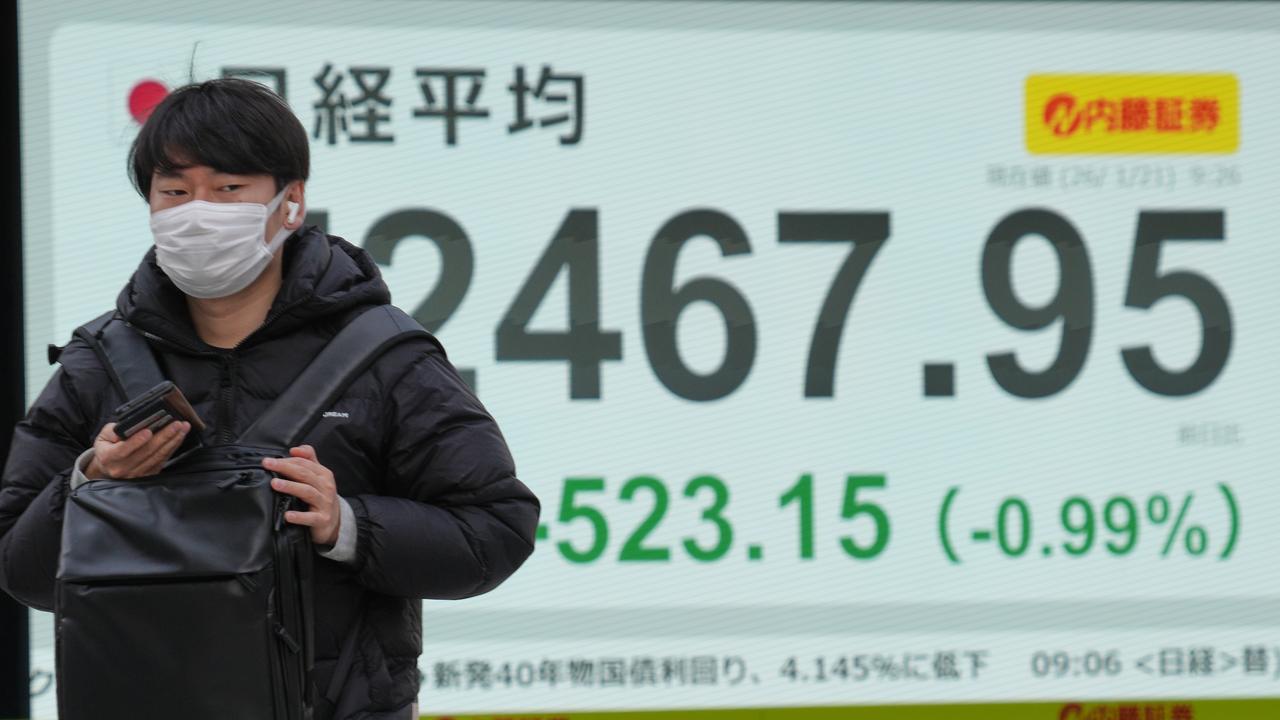
Market Overview - Asian shares have mostly advanced, influenced by Wall Street's performance following US President Trump's decision to retract tariffs on eight European countries regarding Greenland [1][4] - The S&P 500 and Dow Jones Industrial Average futures showed minimal changes, indicating a stable market outlook [1] Regional Performance - Tokyo's Nikkei 225 increased by 1.7% to 53,688.89, driven by technology stocks, with SoftBank Group rising 11.6% and Disco Corp. soaring 17.1% [2] - South Korea's Kospi closed 0.9% higher at 4,952.44, marking a significant milestone by crossing the 5,000 mark for the first time [2] - Technology stocks in South Korea saw gains, with SK Hynix up 2% and Samsung Electronics up 1.9% [3] - The S&P/ASX 200 in Australia gained nearly 0.8% to 8,848.70, while Taiwan's Taiex rose 1.6% and India's Sensex added 0.2% [3] US Market Reaction - US markets experienced their largest losses since October due to Trump's initial tariff threats, which raised concerns about US-European relations [4] - Following Trump's reversal on the Greenland issue, the S&P 500, Dow Jones Industrial Average, and Nasdaq composite all rose by 1.2% [6] Company-Specific Developments - Halliburton's stock jumped 4.1% after reporting stronger-than-expected quarterly profits [7] - United Airlines shares rose 2.2% following better-than-expected quarterly results, while Netflix fell 2.2% despite reporting stronger profits due to concerns over subscriber growth [7] Commodity and Currency Movements - The price of gold fell 0.2% to $4,828.70 per ounce, reflecting reduced investor anxiety [8] - US Treasury yields eased, with the 10-year Treasury yield dropping to 4.25% from 4.30% [8] - The US dollar strengthened against the Japanese yen, rising to 158.75 from 158.27, while the euro increased to $1.1692 from $1.1687 [9]

ASML tops $500 billion market cap as TSMC plans to spend more
Yahoo Finance· 2026-01-15 09:09
Core Viewpoint - ASML, the largest manufacturer of chip-making equipment, reached a market value of over $500 billion following TSMC's announcement of increased capital spending plans to meet the rising demand for AI chips [1][2]. Group 1: ASML's Market Position - ASML's shares rose by 5.4% after TSMC's announcement, contributing to a total increase of 24% in January [2]. - ASML is now recognized as Europe's most valuable company [2]. Group 2: TSMC's Capital Spending Plans - TSMC increased its capital spending forecast for 2026 to between $52 billion and $56 billion, exceeding market expectations of $46 billion, representing a potential increase of up to 21% in spending on chip-making equipment [2]. - This heightened spending from TSMC is in response to increased demand from other manufacturers like Micron and Korean memory chip producers [4]. Group 3: Industry Demand and Growth Outlook - Analysts indicate that ASML stands to benefit significantly from the AI boom, as demand for AI-related chips is growing faster than anticipated [3]. - Despite ASML's forecast of only modest growth for 2026, TSMC's plans to accelerate factory construction suggest a strengthening outlook for ASML into 2027 and beyond [4][5].

US and Taiwan sign $250B trade deal, cutting tariffs on Taiwanese goods
Yahoo Finance· 2026-01-15 08:07
Group 1 - The United States and Taiwan have reached a trade deal that reduces tariffs on Taiwanese goods in exchange for $250 billion in new investments in the U.S. tech industry [1][4] - The tariff on Taiwanese goods has been reduced from an initial 32% to 20%, and now to 15%, aligning it with rates for other U.S. trading partners in the Asia-Pacific region [2] - The U.S. Department of Commerce described the deal as a "historic trade deal" aimed at reshoring America's semiconductor sector and establishing "world-class" U.S.-based industrial parks [3] Group 2 - Taiwan's companies are set to invest $250 billion in sectors including semiconductors, artificial intelligence, and energy, with certain imports from Taiwan being exempt from tariffs [4] - Taiwan Semiconductor Manufacturing Corp. (TSMC), the world's largest chipmaker, announced plans to increase capital spending by nearly 40% this year, following a 35% increase in net profit for the latest quarter [6] - TSMC reported a net profit of 506 billion new Taiwan dollars (approximately $16 billion) for the October-December quarter, exceeding analysts' expectations [7]
China's trade surplus surges 20% to a record $1.2 trillion, even with Trump's tariffs
Yahoo Finance· 2026-01-14 03:35
Trade Surplus and Exports - China's trade surplus reached a record of almost $1.2 trillion in 2025, driven by strong exports to various global markets despite a decline in shipments to the U.S. due to increased tariffs [1] - Total exports for 2025 rose by 5.5% to $3.77 trillion, while imports remained flat at $2.58 trillion, resulting in a trade surplus of over $992 billion in 2024 [2] - In December, exports increased by 6.6% year-on-year, surpassing economists' expectations, while imports rose by 5.7% [2] Export Dynamics - Exports to the U.S. fell by 20% in 2025, but this decline was offset by significant increases in exports to Africa (26%), Southeast Asia (13%), the European Union (8%), and Latin America (7%) [4] - The largest export category was mechanical and electrical items, which rose by 8.4% from the previous year, while exports of labor-intensive products like furniture and clothing saw declines [6] Economic Impact - Strong global demand for computer chips and automotive exports, particularly electric vehicles, contributed to the growth in exports, with auto exports surging by 21% to over 7 million units [5] - The robust export performance has helped maintain China's economic growth close to its official target of about 5%, raising concerns in other countries about the impact of cheap imports on local industries [6] Future Outlook - Economists anticipate that exports will continue to be a significant growth driver for China's economy in 2026, despite facing a "severe and complex" external trade environment [3][7]
President Trump orders divestment in $2.9 million chips deal to protect US security interests
Yahoo Finance· 2026-01-02 23:37
Group 1 - President Trump ordered the divestment of a $2.9 million computer chips deal involving HieFo Corp. due to security concerns [1][3] - The deal, initially announced in May 2024, involved Emcore Corp. selling its computer chips and wafer fabrication operations to HieFo for $2.92 million, which included assuming about $1 million in liabilities [2] - Trump cited "credible evidence" that HieFo's current owner is a citizen of the People's Republic of China, demanding divestment within 180 days [3] Group 2 - HieFo was founded by Dr. Genzao Zhang and Harry Moore, with Zhang previously serving as vice president of engineering at Emcore [3][4] - Plans for the technology acquired from Emcore were to be managed by the same team of employees in Alhambra, California [3] - HieFo's CEO, Zhang, expressed intentions to pursue innovative solutions, including applications in artificial intelligence [4]
A chaotic 'up-crash' as markets and economic realities made for a turbulent 2025
Abc.Net.Au· 2025-12-22 19:10
Economic Overview - The year has been marked by significant economic shocks and surges, particularly due to changes in global trade dynamics and tariffs imposed by the US [1][6] - Despite these shocks, the global economy has shown resilience, with stock markets in various countries reaching record highs [6][10] Tariff Impacts - The US implemented a sweeping regime of tariffs that affected trade with allies and adversaries alike, with rates reaching as high as 145% for China and 10% for countries like Australia and the UK [11][12] - The chaotic nature of the tariffs, including those placed on uninhabited islands, exemplified the unpredictable environment created by the US administration [8][11] Market Reactions - Following the announcement of tariffs, global stock markets initially reacted with panic, with the S&P 500 index losing $7.5 trillion in value within two days [31] - However, the market sentiment shifted as fears of a trade war subsided, leading to a recovery in stock prices [19][31] AI Boom - The rise of artificial intelligence (AI) has been a significant driver of market performance, with substantial investments in technology and data centers propelling the "Magnificent Seven" tech companies [32][37] - Nvidia, a key player in the AI sector, saw its stock price increase by over 1,200%, making it the most valuable company globally, valued at over $4 trillion [33][36] Economic Growth and Projections - The capital expenditure related to AI is estimated to be close to $500 billion, contributing significantly to GDP growth in the US [37][38] - Economists have noted that while there are concerns about market bubbles, the current growth is supported by genuine earnings growth from leading tech companies [36][39]