Cosmos 3

Search documents
人形机器人前景:国家优先级、“大脑”、宇树科技 IPO-Humanoid Horizons National Priority, 'Brain', Unitree IPO
2026-03-26 13:20
Summary of Humanoid Robotics Sector and Unitree IPO Insights Industry Overview - The humanoid robotics sector is experiencing rapid advancements, with significant focus from both China and the US on robotics development [1][2] - The World Model is becoming increasingly important in differentiating robotic capabilities [1] Company Focus: Unitree - Unitree has filed for an IPO, showcasing strong monetization with 5,500 humanoids shipped in 2025, generating Rmb1.7 billion in revenue and Rmb600 million in adjusted net profit [8][48] - The average selling price (ASP) of Unitree's humanoids was Rmb168,000 in the first nine months of 2025, reflecting a 37% decrease compared to 2024 [8] - Unitree achieved a gross profit margin (GPM) of 60% and an adjusted net profit margin (NPM) of 37% in the same period, the highest among Chinese robotic companies [8][48] - Current shipments primarily cater to research and development, education, and entertainment, with a future focus on business-led commercialization [8] - The introduction of lower-cost humanoids, R1 and H2, in the second half of 2025 may lead to further price deflation in the market [8] Key Developments and Trends - The importance of the "robot brain" is expected to rise in 2026, with advancements in model capabilities becoming a key differentiator [8] - The Chinese government is providing strong support for the robotics sector, designating it as a strategic emerging industry in the 15th Five-Year Plan [8][73] - The US is also moving towards a coordinated national robotics strategy, focusing on supply chain resilience and domestic manufacturing [8][73] Market Performance - The equal-weighted Humanoid 100 index has increased by 24% since its inception on February 6, 2025, outperforming the S&P 500 and MSCI Europe, but underperforming MSCI Korea and Taiwan [12] - The China Humanoid Value Chain index has seen a decline of 12% month-to-date as of March 25, 2026, underperforming MSCI China [13] Future Projections - Unitree's CEO, Wang Xingxing, has guided expectations of 10,000 to 20,000 humanoid robot sales in 2026, indicating a potential year-over-year growth of 82% to 264% [42] - Continued government support is anticipated to drive early adoption and scale in the humanoid robotics sector [76] Conclusion - The humanoid robotics industry is poised for significant growth, driven by advancements in technology, strong government support, and increasing commercialization efforts. Unitree's IPO and its strong financial performance highlight the potential for investment opportunities within this sector.

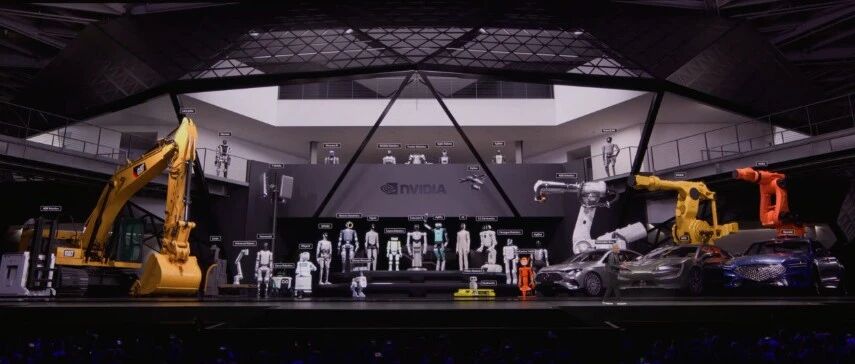
GTC 2026上,英伟达展现的六大机器人趋势
机器人大讲堂· 2026-03-17 15:00
Core Viewpoint - NVIDIA is promoting the concept of "Physical Artificial Intelligence" at the GTC 2026 conference, which expands on the advancements in large language models and generative AI tools to enhance robotics capabilities [2][6]. Group 1: Trends in Robotics - Trend 1: NVIDIA accelerates the simulation and synthetic data generation to "feed" robots [4]. - Trend 2: NVIDIA collaborates with FANUC and ABB to evolve industrial robots [4]. - Trend 3: NVIDIA is building a "General-Expert" brain system for robots [5]. - Trend 4: The GR0 0T N2 architecture enables faster deployment of humanoid robots [5]. - Trend 5: NVIDIA's IGX Thor is aiding breakthroughs in medical robotics [5]. - Trend 6: NVIDIA is driving the global robotics ecosystem co-construction [4]. Group 2: Physical AI Strategy - NVIDIA aims to replace expensive real-world data collection with simulation and synthetic data generation, transforming data challenges into computational problems [6]. - The company has developed a comprehensive platform strategy that includes chips, computing platforms, open models, simulation tools, software frameworks, and security architectures, covering the entire value chain of physical AI systems [6]. - NVIDIA's founder, Jensen Huang, stated that every industrial company will become a robotics company in the future [6][7]. Group 3: Market Potential - The market for industrial robots driven by AI is projected to reach $80 billion by 2030 [10]. - NVIDIA is expanding its physical AI platform into autonomous driving, industrial robots, and humanoid robots, establishing partnerships with major industrial players like ABB and FANUC [10]. Group 4: Generalized Robot Intelligence - NVIDIA is transitioning robots from specialized devices to general-expert systems capable of adaptive and specialized tasks while maintaining industrial-grade precision and reliability [12]. - The company introduced the Cosmos 3 model, which combines synthetic world generation, visual reasoning, and action simulation to enhance robotic capabilities [12][14]. - The open reference architecture consists of three stages for automating the data flow from raw data to final training datasets [14]. Group 5: Humanoid Robots - NVIDIA launched a foundational model based on GR0 0T N1.7 for humanoid robots, which includes dexterous control capabilities [16]. - The GR0 0T series models are designed to handle various tasks across different robotic platforms, with leading developers adopting NVIDIA's Isaac GR0 0T models to accelerate industrial deployment [17]. Group 6: Medical Robotics - NVIDIA's IGX Thor platform is aimed at edge applications in safety-critical environments, facilitating the deployment of autonomous systems in healthcare [20]. - Companies like CMR Surgical and Johnson & Johnson are utilizing NVIDIA's simulation technologies for training and validating their surgical systems [20][21]. Group 7: Ecosystem Collaboration - NVIDIA is fostering deep collaboration within the robotics ecosystem by building an open physical AI platform that integrates design, training, testing, and deployment [23]. - The BONES-SEED dataset, which includes 142,000 high-fidelity human motion animations, is being developed to support humanoid robotics applications [23]. - Disney is using NVIDIA's technology to train its robots, showcasing the practical applications of NVIDIA's simulation tools in real-world scenarios [24][25]. Group 8: Conclusion and Future Outlook - NVIDIA's robotics platform strategy follows a familiar model of providing tools and infrastructure to enable others to innovate [27]. - The importance of the tools provided by NVIDIA for robotics technology is likened to the significance of CUDA for machine learning [27]. - The focus is not on whether the era of intelligent robots will arrive, but on NVIDIA's ability to maintain its position as a global supplier of robotic "brains" [27].