Cowork助手

Search documents
从高盛到黑石,华尔街巨头都来站台:软件不会垮
美股IPO· 2026-02-12 00:54
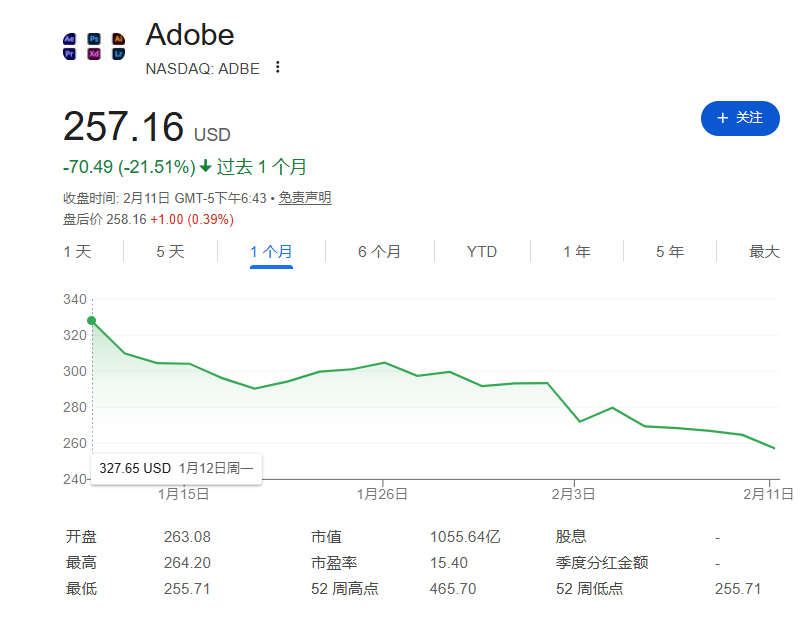
Core Viewpoint - Concerns about AI leading to the demise of the software industry are significantly exaggerated, according to executives from Goldman Sachs, Blackstone, Apollo, and KKR. They acknowledge that while AI will bring about a "dramatic technological cycle" and disruption, established software companies are likely to be protected and may even benefit from these changes [1][3][10]. Group 1: Market Reaction and Software Industry Outlook - The recent sell-off in the software sector was triggered by fears that AI could replace traditional software functions, leading to significant declines in stock prices for major companies like Salesforce and Adobe, resulting in the evaporation of hundreds of billions in market value [3][6][8]. - Executives from major financial institutions argue that the market's reaction is an "indiscriminate" sell-off, and the belief that all software companies will become obsolete is overly broad and unfounded [3][9][10]. - Apollo's John Zito stated that while the software industry will not disappear, its business logic will change, emphasizing that the usage of software is expected to increase significantly [4][5]. Group 2: Investment Risks and Diversification - KKR's CFO Robert Lewin indicated that approximately 15% of their private equity investments are exposed to software companies, which represents about 7% of their total assets, suggesting a manageable risk exposure [11]. - Goldman Sachs' CEO David Solomon downplayed the risk exposure in software investments, stating it is "insignificant" relative to the overall scale of their platform [13]. - The executives emphasized the importance of diversification in their investment portfolios to mitigate the impact of potential disruptions in the software sector [11][12].



从高盛到黑石,华尔街巨头都来站台:软件不会垮
Hua Er Jie Jian Wen· 2026-02-12 00:02
Core Viewpoint - The recent sell-off in the software sector due to AI threat narratives is exaggerated, according to executives from major financial institutions on Wall Street [1]. Group 1: Market Reaction and Sentiment - The stock prices of major software companies like Salesforce and Adobe plummeted, resulting in the evaporation of hundreds of billions in market value, driven by fears that AI will replace traditional software functions [1]. - Executives from firms such as Goldman Sachs, Blackstone, Apollo Global Management, and KKR have stated that the current market reaction is an "indiscriminate" sell-off, arguing that the belief that all software companies will become obsolete is overly broad and unfounded [1][8]. Group 2: Industry Transformation - Apollo's co-president John Zito emphasized that while the software industry will not disappear, its business logic will change, and the market will experience a "very severe technology cycle" with clear winners and losers [2]. - Zito warned investors against judging software companies solely based on current revenue figures, using the analogy of BlackBerry's decline after the iPhone's release [2]. Group 3: AI's Impact on Subscription Models - The immediate cause of market panic was Anthropic's announcement of a new legal tool for its Cowork assistant, which raised concerns about the fate of various software providers [2][7]. - Software companies are seen as particularly vulnerable due to their reliance on subscription and licensing fees for revenue [7]. Group 4: Differentiation in Market Response - Blackstone's CFO Michael Chae noted that the market's response lacks rationality, predicting that larger, well-established companies will be better protected and may even benefit from AI advancements [8]. - Goldman Sachs CEO David Solomon echoed this sentiment, suggesting that the narrative surrounding the software sector has been overly generalized [8]. Group 5: Risk Exposure of Financial Institutions - KKR's CFO Robert Lewin indicated that approximately 15% of KKR's private equity investments are exposed to software companies, representing about 7% of their total assets, but emphasized the diversity of their investments as a protective measure [9]. - Goldman Sachs' David Solomon downplayed the risk exposure in software investments, stating it is "insignificant" relative to the overall scale of their platform [9].