
DOBOT AtomⅡ人形机器人

Search documents
改革开放走在前|从类脑智能到具身智能,特区寻找科技“新梯子”
2 1 Shi Ji Jing Ji Bao Dao· 2025-10-16 13:37
Core Insights - The Guangdong Provincial Institute of Intelligent Science and Technology has developed the world's largest brain-like supercomputing system, featuring a scale of 10 billion neurons, with plans to expand to 86 billion neurons in the future [1][6][10] - The "Shenzhen-Hong Kong-Guangzhou" innovation cluster has been ranked first globally in the 2025 Global Innovation Index, highlighting the region's strong innovation ecosystem [2] - The institute has achieved several global breakthroughs in brain-like computing technology, including the world's first programmable brain-like chip and a heterogeneous computing system [4][6] Group 1: Brain-like Computing - The brain-like computing system is designed to mimic human brain operations, allowing for efficient information processing while reducing energy consumption [4] - The institute aims to explore new algorithms that could potentially disrupt existing AI models like DeepSeek [1][10] - The system's density is approximately 20 times higher than the previous European record, showcasing significant advancements in computational efficiency [6] Group 2: Innovation Ecosystem - The innovation ecosystem in the Guangdong region emphasizes cross-disciplinary collaboration and application-driven technological upgrades [2][8] - The institute has implemented innovative mechanisms in recruitment and financial management to enhance research efficiency and creativity [9] - The region's unique advantages include a complete industrial chain from AI chips to manufacturing, supported by a large urban population [14] Group 3: Robotics and AI - The development of humanoid robots is gaining momentum, with significant production increases in industrial and service robots in Guangdong [11] - The competition in the AI field is intensifying, with a need for breakthroughs in intelligent computing and algorithm efficiency [12] - The integration of physical AI through humanoid robots is seen as a key to enhancing interaction and service capabilities in various industries [13]

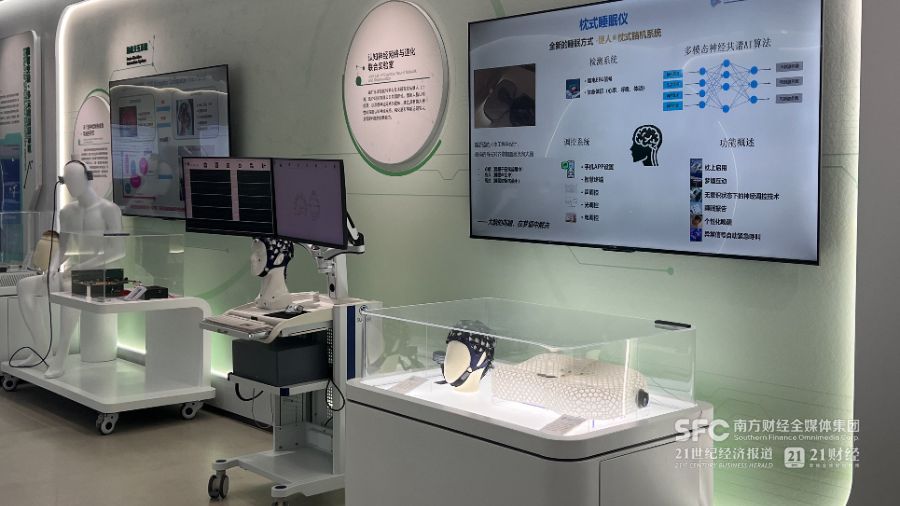
从类脑智能到具身智能,特区寻找科技“新梯子”
2 1 Shi Ji Jing Ji Bao Dao· 2025-10-16 13:24
Group 1: Overview of the Innovation Ecosystem - The Guangdong Provincial Institute of Intelligent Science and Technology is focusing on brain-like intelligence, aiming to develop a new algorithm that could potentially disrupt existing AI models like DeepSeek [1][4] - The "Shenzhen-Hong Kong-Guangzhou" innovation cluster has ranked first globally in the Global Innovation Index, highlighting the region's competitive edge in innovation [2] - The region's innovation ecosystem is characterized by cross-disciplinary collaboration and the encouragement of young scientists and entrepreneurs to explore new opportunities [2][4] Group 2: Technological Advancements - The Guangdong Provincial Institute has achieved several global breakthroughs in brain-like computing, including the world's first programmable brain-like chip with over 100 million neurons and the largest brain-like supercomputing system [3][4] - The institute's current system, built with five cabinets, has a computing capacity of 100 billion neurons, significantly surpassing previous global standards [3][4] - Future goals include constructing a complete model of a human brain with 86 billion neurons to enhance life sciences research and develop new algorithms [6] Group 3: Robotics and Market Dynamics - The humanoid robotics sector in China is rapidly advancing, with significant production increases in industrial and service robots, leading the nation in market share [7][8] - Companies like UBTECH and Yujian Robotics are at the forefront, with UBTECH's Walker S2 capable of continuous operation and Yujian achieving over 100,000 units deployed globally [7][8] - The competition in the AI field is intensifying, with a focus on overcoming the bottleneck of intelligent computing and improving algorithm efficiency [8][9] Group 4: Supportive Environment for Innovation - The Guangdong Provincial Institute has implemented a market-oriented recruitment and compensation system, along with a negative list system to accelerate research progress [5] - The institute has attracted over 410 research and management personnel and filed numerous patents, indicating a robust research environment [5] - The unique combination of Hong Kong's financial advantages, Shenzhen's innovation landscape, and Guangdong's manufacturing base creates a complementary ecosystem for technological advancement [9]