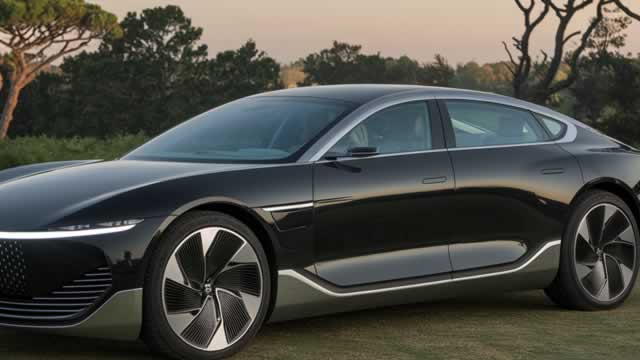
EQS SUV

Search documents
German automaker Mercedes-Benz to invest $4 billion in Alabama SUV plant
Reuters· 2026-03-31 17:30
Group 1 - Mercedes-Benz plans to invest $4 billion in its Alabama plant through 2030 to enhance SUV production and address U.S. auto tariffs [1] - The total investment in U.S. operations by Mercedes-Benz is projected to exceed $7 billion in the coming years [2] - The company will relocate up to 500 jobs to a new research and development hub in Atlanta [2]

全球再裁3万人,奔驰被逼到悬崖边上
Tai Mei Ti A P P· 2025-10-27 01:54
Core Viewpoint - Mercedes-Benz is initiating its largest-ever layoff plan, aiming to cut 30,000 jobs to save €5 billion (approximately ¥41.3 billion) annually, which will be reinvested into the development of 36 new models, including 17 electric vehicles [1][5]. Group 1: Layoff and Cost-Saving Measures - The layoff plan includes attractive severance packages, with some employees eligible for up to €500,000 (approximately ¥4.13 million) in compensation [3]. - The company has already seen 4,000 employees voluntarily leave under this plan, with senior management receiving significant payouts [3]. - This marks the third major restructuring effort by Mercedes in four years, following previous layoffs of 10,000 in 2019 and additional cuts in 2023 [4][5]. Group 2: Sales Decline and Market Challenges - Mercedes reported a 12% year-on-year decline in global sales for Q3, with a staggering 27% drop in the Chinese market [6]. - The sales downturn is attributed to the competitive pressure from new electric vehicle entrants and the need for internal cost optimization [6][7]. Group 3: Shift in Electric Vehicle Strategy - The company initially pursued a "oil-to-electric" strategy with the EQC model, which faced significant market challenges and led to a reassessment of its approach [9][10]. - CEO Ola Källenius has shifted the strategy from "oil-to-electric" to a fully electric model, emphasizing the need for a dedicated electric platform [10][11]. - Despite setbacks with the EQS model, which failed to meet market expectations, Mercedes has ramped up its electric vehicle offerings, achieving a 67% increase in sales for electric models in 2022 [18]. Group 4: Strategic Adjustments and Future Outlook - The company has recognized the challenges of transitioning to electric vehicles and has adjusted its strategy to maintain a dual approach, balancing electric and internal combustion engine models [19]. - The target for electric vehicle sales to account for 50% of total sales has been postponed from 2025 to 2030, reflecting a more cautious approach [19]. - Mercedes is now focused on survival and adapting to market demands, with the understanding that the transition to electric vehicles is a long-term endeavor [20][21].
Mercedes taps the brakes on EV orders, citing low demand in the US
Business Insider· 2025-07-30 20:42
Core Viewpoint - Mercedes-Benz is pausing orders for its electric vehicles (EVs) in the U.S. due to declining demand among American consumers, affecting all variants of the EQS Sedan, EQS SUV, EQE Sedan, and EQE SUV [1][2] Group 1: Sales and Production - Total unit sales for Mercedes-Benz's battery electric vehicles (BEVs) dropped by nearly 25% year-over-year, from 45,843 units to 35,027 units [2] - The company began manufacturing the EQS SUV and EQE SUV at its Alabama plant in 2022 and added the Mercedes-Maybach EQS SUV in 2023 [3] Group 2: Market Conditions - The decision to pause orders follows the elimination of the $7,500 tax credit for new electric vehicles, which industry experts warn could make EVs less affordable, impacting various manufacturers [4] - EV sales in North America increased by only 5% in the first four months of 2024, contrasting with 25% growth in Europe and 35% in China [8] Group 3: Future Outlook - A representative from Mercedes-Benz expressed belief that American interest in electric vehicles will eventually rebound, despite the current challenges [9] - The company anticipates that the medium to long-term adoption rate of BEVs in the U.S. will gradually increase, albeit at a slower pace than previously expected [10]