GI Genius

Search documents
2 Healthcare Dividend Stocks That are Just What the Doctor Ordered
The Motley Fool· 2026-02-03 22:35
Core Viewpoint - AbbVie and Medtronic are highlighted as healthcare stocks that consistently grow their dividends, supported by healthy free cash flow, despite the general trend of lower dividend yields in the healthcare sector [1][3][15]. AbbVie - AbbVie has a dividend yield of 2.98% and has increased its quarterly dividend for 54 consecutive years, qualifying it as a Dividend King [4]. - The company reported revenue of $15.8 billion in the third quarter, a 9% year-over-year increase, although earnings per share (EPS) declined by 38% to $1.86 due to higher R&D spending [6]. - AbbVie has successfully transitioned from reliance on Humira, which previously accounted for 63% of its revenue, to a diversified portfolio including Rinvoq and Skyrizi, with Skyrizi generating $4.7 billion in the latest quarter [7]. - The oncology segment now contributes nearly 11% to AbbVie's revenue, bolstered by new therapies [8]. - AbbVie's dividend payout ratio is 58%, but its free cash flow per share of $11.11 supports its annual dividend payout of $6.92 [9]. Medtronic - Medtronic, with a market cap of $132 billion, is the largest stand-alone medical device maker, producing a wide range of medical equipment [10]. - The company reported revenue of $9 billion in the second quarter of fiscal 2026, a 6.6% year-over-year increase, with EPS rising 8% to $1.07 [13]. - Medtronic's dividend yield is approximately 2.76%, and it has increased its dividend for 48 consecutive years, with a payout ratio of 69% [14]. - The company plans to spin off its diabetes business, which accounts for only 8% of revenue, without impacting its dividend [14]. Industry Insights - Healthcare companies, unlike utilities, must continuously invest in R&D due to the nature of their products, which often face patent expirations and generic competition [2]. - AbbVie and Medtronic leverage their size and diversification to maintain revenue growth and dividend increases, mitigating risks from potential downturns in specific segments [15][16].



Stifel Maintains Hold on Medtronic (MDT) After FDA Approves HUGO System
Yahoo Finance· 2025-12-22 14:53
Core Viewpoint - Medtronic plc is highlighted as a promising healthcare AI stock following the FDA's approval of its HUGO robotic-assisted surgery system, which is expected to enhance its competitive position in the surgical robotics market [1][2]. Group 1: FDA Approval and Market Impact - The FDA granted regulatory approval for Medtronic's HUGO robotic-assisted surgery system, marking the end of a lengthy development phase and enabling competition in the US surgical robotics market [2][3]. - The HUGO system is intended for minimally invasive urologic surgical procedures, including prostatectomy, nephrectomy, and cystectomy [3][4]. - Stifel anticipates that significant revenue contributions from the HUGO launch will not materialize until Medtronic's fiscal year 2027 [2]. Group 2: Clinical Study and Launch Strategy - The approval of the HUGO system followed positive outcomes from the Expand URO investigational device exemption clinical study, which is noted as the largest multi-center prospective IDE trial for multi-port robotic-assisted urologic surgery in the US [4]. - Medtronic plans a phased launch of the HUGO system, focusing on partnerships with leading hospitals to facilitate its introduction into the market [4]. Group 3: Company Overview - Medtronic plc develops and manufactures a range of medical devices and therapies across various sectors, including cardiovascular, diabetes, surgical, and neurological care [5]. - The company's AI-enabled product portfolio includes GI Genius, Touch Surgery Enterprise for surgical video analysis, AiBLE for neurosurgery, and the MiniMed 780G insulin pump [5].
一款AI内镜设备的转化路径长什么样?从临床需求到规模应用
思宇MedTech· 2025-12-20 01:11
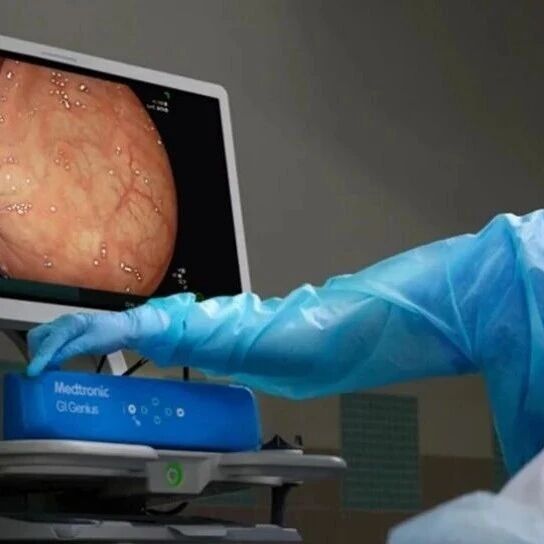
Core Viewpoint - The article discusses the significant advancement in gastrointestinal endoscopy technology with the introduction of a domestic high-definition endoscope system combined with AI-assisted diagnostic capabilities in Xinjiang, China. This innovation aims to enhance the accuracy and efficiency of gastrointestinal disease screening and treatment in county-level medical settings, reducing the need for patients to travel to larger hospitals for care [1]. Part 1: Clinical Demand Discovery - The emergence of the AI-assisted gastrointestinal endoscopy system is driven by unmet clinical needs, particularly the challenge of early detection of small lesions in gastrointestinal cancer patients, which often leads to late-stage diagnoses [3][4]. - The system enhances lesion recognition, operational standardization, and diagnostic reliability through a collaborative approach involving doctors, equipment, and AI [5]. Part 2: Technical Solution Selection - Various technical paths were considered for the AI-assisted gastrointestinal endoscopy system, including software enhancements to existing equipment, hardware upgrades for improved imaging, and a combination of both [6][7]. - Path A focuses on adding AI capabilities to existing endoscope systems, exemplified by the GI Genius system, which has shown a 14.4% increase in adenoma detection rates [8]. - Path B involves upgrading hardware for better imaging quality, while Path C emphasizes a gradual approach starting with quality control before expanding to lesion detection [10][11]. Part 3: Cross-Disciplinary Team Collaboration - The development phase involves a collaborative ecosystem where algorithm engineers, hardware engineers, and clinical doctors work together to refine the AI system based on real-world clinical practices [14]. - Iterative prototyping and preclinical validation are crucial, with multiple stages of testing to ensure safety and effectiveness before clinical trials [15][16]. Part 4: Clinical Trials and Regulatory Approval - Clinical trials are essential for validating the safety and effectiveness of the AI-assisted endoscopy system, with early studies indicating significant improvements in adenoma detection rates [20][21]. - Regulatory bodies like the FDA and NMPA play a critical role in the approval process, focusing on the system's effectiveness, safety, and compatibility with existing medical devices [23][24]. Part 5: Productization and Clinical Application - After regulatory approval, the AI endoscopy product enters the commercialization phase, requiring adaptation to various hospital systems and ensuring compliance with medical device standards [30]. - Key players in this phase include manufacturing, marketing, and clinical support teams, with a focus on demonstrating clinical efficacy to encourage adoption [31]. Challenges and Key Factors - The commercialization process faces challenges such as high initial costs, skepticism from experienced doctors, and the need for standardized protocols to ensure consistent performance across different products [34][35]. - Long-term success in the market will depend on continuous innovation, collaboration within the industry, and the ability to demonstrate tangible clinical benefits to both doctors and patients [36].
昔日冰球队长,如今掌舵335亿美元医疗科技巨头:美敦力CEO背后的创新逻辑
思宇MedTech· 2025-08-10 13:10
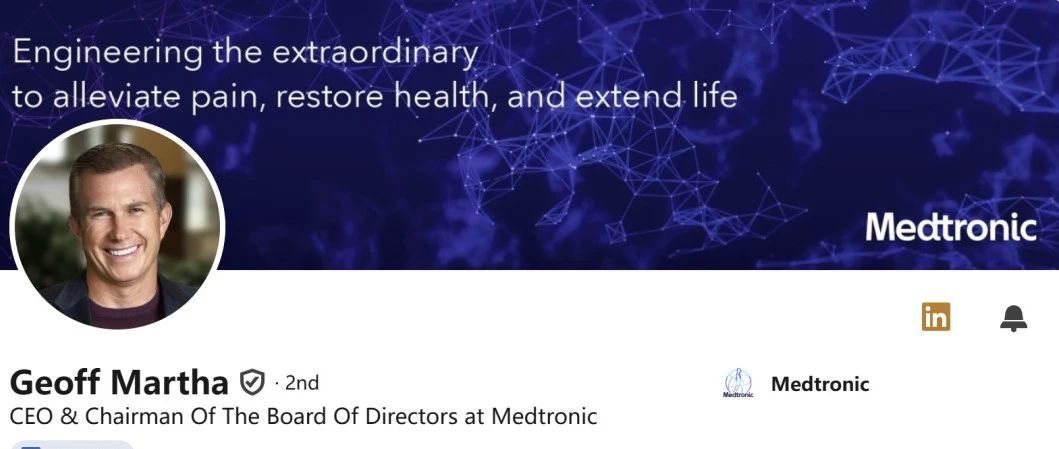
Core Viewpoint - The article discusses the strategic leadership of Geoff Martha at Medtronic, focusing on his approach to innovation, crisis management, and the restructuring of the company's product portfolio to emphasize high-growth areas in the medical technology sector [2][5][21]. Strategic Layout - Medtronic is shifting its focus towards high-growth sectors by divesting from patient monitoring and respiratory intervention businesses, and plans to spin off its diabetes segment, concentrating resources on neuromodulation, cardiac ablation, and robotics [5][12]. Crisis Response - During the COVID-19 pandemic, Martha made a high-risk decision to open-source ventilator designs, which alleviated equipment shortages globally and earned Medtronic the Fortune "Change the World" award, reflecting a commitment to corporate responsibility [7][8]. Financial Performance - In fiscal year 2025, Martha's total compensation was $23.3 million, a 16% increase year-over-year, with 80%-90% tied to long-term incentives. Medtronic's revenue grew by 3.6% to $33.5 billion, and profit increased by 27% [8][9][11]. Innovation Focus - Key projects under Martha's leadership include the Symplicity SpyralRDN system for hypertension, adaptive deep brain stimulation for Parkinson's, and AI-assisted endoscopy for early cancer detection, indicating a strong commitment to advancing medical technology [12][21]. Talent Strategy - Martha promotes a decentralized R&D model to foster innovation, allowing business units greater autonomy and accelerating product development. This approach, along with equity incentives and diverse networks, aims to create a culture conducive to continuous innovation [14][21]. Cross-Industry Innovation - Medtronic is applying its heart monitoring technology to wildlife conservation efforts, showcasing the company's mission to extend its technological capabilities beyond traditional healthcare applications [18][21].